• Home
  • Mission
  • Federalist Papers
  • Foundation
  • U.S. Constitution
  • Bill of Rights

Federalist Press | Defending Liberty — Informing America

Breaking News and Political Commentary

  • All Stories
  • Economy
  • Elections
  • Entitlement
  • Ethics
  • Foreign
  • Gender
  • Religion
  • Sci-Tech

Easter Morning

March 31, 2013 By Editor 3 Comments

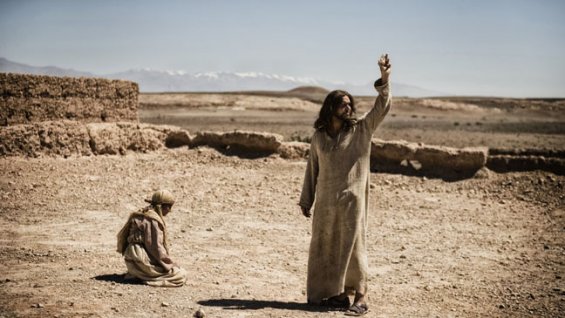
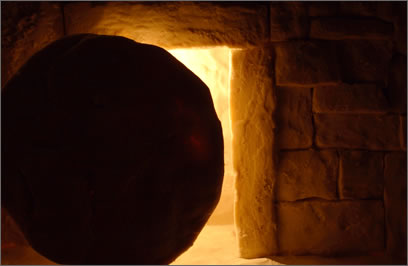
stone_resurrectionThe New Testament of the Bible contains the story of the life of Jesus Christ. Within its pages is recounted how He was crucified on Friday, and his body was hastily removed from the cross and placed into a tomb hewn into the rock, with very little time to appropriately prepare the body for final burial before the Jewish Sabbath started at sunset.

It was early Sunday morning when Mary Magdalene and other women disciples arrived at the tomb to see the sepulcher and prepare His body. Suddenly there was a great earthquake and an angel of the Lord descended from heaven, and came and rolled back the stone from the door, and sat on it. His countenance was like lightning, and his raiment white as snow.

The angel said, “Fear not: for I know that you seek Jesus, which was crucified. He is not here: for he is arisen. Come, see the place where the Lord lay.” He then instructed the women to go and tell Jesus’ disciples that He was risen from the dead and that He would go before them to Galilee; and there they would see Him.

The others ran to tell the Apostles what they had seen and heard, but Mary stood at the door of the sepulcher weeping. As she wept, she stooped down, and looked into the sepulcher, and saw two angels in white sitting, one at the head and the other at the feet where the body of Jesus had lain.

They said to her, “Woman, why are you weeping?”
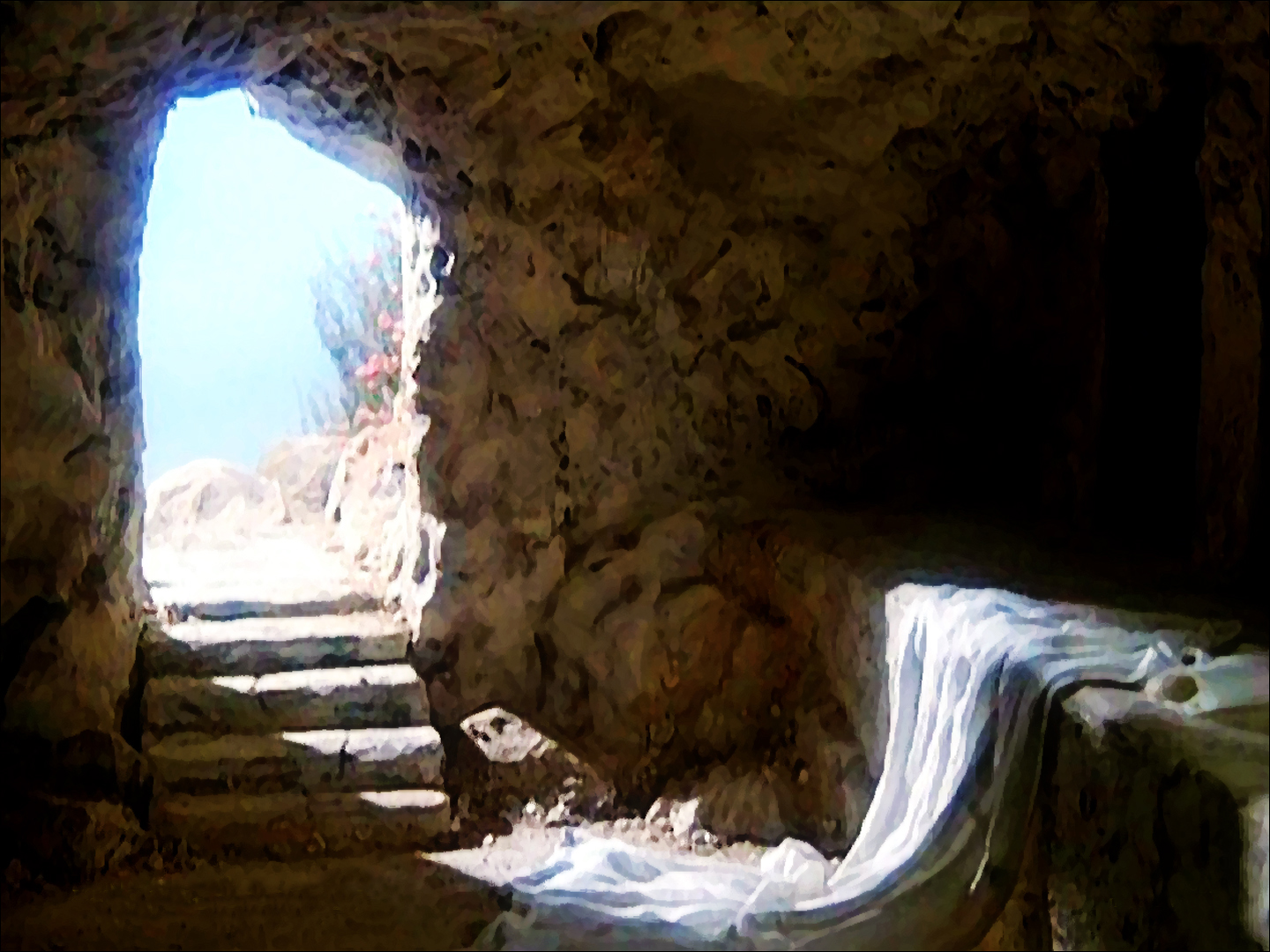
empty-tombShe said, “Because they have taken away my Lord, and I know not where they have laid him.”

And when she had spoken she turned back, and saw Jesus standing, but knew not that it was Him. He spoke to her and said, “Woman, why are you crying? Whom do you seek?”

She, supposing him to be the gardener, said, “Sir, if you have borne him away, tell me where you have laid him, and I will take him away.”

Jesus said, “Mary.”

Suddenly recognizing His voice, she turned herself and said to him, “Rabboni,” which is to say, Master.

Jesus said to her, “Touch me not; for I am not yet ascended to my Father: but go to my brethren, and say to them, ‘I ascend unto my Father, and your Father; and to my God, and your God.’”

What is the significance of this story nearly 2,000 years later? Each of us must decide its implications and importance for ourselves, and apply its lessons in our own lives as we interpret the message for ourselves. John, the Apostle who recorded this version of the incident gives us his own explanation of why he recorded it: “But these are written, that ye might believe that Jesus is the Christ, the Son of God; and that believing, ye might have life through his name.”

Publius

Filed Under: All Stories, Ethics, Foreign, Religion

Conservationists seek to save ‘Peter Cottontail’

March 31, 2013 By Editor Leave a Comment

cottontailConservationists want to make sure Peter Cottontail is around for many Easters to come.The species that inspired a New England author to pen tales about a curious bunny is in danger. Wildlife officials said the New England cottontail could face extinction because the shrub lands it calls home are disappearing.

The U.S. Fish and Wildlife Service has partnered with state agencies and private organizations from Maine to New York to restore its natural habitat and save the critter.

New England cottontails were abundant a century ago, but as neglected agricultural lands reverted back to forest, the population thinned.

Conservationists hope habitat management and captive breeding will prevent the species’ decline, which would require a more costly response and restrictions on land use and hunting.

Published March 30, 2013 / Associated Press

Filed Under: All Stories

Left Want Ben Carson Replaced as Commencement Speaker After Gay Marriage Remarks

March 30, 2013 By Editor Leave a Comment

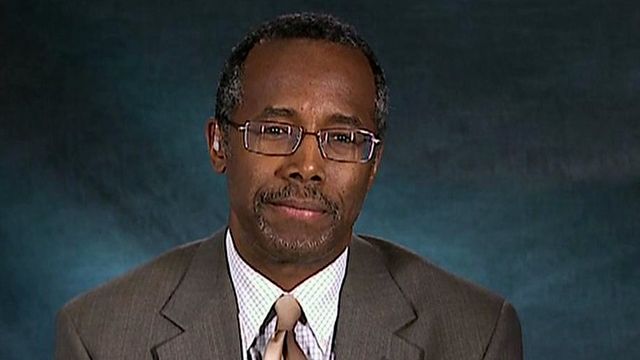
Ben_carsonJohns Hopkins students are campaigning to have Dr. Ben Carson pulled from this year’s commencement speaker line-up, in response to comments the well-known neurosurgeon, a critic of the Obama administration, made about gay marriage.

Carson has since said he apologizes for having offended anyone and indicated he might withdraw from the commencement role, though he says his words are being misconstrued.

Carson — who rocketed to political fame after criticizing President Obama’s policies during the National Prayer Breakfast, which Obama attended — made the gay marriage comments on Fox News Tuesday night.

Host Sean Hannity asked Carson his opinion on same-sex marriage, given the Supreme Court’s consideration of two gay marriage cases this week.

“Marriage is between a man and a woman,” Carson said. “It’s a well-established, fundamental pillar of society and no group, be they gays, be they NAMBLA, be they people who believe in bestiality — it doesn’t matter what they are, they don’t get to change the definition.”

Students accused Carson of effectively comparing “gay relationships with pedophilia and bestiality.”

The Health and Human Rights Student Group began circulating a petition, linked out of its Facebook page, challenging Carson’s selection as the 2013 commencement speaker for the Johns Hopkins School of Medicine.

“At the time of his nomination, Dr. Carson was known to most of us as a world-class neurosurgeon and passionate advocate for education. Many of us had read his books and looked up to him as a role model in our careers,” the group said. “Since then, however, several public events have cast serious doubt on the appropriateness of having Dr. Carson speak at our graduation.”

The group cited his gay marriage comments, but also his comments at the National Prayer Breakfast — Carson was hailed by conservatives, and even landed a speaking role at the Conservative Political Action Conference, for his remarks in February.

The commencement address may be in doubt.

Asked about the students’ objections, Carson on Friday told MSNBC it’s “their day and the last thing I would want to do is rain on their parade.”

Asked whether he’s told the university he would not deliver the address, Carson said he was “waiting for appropriate channels.”

Carson also told the Baltimore Sun that people “have completely taken the wrong meaning out of what I was saying.”
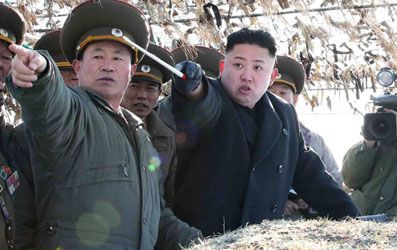
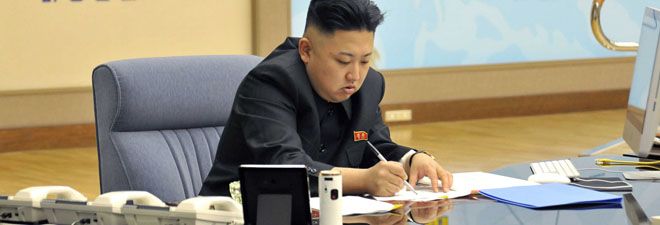
He added:  “Now perhaps the examples were not the best choice of words, and I certainly apologize if I offended anyone. But the point that I was making was that no group of individuals, whoever they are, whatever their belief systems, gets to change traditional definitions.”

Published March 29, 2013 / FoxNews.com

Filed Under: All Stories, Elections, Entitlement, Ethics, Gender, Religion

N. Korea in ‘State of War’ With South

March 30, 2013 By Editor Leave a Comment

In its latest threat, North Korea says it’s entering a ‘state of war’ with South Korea, and promises to respond to any provocations by the United States and South Korea without ‘any prior notice.’

NKoreaSEOUL, South Korea –  North Korea said Saturday it had entered “a state of war” with South Korea in its latest threat aimed at the United States and its ally after two American B-2 bombers flew a training mission in the region.

“From this time on, the North-South relations will be entering the state of war and all issues raised between the North and the South will be handled accordingly,” said a statement carried by the official North Korean news agency, according to a Reuters report.

The joint statement by the government, political parties and organizations said North Korea will deal with all matters involving South Korea according to “wartime regulations.” It also warned it will retaliate against any provocations by the United States and South Korea without “any prior notice.”

The divided Korean Peninsula is already in a technical state of war because the 1950-53 Korean War ended in a cease-fire, not a peace treaty. But Pyongyang said it was scrapping the war armistice earlier this month.

Reuters reported that North Korea’s statement said it would respond “without mercy” to any action by South Korea that harmed its sovereignty, indicating it was not about to mount a pre-emptive strike.

Analysts say a full-scale conflict is extremely unlikely and North Korea’s threats are instead aimed at drawing Washington into talks that could result in aid and boosting leader Kim Jong Un’s image at home. But the harsh rhetoric from North Korea and rising animosity from the rivals that have followed U.N. sanctions over Pyongyang’s Feb. 12 nuclear test have raised worries of a misjudgment leading to a clash.

South Korea’s Unification Ministry released a statement saying the latest threat wasn’t new and was just a follow-up to Kim’s earlier order to put troops on a high alert in response to annual U.S-South Korean military drills. Pyongyang sees those drills as rehearsals for an invasion; the allies call them routine and defensive.

In an indication North Korea is not immediately considering starting a war, officials in Seoul said South Korean workers continued Saturday to cross the border to their jobs at a joint factory park in North Korea that’s funded by South Koreans

On Friday, North Korean leader Kim Jong Un warned his forces were ready “to settle accounts with the U.S.” after two nuclear-capable U.S. B-2 bombers dropped dummy munitions on a South Korean island range as part of joint drills and returned to their base in Missouri.

North Korean state media later released a photo of Kim and his senior generals huddled in front of a map showing routes for envisioned strikes against cities on both American coasts. The map bore the title “U.S. Mainland Strike Plan.”

At the main square in Pyongyang, tens of thousands of North Koreans turned out for a 90-minute mass rally in support of Kim’s call to arms. Small North Korean warships, including patrol boats, conducted maritime drills off both coasts of North Korea near the border with South Korea earlier this week, South Korean Defense Ministry spokesman Kim Min-seok said in a briefing Friday. He didn’t provide details.

The spokesman said South Korea’s military was mindful of the possibility that North Korean drills could lead to an actual provocation. He said the South Korean and U.S. militaries are watching closely for any signs of missile launch preparations in North Korea. He didn’t elaborate.

Experts believe North Korea is years away from developing nuclear-tipped missiles that could strike the United States. Many say they’ve also seen no evidence that Pyongyang has long-range missiles that can hit the U.S. mainland.

Still, there are fears of a localized conflict, such as a naval skirmish in disputed Yellow Sea waters. Such naval clashes have happened three times since 1999. There’s also danger that such a clash could escalate. Seoul has vowed to hit back hard the next time it is attacked.

“The first strike of the revolutionary armed forces of the DPRK will blow up the U.S. bases for aggression in its mainland and in the Pacific operational theatres including Hawaii and Guam,” the North said Saturday in the statement carried by the official Korean Central News Agency. DPRK stands for the Democratic People’s Republic of Korea, the North’s official name.

Pyongyang uses the U.S. nuclear arsenal as a justification for its own push for nuclear weapons. It says that U.S. nuclear firepower is a threat to its existence.

Published March 30, 2013 / FoxNews.com /The Associated Press and Reuters contributed to this report.


Filed Under: All Stories, Elections, Foreign

N. Korea Threats Raise Concern Kim Backing Regime Into Corner

March 29, 2013 By Editor Leave a Comment

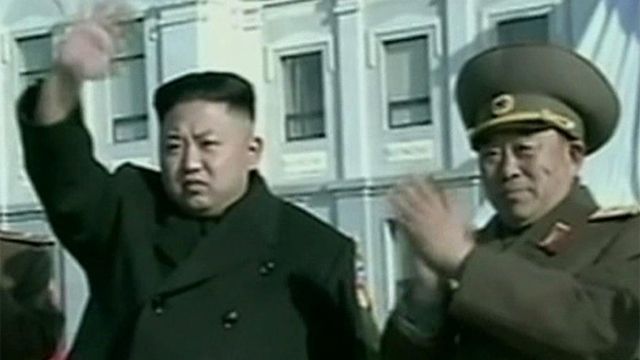
KimUNWith the threats billowing out of North Korean dictator Kim Jong Un’s regime at an unusually rapid clip, concern is mounting that the young leader could be backing himself into a corner — feeling compelled to do something or lose face.

Shortly after midnight local time, North Korean state television reported that Kim signed orders to put the nation’s rockets on combat-ready status. In a photo released on state-run media, a chart titled “U.S. mainland strike plan” could be seen and a map showed missiles arcing into Hawaii, Washington, Los Angeles and Austin, Texas.

The Pentagon is worried Kim may put himself in a position where he feels he has to act on his threats.

The North Koreans, while having made progress in their ballistic missile program, still have not mastered the technology of delivering a nuclear device by a long-range missile. But they are making progress, and that is what has the Pentagon concerned. Plus there is the concern that North Korea could strike at South Korea, a top U.S. ally.

“The North Koreans seem to be headed in a different direction here. So we will unequivocally defend and we are unequivocally committed to that alliance with South Korea, as well as our other allies in that region of the world.  And we will be prepared — we have to be prepared to deal with any eventuality there,” Defense Secretary Chuck Hagel said Thursday.

Kim warned Friday he is preparing to “settle accounts with the U.S.” after the U.S. deployed B-2 stealth bombers to South Korea to participate in a training exercise Thursday.

The third-generation dictator’s comments in a meeting with senior generals are part of a rising tide of threats meant to highlight anger over the drills and recent U.N. sanctions over Pyongyang’s nuclear test.

State media says Kim signed a rocket preparation plan and ordered rockets on standby to strike the U.S. mainland, South Korea, Guam and Hawaii.

Later Friday at the main square in Pyongyang, tens of thousands of North Koreans turned out for a 90-minute mass rally in support of Kim’s call to arms.

Men and women, many of them in olive drab uniforms, stood in arrow-straight lines, fists raised as they chanted, “Death to the U.S. imperialists.” Placards in the plaza bore harsh words for South Korea as well, including, “Let’s rip the puppet traitors to death!”

The U.S. military says the two B-2 stealth bombers sent to South Korea were meant to demonstrate the Pentagon’s commitment to defend its ally against threats from North Korea.

The two B-2 Spirit bombers flew more than 6,500 miles from Whiteman Air Force Base in Missouri to South Korea, dropping inert munitions before returning to the U.S., according to a statement released by U.S. Forces Korea.

“The United States is steadfast in its alliance commitment to the defense of the Republic of Korea, to deterring aggression, and to ensuring peace and stability in the region,” the statement said.

The B-2 Spirit is capable of delivering both conventional and nuclear weapons. The Pentagon said the mission was part of its ongoing Foal Eagle training exercise series, which began March 1 and ends April 30.

Hagel said Thursday afternoon that the move was part of normal exercises and not intended to provoke a reaction from North Korea.

The exercise, though, was announced a day after North Korea said it had shut down a key military hotline usually used to arrange passage for workers and goods through the Demilitarized Zone.

North Korea, which says it considers the U.S.-South Korean military drills preparations for invasion, has pumped out a string of threats in state media. In the most dramatic case, Pyongyang made the highly improbable vow to nuke the United States.

On Friday, state media released a photo of Kim and his senior generals huddled in front of a map showing routes for envisioned strikes against cities on both American coasts.

Experts believe the country is years away from developing nuclear-tipped missiles that could strike the United States. Many say they’ve also seen no evidence that Pyongyang has long-range missiles that can hit the U.S. mainland.

Still, there are fears of a localized conflict, such as a naval skirmish in disputed Yellow Sea waters. Such naval clashes have happened three times since 1999. There’s also the danger that such a clash could escalate. Seoul has vowed to hit back hard the next time it is attacked.

North Korea’s threats are also worrisome because of its arsenal of short- and mid-range missiles that can hit targets in South Korea and Japan. Seoul is only a short drive from the heavily armed border separating the Koreas.

“The North can fire 500,000 rounds of artillery on Seoul in the first hour of a conflict,” analysts Victor Cha and David Kang wrote recently for Foreign Policy magazine. They also note that North Korea has a history of testing new South Korean leaders; President Park Geun-hye took office late last month. “Since 1992, the North has welcomed these five new leaders by disturbing the peace,” they wrote.

Published March 29, 2013 / FoxNews.com / The Associated Press contributed to this report.

Filed Under: All Stories, Elections, Foreign, Sci-Tech

Obama Tries to ‘Shame’ Congress into Approving Gun Control Package

March 28, 2013 By Editor Leave a Comment

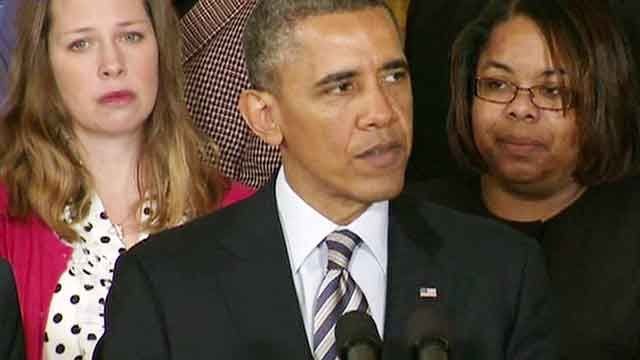
obama_gun_controlPresident Obama moved Thursday to put the muscle of the White House and his network of supporters behind a gun control package tracking toward the Senate floor, calling on voters to pressure Congress into backing it as the proposal runs into resistance on Capitol Hill.

The president, in a set of brief remarks from the White House Thursday surrounded by the mothers of shooting victims, raised concern that the shock from the Newtown elementary school shooting could soon fade.

“Less than 100 days ago that happened. … Shame on us if we’ve forgotten,” Obama said. “I haven’t forgotten those kids. Shame on us if we’ve forgotten.”

Amid signals from Washington that the Senate bill could be losing momentum and high-dollar ad campaigns on both sides, the president was there to deliver a message to wavering lawmakers. “Don’t get squishy,” he said.

Obama, accusing opponents of drumming up “fear,” urged supporters to call members of Congress and pressure them into backing the package.

Republican Sen. Mike Lee, of Utah, ripped the president for the remarks, suggesting he was exploiting the Newtown tragedy.

“The proposals the president is calling for Congress to pass would primarily serve to reduce the constitutionally protected rights of law-abiding citizens while having little or no effect on violent crime,” Lee said in a statement. “It is deeply unfortunate that he continues to use the tragedy at Newtown as a backdrop for pushing legislation that would have done nothing to prevent that horrible crime.”

Lee said he and his conservative colleagues plan to ensure that any of the firearms proposals require a 60-vote threshold in order to proceed. This could be a high hurdle for the Senate to clear.

Already, Senate Majority Leader Harry Reid dropped from the main package a proposal to renew and expand the expired assault weapons ban.

The base bill will instead cover universal background checks, strengthened punishments for illegal trafficking and more money for school security.

Items like school security enjoy broad support. But the move to include private sales — including gun show purchases — in the background check system remains controversial in some circles. Plus the assault weapons ban, which Republicans most adamantly oppose, is still expected to get a vote as an amendment to the main bill.

The National Rifle Association, during and after Obama’s remarks, tweeted a flurry of comments criticizing the latest Obama push. The group accused him of campaigning “against guns to please the fringe.”

Both sides of the gun debate are stepping up their effort to sway Congress. While the NRA has been vocal since the start of the process, New York Mayor Michael Bloomberg just launched a $12 million ad buy in support of the legislation.

“It’s not done until it’s done,” Obama said Thursday. “There are some powerful voices on the other side that are interested in running out the clock, or changing the subject. … They’re doing everything they can to make all our progress collapse under the weight of fear and frustration.”

Published March 28, 2013 / FoxNews.com

Filed Under: All Stories, Economy, Elections, Ethics

Teachers’ Union: F

March 28, 2013 By Editor Leave a Comment

nea_report_cardWe hear constantly about how American students are losing ground in worldwide performance standards. We score around 500 out of 1,000 in a number of important categories like reading and science.

Every three years the Organization for Economic Co-operation and Development (OECD) Program for International Student Assessment (PISA) report is compiled and released, comparing the knowledge and skills of 15-year-olds in 70 countries around the world. The United States ranks 14th of 34 OECD countries for reading skills, 17th for science, and a dismal 25th for mathematics.

The man-on-the-street interview has become common fodder for comedy shows, because the ignorance of the average American is overwhelmingly predictable. If you don’t believe it, casually ask someone in Starbucks the most fundamental of social studies questions: how many senators are in the US congress, or even the name of the vice president. You will be surprised at the number of blank stares you receive.

The Dumbing Down of America

So what do children learn in schools under the stern directives of the National Education Association? They learn about global warming, necessary tolerance for abhorrent human behaviors, and about how bad President Bush was. They are taught to speak out vehemently against anything and everything that is traditional or moral, and to blindly embrace every edict and dogma of the left.

Our classrooms are often filled with NEA union “change agents,” set in place to transition impressionable minds from logical and moral thought to leftist nonsense of redistribution and “fairness.” Our children don’t dare question the dogmatic edicts of these “community organizers” whose job it is to preach the gospel of the left, numbing the minds of the children and getting them to thoughtlessly repeat the chants and talking points of liberals.

Even in conservative Provo, Utah, we’ve received reports of a female seventh-grade teacher who recently bullied a female student in front of the class for having a note in her papers on the desk that she was supporting Mitt Romney for president. When the girl’s father asked the principal why his daughter was berated in front of the entire class and called “stupid” for her written thought, he was threatened with a lawsuit and a restraining order if he mentioned the incident outside of the principal’s office.

With all of that “education” going on, it’s no wonder that there is no time or energy left over for things like reading, writing and arithmetic.

“This is an absolute wake-up call for America,” U.S. Education Secretary Arne Duncan said in an interview with The Associated Press. “The results are extraordinarily challenging to us and we have to deal with the brutal truth. We have to get much more serious about investing in education.”

Does Education Need More Money?

Duncan’s use of the word “investing” is liberal-speak for raising taxes and feeding the NEA with more money to donate to Democratic candidate political campaigns. In fact, where students are more likely to drop out of school, and to be unemployed when they leave school, we find the highest levels of NEA influence, and the highest support for Democrats. Think east coast and west coast cities, Chicago, Detroit, etc.

Indeed, we constantly hear how underpaid teachers are, and how our schools need more money for the classrooms. Let’s look at some real numbers. First, we spend more than $9,000 per student per year on K-12 education (far more than all the countries who beat us in PISA reports), totaling over $120,000 per student by high school graduation. That is over $800 billion annually, which is a full 4.5% of our gross domestic product.

So where does all of this money go? Around 60% goes to classroom instruction, including teachers’ salaries. The rest (40%) goes to non-teaching employees and extras, in place mainly to ensure federal compliance, to qualify for the small percentage of the local budget that comes from Washington, D.C.

According to U.S. Bureau of Labor Statistics, mechanical engineers earn $31.93 per hour, but public school teachers earn on average more than $34.00 per hour, with an average annual salary of over $47,000. That salary is for a job that consumes just 36.5 hours per week compared with many hours more for nearly everyone else. Compared with public school teachers, editors and reporters earn 24% less; architects, 11% less; psychologists, 9% less; chemists, 5% less; mechanical engineers, 6% less; and economists, 1% less. It is true that there are those who earn more than public school teachers. Nuclear engineers earn 17% more; actuaries, 9% more; and physicists, 3% more. There are public school teachers working for a number of failing school systems who are earning a lot more than most people. The Detroit metropolitan area has the highest average public school teacher pay among metropolitan areas for which data are available, at $47.28 per hour, followed by the San Francisco metropolitan area at $46.70 per hour, and the New York metropolitan area at $45.79 per hour.

We need to invest more? No, we need to take back control of our schools and ensure that motivated teachers are teaching basic educational courses—the kind of subjects that are tested and measured internationally. We need to make sure there is competition in the teaching profession, something the NEA has fought with tremendous ferocity. We need to reward teachers who excel, and fire teachers who aren’t teaching useful subject matter to our children.

PUBLIUS

Filed Under: All Stories, Economy, Entitlement, Ethics

UN Arms Treaty Will Regulate Your Gun Ownership

March 28, 2013 By Editor 1 Comment

gun_controlThe U.N.’s Arms Trade Treaty, which seemed dead last July, is beginning to wrap up negotiations.  The Obama administration is committed to getting it passed . Secretary of State John Kerry confirmed: “The United States is steadfast in its commitment to achieve a strong and effective Arms Trade Treaty.”

The treaty was resurrected on Nov. 8 – the very day after President Obama’s re-election. Very conveniently, that the Obama administration delayed the U.N. vote in favor of renewing negotiations delayed until the president was no longer constrained by public opinion.

The Arms Trade Treaty will regulate individual gun ownership all across the world. Each country will be obligated to “maintain a national control list that shall include [rifles and handguns]” and “to regulate brokering taking place under its jurisdiction for conventional arms.”  In fact, the new background check rules approved by the Senate Judiciary Committee include just those rules — a registration system and a record of all transfers of guns.

The treaty pretends that individual weapons smugglers are the main problem.

But nations themselves will be responsible for enforcing the rules. That means Iran, China, Russia – the leading countries for the truly troubling parts of the international arms trade – are supposed to curb it.  Does anyone actually believe these nations will actually enforce these regulations against themselves?

Democracies are a different story.  Many of their civilians have freedoms to lose. And they are much more transparent on whether they are actually honoring the rules that apply to their governments.

Just like with gun control, in general, it is only the “good guys” who will obey the new rules. The U.N. Arms Trade Treaty, if passed, would only be effective against those countries that choose to obey them.

The treaty pretends that individual weapons smugglers are the main problem. But governments, not private individuals, are the primary source of weapons. For example, the FARC guerrillas fighting in Colombia get their guns from the Venezuelan government.

Unsurprisingly, the U.N. treaty provisions are the long-time favorites of American gun control advocates: registration and licensing of guns and ammunition, along with restrictions on the private gun transfers. Unfortunately, these expensive measures have a long history of failing to curb crime wherever they have been tried and primarily end up disarming law-abiding gun owners.

The treaty pushes gun registration and licensing as a way to trace those who supply these illicit weapons. Yet, to see the problem with these regulations, one only needs to look at how ineffective they have been in solving crime. Canada just ended its long gun registry last year, as it was a colossal waste of money.

Indeed, it is a costly scheme. Beginning in 1998, Canadians spent a whopping $2.7 billion on creating and running a registry just for long guns. With more people and more guns in the United States, the estimated costs for a similar registration scheme for 13 years would be about $67 billion.

Gun control advocates have long claimed registration is a safety issue. Their reasoning is straightforward: If a gun is left at a crime scene, and it was registered to the person who committed the crime, the registry will link it back to the criminal.

Unfortunately, it rarely works out this way. Criminals are seldom stupid enough to leave behind crime guns that are registered to themselves.

As to restrictions on the private transfers of guns, the most common type of regulation discussed in the U.S. today involves background checks. Yet, whether one is talking about the Brady Act or the so-called gun show loophole, economists and criminologists who have looked at this simply don’t find evidence those regulations reduce crime.  It may even increase crime, as fewer would-be victims acquire guns. Unfortunately, just like criminal gangs in the U.S. obtaining guns, it is simply wishful thinking that a United Nations treaty – no matter how well intended – can do much to stop rebel groups from getting weapons.

Obama likes to believe that his re-election gives him a mandate for sweeping changes. Well, he certainly lacks a mandate for these new gun restrictions, as he tried so hard to avoid the U.N. treaty until after the election.

The good news is that even if President Obama signs the U.N. Arms Trade Treaty, it is unlikely to be ratified by the US Senate. Nonetheless, by promoting gun control elsewhere in the world, it might eventually lead to more pressure for gun control here at home.

By John R. Lott, Jr., an economist and former chief economist at the United States Sentencing Commission; also a leading expert on guns. He is the author of several books, including “More Guns, Less Crime.” His latest book is “At the Brink: Will Obama Push Us Over the Edge? (Regnery Publishing 2013).” Follow him on Twitter@johnrlottjr.

Filed Under: All Stories, Economy, Ethics, Foreign

UN Arms Treaty

March 28, 2013 By Editor 1 Comment

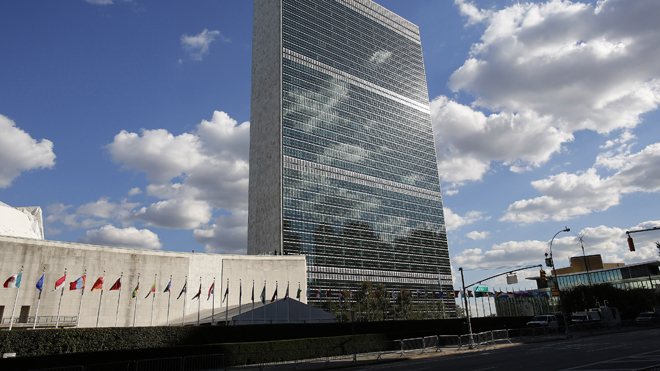
Clouds are reflected off the Secretariat Building of the UN headquarters during the 67th United Nations General Assembly, in New YorkUNITED NATIONS –  Supporters of a U.N. treaty designed to regulate the multibillion-dollar global arms trade were optimistic that a final draft circulated a day before Thursday’s deadline will reach consensus.Negotiators reconvened last week in a final attempt to reach a deal on the Arms Trade Treaty, which would require all countries to establish national regulations to control the transfer of conventional arms and to regulate arms brokers.

U.N. diplomats, speaking on condition of anonymity because negotiations have been private, said Wednesday the United States was virtually certain to go along with the latest text.

Hopes of reaching agreement on what would be a landmark treaty were dashed last July when the U.S. said it needed more time to consider the proposed accord — a move quickly backed by Russia and China. In December, the U.N. General Assembly decided to hold a final conference and set Thursday as the deadline for reaching agreement.

“We need a treaty,” China’s U.N. Ambassador Li Baodong told The Associated Press. “We hope for consensus.”

Questions remain on whether Iran, Egypt, India and several other countries that had serious concerns about the text would go along with the draft, which requires agreement of all 193 U.N. member states for adoption.

There has never been an international treaty regulating the estimated $60 billion global arms trade. For more than a decade, activists and some governments have been pushing for international rules to try to keep illicit weapons out of the hands of terrorists, insurgent fighters and organized crime.

“It’s important for each and every country in the world that we have a regulation of the international arms trade,” Germany’s U.N. Ambassador Peter Wittig told the AP. “There are still some divergencies of views, but I trust we can overcome them.”

The draft treaty does not control the domestic use of weapons in any country, but it would require all countries to establish national regulations to control the transfer of conventional arms, parts and components and to regulate arms brokers. It would prohibit states that ratify the treaty from transferring conventional weapons if they would violate arms embargoes or if they would promote acts of genocide, crimes against humanity or war crimes.

The final draft makes this human rights provision even stronger, adding that the export of conventional arms should be prohibited if they could be used in the commission of attacks on civilians or civilian buildings such as schools and hospitals.

The National Rifle Association has portrayed the draft treaty as a threat to gun ownership rights enshrined in the U.S. Constitution and has lobbied to defeat the proposal at the U.N.

The NRA last week praised the Senate’s passage of an amendment to the Democratic budget proposal that would prevent the U.S. from entering into the treaty.

The measure, introduced by Sen. James Inhofe, R-Okla., passed on a 53-46 vote.

“Thanks to the efforts of Senator Inhofe, we are one step closer to ensuring the U.N. will not trample on the freedoms our founding fathers guaranteed to us,” Chris W. Cox, executive director of NRA’s Institute for Legislative Action, said in a statement released following the vote.

Ammunition has been a key issue, with some countries pressing for the same controls on ammunition sales as arms, but the U.S. and others opposed such tough restrictions. The draft calls for each country that ratifies the treaty to establish regulations for the export of ammunition “fired, launched or delivered” by the weapons covered by the convention.

The Control Arms coalition, which represents about 100 organizations worldwide campaigning for a strong treaty, and diplomats from countries that support them, said this wouldn’t cover hand grenades and mines.

India and other countries had insisted that the treaty have an opt-out for government arms transfers under defense cooperation agreements. The new text appears to keep that loophole, stating that implementation of the treaty “shall not prejudice obligations” under defense cooperation agreements by countries that ratify the treaty.

“Making this treaty was like making a sausage: Everyone has added an ingredient,” said Ted Bromund, a senior research fellow at The Heritage Foundation, a conservative think tank.

“Unfortunately, that has produced a document that leans much too far towards satisfying the concerns of the Arab Group and Mexico. The former view it as a rebellion prevention plan, while the latter wants a text that edges towards its view that the domestic firearms market in the U.S. should be subject to treaty regulation,” he said.

But Daryl Kimball, executive director of the independent Washington-based Arms Control Association, said, “The emerging treaty represents an important first step in dealing with the unregulated and illicit global trade in conventional weapons and ammunition, which fuels wars and human rights abuses worldwide.”

He said the text could have been stronger and more comprehensive, but it can still make an important difference.

“The new treaty says to every United Nations member that you cannot simply ‘export and forget,'” Kimball said.

In considering whether to authorize the export of arms, the draft says a country must evaluate whether the weapon would be used to violate international human rights or humanitarian laws or be used by terrorists or organized crime. The final draft would allow countries to determine whether the weapons transfer would contribute to or undermine peace and security.

Anna Macdonald, Oxfam’s head of arms control, said the scope of the weapons covered in the latest draft is still too narrow.

“We need a treaty that covers all conventional weapons, not just some of them,” she said. “We need a treaty that will make a difference to the lives of the people living in Congo, Mali, Syria and elsewhere who suffer each day from the impacts of armed violence.”

Published March 28, 2013 / FoxNews.com / The Associated Press and Reuters contributed to this report.

Filed Under: All Stories, Economy, Elections, Ethics, Foreign

US Sends B-2 Stealth Bombers Over South Korea

March 28, 2013 By Editor Leave a Comment

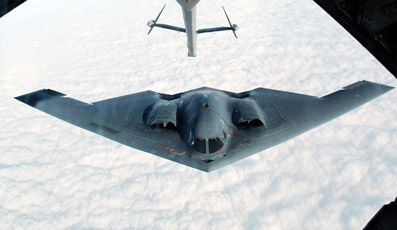
stealth_bomberThe U.S. military announced Thursday that two B-2 stealth bombers were sent to South Korea to participate in a training exercise, demonstrating the Pentagon’s commitment to defend its ally against threats from North Korea.

The two B-2 Spirit bombers flew more than 6,500 miles from Whiteman Air Force Base in Missouri to South Korea, dropping inert munitions before returning to the U.S., according to a statement released by U.S. Forces Korea.

“The United States is steadfast in its alliance commitment to the defense of the Republic of Korea, to deterring aggression, and to ensuring peace and stability in the region,” the statement said.

The B-2 Spirit is capable of delivering both conventional and nuclear weapons. The Pentagon said the mission was part of its ongoing Foal Eagle training exercise series, which began March 1 and ends April 30.

The exercise was announced a day after North Korea said it had shut down a key military hotline usually used to arrange passage for workers and goods through the Demilitarized Zone.

The hotline shutdown follows a torrent of bellicose rhetoric in recent weeks from North Korea, which is angry about annual South Korea-U.S. military drills and U.N. sanctions over its nuclear test last month. North Korea calls the drills rehearsal for an invasion; Seoul and Washington say the training is defensive in nature and that they have no intention of attacking.

North Korea’s threats and provocations are seen as efforts to provoke the new government in Seoul, led by President Park Geun-hye, to change its policies toward Pyongyang. North Korea’s moves at home to order troops into “combat readiness” are seen as ways to build domestic unity as young leader Kim Jong Un strengthens his military credentials.

North Korea previously cut Red Cross phone and fax hotlines with South Korea, and another communication channel with the U.S.-led U.N. command at the border between the Koreas. Three other telephone hotlines used only to exchange information about air traffic were still operating normally Thursday, according to South Korea’s Air Traffic Center.

North Korea said there was no need for communication between the countries in a situation “where a war may break out at any moment.”

In Washington, U.S. State Department spokesman Patrick Ventrell told reporters that North Korea’s “latest threat to cut off communication links coupled with its provocative rhetoric is not constructive to ensuring peace and stability on the peninsula.”

Although North Korea has vowed nuclear strikes on the U.S., analysts outside the country have seen no proof that North Korean scientists have yet mastered the technology needed to build a nuclear warhead small enough to mount on a missile.

Published March 28, 2013 / FoxNews.com / The Associated Press contributed to this report.

Filed Under: All Stories, Foreign

North Korea Cuts Hotline With South Korea

March 27, 2013 By Editor Leave a Comment

NorthKoreaSEOUL, South Korea –  Raising tensions with South Korea yet again, North Korea cut a military hotline that has been essential in operating the last major symbol of inter-Korean cooperation: an industrial complex in the North that employs hundreds of workers from the South.

There was no immediate word about what cutting one of the few remaining official North-South links would mean for South Korean workers who were at the Kaesong industrial complex. When the link was last cut, in 2009, many South Koreans were stranded in the North.

The hotline shutdown is the latest of many threats and provocative actions from North Korea, which is angry over U.S.-South Korean military drills and recent U.N. sanctions punishing it for its Feb. 12 nuclear test. In a statement announcing the shutdown, the North repeated its claim that war may break out any moment.

Outside North Korea, Pyongyang’s actions are seen in part as an effort to spur dormant diplomatic talks to wrest outside aid, and to strengthen internal loyalty to young leader Kim Jong Un and build up his military credentials.

South Korean officials said that about 750 South Koreans were in Kaesong on Wednesday, and that the two Koreas had normal communications earlier in the day over the hotline when South Korean workers traveled back and forth to the factory park as scheduled.

Workers at Kaesong could also be contacted directly by phone from South Korea on Wednesday.

A South Korean worker for Pyxis, a company that produces jewelry cases at Kaesong, said in a phone interview that he was worried about a possible delay in production if cross-border travel is banned again.

“That would make it hard for us to bring in materials and ship out new products,” said the worker, who wouldn’t provide his name because of company rules.

The worker, who has been in Kaesong since Monday, said he wasn’t scared.

“It’s all right. I’ve worked and lived with tension here for eight years now. I’m used to it,” he said.

Pyongyang’s action was announced in a message that North Korea’s chief delegate to inter-Korean military talks sent to his South Korean counterpart.

Seoul’s Unification Ministry called the move an “unhelpful measure for the safe operation of the Kaesong complex.”

North Korea recently cut a Red Cross hotline with South Korea and another with the U.S.-led U.N. command at the border between the Koreas. The Unification Ministry said only three telephone hotlines remain between the North and South, and those are used only for exchanging information about air traffic.

Kaesong is operated in North Korea with South Korean money and know-how and a mostly North Korean work force. It provides badly needed hard currency in North Korea, where many face food shortages.

Other examples of joint inter-Korean cooperation have come and gone. The recently ended five-year tenure of hard-line South Korean President Lee Myung-bak saw North-South relations plunge. Lee ended an essentially no-strings-attached aid policy to the North.

North Korea last cut the Kaesong line in 2009, as a protest to that year’s South Korean-U.S. military drills. North Korea refused several times to let South Korean workers commute to and from their jobs, leaving hundreds stranded in North Korea. The country restored the hotline and reopened the border crossing more than a week later, after the drills were over.

Shinwon Group, a South Korean apparel maker with a factory at Kaesong, said it would call its workers on Thursday morning to check on them. Shinwon’s South Korean employees stay in Kaesong for two weeks before returning to Seoul. Workers at Kaesong talked by phone with the Seoul office Wednesday morning, but there was nothing unusual about the call, said spokesman Lee Eun-suk.

Lee said that the last time the phone line was cut off between Kaesong and Seoul, it was “inconvenient” but did not affect business.

North Korea’s actions have been accompanied by threatening rhetoric, including a vow to launch a nuclear strike against the United States and a repeat of its nearly two-decade-old threat to reduce Seoul to a “sea of fire.” Outside weapons analysts, however, have seen no proof that the country has mastered the technology needed to build a nuclear warhead small enough to mount on a missile.

In a sign of heightened anxiety, Seoul briefly bolstered its anti-infiltration defense posture after a South Korean border guard hurled a hand grenade and opened fire at a moving object several hours before sunrise Wednesday. South Korean troops later searched the area but found no signs of infiltration, and officials believe the guard may have seen a wild animal, according to Seoul’s Defense Ministry.

Published March 27, 2013 / Associated Press

Filed Under: All Stories, Foreign

The Spirit of Antichrist Permeates Our Nation

March 27, 2013 By Editor 2 Comments

Satan_ObamaBecause of all the buzz in the press lately about religious freedoms coming under attack, there has been a great deal of discussion about the role of religion in our nation.

Barack Hussein Obama has declared that “America is no longer a Christian nation,” and in our article of May 28, 2012 Obama vs. Catholic Church, we outlined how one of his first acts as POTUS was to insist that the gold “IHS” monograms for the name of Christ be covered up with black painted plywood in Gaston Hall at the Catholic church’s Georgetown University, where he delivered a speech on economics.

We see on national television, in the movies, magazines and other media, on left-leaning news programs, newspapers and the blogs and social networks a hardening stance against Christianity in America. Even our political leaders who claim a Christian background not only embrace practices and policies that are clearly against the teachings of the Bible, but publically belittle and berate anyone who endorses them—or endorses Jesus Christ or His Father, the God of Israel.

The Democratic Party, and indeed, many if not most liberals and progressives in this country have adopted an anti-God, anti-Christian approach to public life, and in a growing number of cases, their personal lives.  See, e.g., our article of September 9, 2012 DNC Boos God . The support for the State of Israel has waned with the decline of Christianity in this country—leaving American Jewish families to wonder if they’ve been abandoned by the Democratic Party that they so willingly embraced.

Antichrist is a personage mentioned in the New Testament of the Bible on a few occasions; but also described is a “Spirit of Antichrist,” illustrated by John the Apostle in 1 John 4 thus:

 3 And every spirit that confesseth not that Jesus Christ is come in the flesh is not of God: and this is that spirit of antichrist, whereof ye have heard that it should come; and even now already is it in the world.

The Apostle further elaborates the principle of the Spirit of Antichrist in 2 John 1, explaining:

7 For many deceivers are entered into the world, who confess not that Jesus Christ is come in the flesh. This is a deceiver and an antichrist.

Indeed, we are deluged in a sea of deceivers. We live in that Orwellian world where good is bad and bad is good, where our universities churn out “spin doctors” by the millions, whose only purpose is to make wickedness appear to be goodness through tolerance and inclusion, and to make enslavement appear as liberty through taxation, regulation and the public dole. They belly up to news desks and slither on couches looking into television cameras and lie about everything with a sophistry that oozes effortlessly from their filthy lips, and assail anyone who dares speak a word of decency or honesty.

Yes, the Spirit of Antichrist has doubtless overtaken our nation’s media, government, education and many other institutions. Deceivers rule the country. It was foretold, and we must accept its eventuality and reality.

The only questions that remain are a) which team’s jersey do you wear? and b) is the person of Antichrist already among us, arising on the scene?

Publius

Filed Under: All Stories, Economy, Elections, Entitlement, Ethics, Religion

Mormon Refuses to ‘Stomp Jesus’ – Governor Calls for Investigation of University

March 27, 2013 By Editor 2 Comments

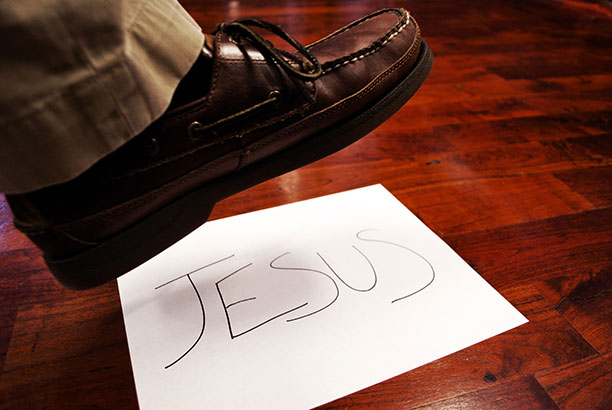
stomp_jesusFlorida Gov. Rick Scott is calling on the state university system chancellor to investigate a classroom lesson at Florida Atlantic University in which students were instructed to stomp on sheets of paper that had “Jesus” written on them.

“As we enter the week memorializing the events of Christ’s passion, this incident gave me great concern over the lessons we are teaching our students,” Scott wrote in the letter to Chancellor Frank Brogan. “The professor’s lesson was offensive, and even intolerant, to Christians and those of all faiths who deserve to be respected as Americans entitled to religious freedom.”

Scott said in his letter that he was “deeply disappointed” by the recent incident in an intercultural communications class taught by Deandre Poole, who also happens to be the vice chair of the Palm Beach Democratic party.

Ryan Rotela, a devout Mormon was in the classroom and refused to obey the instructor’s directions. When he complained, Rotela was banned from the classroom and charged with violating the student code of conduct.

After Rotela retained the legal services of the Liberty Institute, the university had a change of heart – profusely apologizing and promising to clear his record.

Scott said the incident raised questions about “the lessons being taught in our classrooms.” He said he wanted a report on the incident and how it was handled, as well as a statement of the university’s policies to ensure such “lessons” don’t occur again.

State University System spokeswoman Kim Wilmath said officials would work closely with FAU in preparing a response to the governor’s concerns.

“The State University System prides itself not only on its commitment to academic freedom, but at the same time, its awesome responsibility to the people it serves,” she said in a written statement. “We are gratified to know that FAU has apologized for any offense the exercise has caused and has pledged never to use this exercise again. Clearly, there were things the university could have done differently by its own acknowledgement.”

On Tuesday afternoon FAU released a video statement from Charles Brown, the school’s senior vice president of student affairs.

“On behalf of all us here at FAU, we are deeply sorry for any hurt this incident might have caused our students, people in the community and beyond,” Brown said. “As an institution of higher education, we embrace academic freedom. but with that comes a level of responsibility which we did not uphold.”

Brown said the lesson would no longer be used at FAU.

“It was insensitive and deeply hurtful and we are deeply sorry,” he said.

The governor didn’t seem satisfied with the apology, saying it was “in many ways inconsequential to the larger issue of a professor’s poor judgment.”

“Our public higher educational institutions are designed to shape the minds of Florida’s future leaders,” Scott wrote. “We should provide educational leadership that is respectful of religious freedom of all people.”

By Todd Starnes / With reporting from Associated Press

Related posts:

  1. University: ‘Jesus Stomp’ Student Will Not Be Punished
  2. Professor Makes Students “Stomp on Jesus”
  3. University Apologizes for “Stomping Jesus”
  4. University Takes Action to Punish Student
  5. State Investigation Launched After Students Dress in Burqas

Filed Under: All Stories, Elections, Ethics, Religion

The Ghost of Jimmy Carter

March 27, 2013 By Editor Leave a Comment

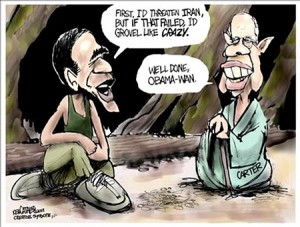
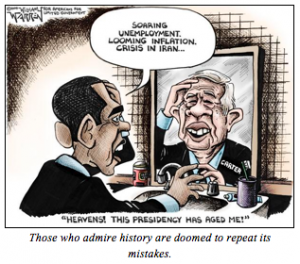
obama-carterPresident Jimmy Carter promised Hope and Change to an America dragged through the mud by a media feeding frenzy during the Nixon Watergate era.

The left got the white house handed to them, along with the congress, and nothing could stop the wholesale implementation of liberal-progressive policies. Anyone who lived during the Carter administration knows that it was a horrific time in American history.

Carter began his presidency by apologizing for American success, and it wasn’t long before Arabs began slapping him around like the whimp he told them he was.

OPEC decided the US was powerless to oppose them, and they immediately began cutting oil supplies and raising prices. Carter’s response was classic Democrat, demonstrating a complete lack of understanding of global free markets–impose price freezes on gasoline in the US. World oil markets naturally sought out the more lucrative markets and we well recall the gas lines stretching for blocks as Americans waited for hours to get their tanks filled, reminiscent of the Depression Era shortages and rationing schemes.
In grand Neville Chamberlain style Carter immediately tried diplomatic talks with the Soviet Union feeling that thrill going up his leg as the Soviets put their signatures on pieces of paper with him. Of course, while agreeing to limit expansion, the USSR invaded Afghanistan behind his back, bitch-slapping the president of the United States in front of the entire world.

Carter also withdrew US support of the Shah of Iran, historically a strong U.S. ally in the Middle East, one of few who recognized Israel as a sovereign state. Without our support the Shah was forced into exile, replaced by a fundamentalist government, hostile to the U.S. Iranian students stormed the US embassy and took 53 Americans hostages, and held them as political prisoners for 444 days. Carter had been paring back the US military and saw his duty as Commander in Chief as unbecoming a Progressive President, and when it was time to send in a military extraction team to get our hostages out, the equipment failed in one of the greatest military blunders in history. The hostages were kept in Iran and paraded before the world media up until President Elect Ronald Reagan sent Iran the message, “Let my people go,” and they were brushed up and sent back immediately.

Carter, the Apologizer in Chief, also gave up US control of the American-built Panama Canal, affording China and other nations greater access to our easier trade routes, further harming US trade superiority. Seeing no deterrence, the Soviets further expanded their influence in the Western Hemisphere by helping leftists overthrow governments in Central and South America.

Democratic economic strategies had our US economy spiraling in a tailspin, with the prime rate at 21 percent, killing business expansion and the housing market. Of course, unemployment skyrocketed under these circumstances.

DOES ANY OF THIS SOUND FAMILIAR?

This writer has always said that American politics has been reduced to this: The Democrats take control of government based on promises of throwing a big party, and the next election the Republicans are called in to clean up the mess.

At what point will America wake up to the reality that the policies of the left don’t work? It’s time to install a conservative government, and to keep a conservative government in place . . . and replace the long-term growth, development and expansion of personal liberty that we enjoyed for the first 100 years. Call me old fashioned.

PUBLIUS

Filed Under: All Stories, Economy, Elections, Entitlement, Ethics, Foreign

Gun Store Cancels Mark Kelly’s Rifle Purchase, Questions His ‘Intent’

March 26, 2013 By Editor Leave a Comment

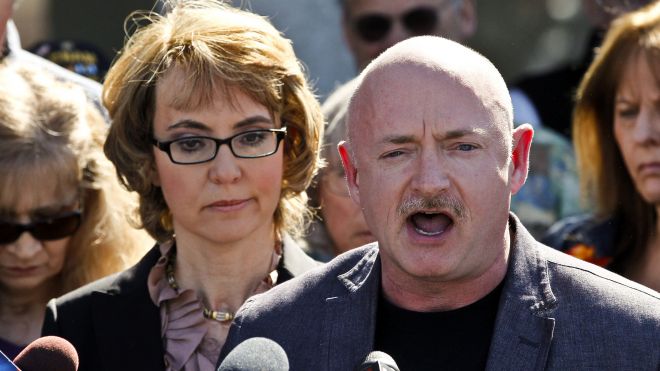
Mark_Kelly_Gun_ControlA Tucson gun store owner has decided to rescind the sale of a military-style rifle to Mark Kelly, the husband of former U.S. Rep. Gabrielle Giffords, after Kelly said he had intended the purchase to make a political point about how easy it is to obtain the kind of firearms he’s lobbying Congress to ban.

Kelly’s March 5 purchase of an AR-15-style rifle and a 45.-caliber handgun at Diamondback Police Supply sparked a frenzy of reaction from both sides of the debate after he posted to Facebook a photo of himself shopping.

A background check took only a matter of minutes to complete, Kelly said in the Facebook post, adding that it’s scary to think people can buy similar guns without background checks at gun shows or on the Internet.

But Kelly couldn’t immediately take possession of the rifle because the shop had bought it from a customer. As a result, the store is required by a Tucson ordinance to hold the gun for 20 days to give the city enough time to make sure the weapon wasn’t used in a crime.

Store owner Doug MacKinlay said Monday in a Facebook post of his own that he “determined that was in my company’s best interest to terminate this transaction prior to his returning to my store.”

“While I support and respect Mark Kelly’s 2nd Amendment rights to purchase, possess, and use firearms in a safe and responsible manner, his recent statements to the media made it clear that his intent in purchasing the Sig Sauer M400 5.56mm rifle from us was for reasons other then for his personal use,” MacKinlay said in the statement.

He added that the store will return Kelly’s money, donate the rifle to the Arizona Tactical Officers Association to be raffled as a fundraiser and make an additional contribution of $1,295 — the value of the rifle — to the Eddie Eagle GunSafe Program.

Kelly’s purchase of the guns sparked accusations of hypocrisy from gun-rights supporters, with many on Facebook focusing on his motivations and the rules for purchasing such guns. Kelly, a former astronaut, said he intended to eventually hand in the rifle to Tucson police but planned to keep the handgun.

Kelly and Giffords started a gun control advocacy group, Americans for Responsible Solutions, amid the wave of recent mass shootings. They have been touring the country in recent months in support of expanded background checks for gun purchases.

Kelly bought the guns at a Tucson shop the day before he appeared with his wife at the supermarket where she was wounded during a shooting rampage that left six dead and 12 others injured two years ago. Giffords resigned from Congress last year as she continues to recover from her injuries.

Published March 25, 2013 / FoxNews.com / The Associated Press contributed to this report.


Filed Under: All Stories, Elections, Ethics

Italy’s Highest Court Orders New Trial for Amanda Knox

March 26, 2013 By Editor Leave a Comment

Amanda-KnoxROME –  Italy’s highest criminal court on Tuesday overturned Amanda Knox’s acquittal in the murder of her British roommate and ordered a new trial, prolonging a case that has become a cause celebre in the United States.

Knox called the decision “painful” but said she was confident that she would be exonerated.

Italian law cannot compel Knox to return for the new trial, and her lawyer said she had no plans to do so. The appellate court hearing the new case could declare her in contempt of court but that carries no additional penalties.

Italy’s Court of Cassation ruled that an appeals court in Florence must re-hear the case against the American student and her former Italian boyfriend for the murder of 21-year-old Meredith Kercher. The exact issues that have to be reconsidered won’t be known until the court releases its full ruling within 90 days.

Knox, now a student at the University of Washington, stayed up until 2 a.m. Seattle time to hear her fate and issued a statement through a family spokesman.

“It was painful to receive the news that the Italian Supreme Court decided to send my case back for revision when the prosecution’s theory of my involvement in Meredith’s murder has been repeatedly revealed to be completely unfounded and unfair,” she said.

Knox said the matter must now be examined by “an objective investigation and a capable prosecution.”

“No matter what happens, my family and I will face this continuing legal battle as we always have, confident in the truth and with our heads held high in the face of wrongful accusations and unreasonable adversity,” Knox said.

Knox, now 25, and Raffaele Sollecito, who turned 29 on Tuesday, were arrested shortly after Kercher’s body was found in a pool of blood in November 2007 in her bedroom. Kercher, whose throat had been slashed, had shared an apartment with Knox and others in Perugia, an Italian university town where the two women were exchange students.

Prosecutors alleged Kercher was the victim of a drug-fueled sex game gone awry. Knox and Sollecito denied wrongdoing and said they weren’t even in the apartment that night, although they acknowledged they had smoked marijuana and their memories were clouded.

An Ivory Coast man, Rudy Guede, was convicted of the murder in a separate proceeding and is serving a 16-year sentence. Knox and Sollecito were also initially convicted of the murder and given long prison sentences, but were then acquitted on appeal and released in 2011.

The high court’s ruling Tuesday overturned the appeals court acquittals.

“She thought the nightmare was over,” Knox attorney Carlo Dalla Vedova said after the decision was released.

The court on Tuesday also upheld a slander conviction against Knox. During a 14-hour police interrogation, Knox had accused a local Perugia pub owner of carrying out the killing. The man was held for two weeks based on her allegations, but was then released for lack of evidence.

Dalla Vedova said Knox wouldn’t come to Italy “for the moment” but would follow the case from home. He said he didn’t think the new appeals trial would begin before early 2014.

It is unclear what would happen if Knox was convicted in a new appeals trial.

“If the court orders another trial, if she is convicted at that trial and if the conviction is upheld by the highest court, then Italy could seek her extradition,” Dalla Vedova said Monday.

It would then be up to the United States to decide if it honors the request. U.S. and Italian authorities could also come to a deal that would keep Knox in the United States.

The appeals court that acquitted Knox and Sollecito in 2011 criticized virtually the entire case mounted by prosecutors. The appellate court noted that the murder weapon was never found, said that DNA tests were faulty and that prosecutors provided no murder motive.

It’s not clear what part of the appeals sentence was faulted by the high court in ordering a new trial.

Kercher’s family attorney, Francesco Maresca, said after Tuesday’s ruling: “Yes, this is what we wanted.”

Sollecito’s attorney, Giulia Bongiorno, noted that Tuesday’s ruling was not a determination of guilt but merely a need for further study of the appeals court ruling.

“It’s a decision that cancels a verdict and orders a retrial,” she said. “I’m not concerned about a deeper reading of the documentation, because I know the documentation.”

She acknowledged that perhaps the appeals court ruling had been “too generous” in ruling that the pair simply did not commit the crime, but was confident that Sollecito’s innocence would be affirmed.

In her statement, Knox took the Perugia prosecutors to task, saying they “must be made to answer” for the discrepancies in the case. She said “my heart goes out to” Kercher’s family.

After nearly four years behind bars in Italy, Knox returned to her hometown of Seattle after the 2011 acquittal and Sollecito resumed his computer science studies, following the degree he earned while studying in prison.

Italy’s judicial system allows for two levels of appeals, and prosecutors can appeal acquittals.

Although the court on Monday heard gruesome details, including how Kercher choked on her own blood, it wasn’t ruling on the guilt or innocence of the defendants. Its sole task was to decide if the appellate trial was properly conducted.

Dalla Vedova had argued Monday that the slander verdict against Knox should be thrown out because she was questioned without a lawyer even though police essentially treated the student as a suspect in their 14-hour interrogation session.

Because of time she served in prison before the appeals-level acquittals, Knox didn’t have to serve time for the slander conviction.

Published March 26, 2013 / Associated Press

Filed Under: All Stories, Foreign, Gender

EU Approves Cyprus Bailout Deal, Funded by Bank Assets Seizure

March 25, 2013 By Editor Leave a Comment

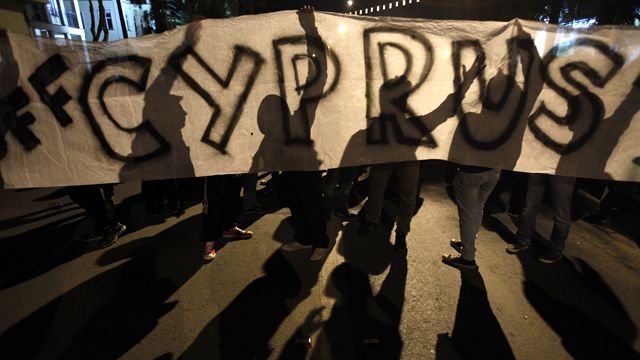
cyprus_2Imagine waking up to find out that as much as 40 percent of the money you thought was safely deposited in the bank was seized, without your permission, to bail out a near-bankrupt government.

That’s just what thousands of large depositors in Cyprus woke up to Monday morning after European Union officials accepted a last-minute deal offered by the island’s lawmakers to secure a $13 billion bailout to avert imminent financial meltdown.

The deal, which also slashed the island’s oversized banking sector, came as euro ministers in Brussels threatened to cut off crucial emergency assistance to Cyprus’ embattled banks after business on Monday if no agreement was reached.

Without that EU funding, Cyprus’ banks would have collapsed, dragging the country’s economy down with them and threatening the small Mediterranean island’s membership of the 17-strong group of European Union countries that use the euro — all of which would have sent the EU’s markets spinning.

“It’s not that we won a battle, but we really have avoided a disastrous exit from the eurozone,” Finance Minister Michalis Sarris said in Brussels.

“This decision is painful for the Cypriot people. This decision was a defeat of solidarity, of social cohesion, which are fundamental freedoms, fundamental principles of the European Union,” Parliament President Yiannakis Omirou told AP.

The deal also angered Russia’s leaders. It is believed that many of the affected large accounts belong to Russian depositers, and Moscow has been a major lender to prop up the Cypriot banking system. It’s been estimated that Russians have more than $31 billion deposited in Cyprus banks.

Dmitry Medvedev reportedly likened the deal to “the stealing of what has already been stolen continues,” the Telegraph reported, a reference to Vladimir Lenin’s explanation of the Bolshevik seizure of capitalists’ assets and property.

Last week Medvedev likened the bank seizure to “a certain period of time by Soviet authorities, who did not stand on ceremony when it came to people’s savings.”

Russian President Vladimir Putin, meanwhile, ordered the government to look into restructuring the terms of a more than $3 billion loan, a move that appeared to please EU ministers.

Cyprus banks, meanwhile, were rationing the amount of money they were dispensing to 100 euros, trying to avert a run on cash from nervous depositers.

Under the deal, Laiki, the country’s second-largest bank, will be restructured, with all bond holders and people with more than 100,000 euros in their accounts facing significant losses. The bank will be dissolved immediately into a bad bank containing its uninsured deposits and toxic assets, with the guaranteed deposits being transferred to the nation’s biggest lender, Bank of Cyprus.

Jeroen Dijsselbloem, who chairs the meetings of the eurozone’s finance ministers, said it was not yet clear how severe the losses would be to Laiki’s large bank deposit holders, but he noted that it is expected to yield 4.2 billion euros overall — or much of the money that Cyprus needed to raise to secure the bailout. Analysts have estimated investors might lose up to 40 percent of their money.

Large deposits with Bank of Cyprus above the insured level will be frozen until it becomes clear whether or to what extent they will also be forced to take losses, the Eurogroup of finance ministers said in a statement.

Without a bailout deal by Monday night, the tiny Mediterranean nation would have faced the prospect of bankruptcy, which could have forced it to become the first country to abandon the euro currency. That would have sent the region’s markets spinning.

The eurozone finance ministers accepted the plan after hours of negotiations in Brussels between Cypriot officials and the so-called troika of creditors.

Markets in Europe reacted positively, opening sharply higher, and the euro was back near $1.30, though the measures are likely to deepen the recession in Cyprus.

“We believe that this will form a lasting, durable and fully financed solution,” said IMF chief Christine Lagarde.

To secure the rescue loan package, the Cypriot government had to find ways to raise 5.8 billion euros ($7.5 billion) on its own. The bulk of that money is now being raised by seizing bank assets from large deposit holders, with the remainder coming from tax increases and privatizations.

The cash-strapped island nation has been shut out of international markets for almost two years. It first applied for a bailout to recapitalize its ailing lenders and keep the government afloat last June, but the political negotiations stalled. After a botched agreement last week, the ECB threatened to cut off emergency assistance to the country’s banks.

“We’ve put an end to the uncertainty that has affected Cyprus and the euro area over the past week,” Dijsselbloem said.

That uncertainty around the nation of about 800,000 had shaken the entire eurozone of 300 million people, even though Cyprus only makes up less than
0.2 percent of the eurozone’s economy.

Several national parliaments in eurozone countries such as Germany must also approve the bailout deal, which might take another few weeks. EU officials said they expect the whole program to be approved by mid-April.

Dijsselbloem defended the creditors’ approach of making deposit holders take heavy losses, saying the measures “will be concentrated where the problems are, in the large banks.”

The international creditors, led by the IMF, were seeking a fundamental restructuring of the country’s outsized financial system, which is worth up to eight times the Cypriot gross domestic product of about 18 billion euros.
They said the country’s business model of attracting foreign investors, among them many Russians, with low taxes and lax financial regulation had backfired and needed to be upended.

The drastic shrinking of the financial sector, the wiping out of wealth through the losses on deposits, the loss of confidence with the recent turmoil and the upcoming austerity measures all mean that Cyprus is facing tough times.

Published March 25, 2013 / FoxNews.com / The Associated Press contributed to this report.

Filed Under: All Stories, Economy, Entitlement, Foreign

Diogo Morgado, Jesus in History’s ‘The Bible,’ Calls Obama Controversy ‘Hilarious’

March 25, 2013 By Editor Leave a Comment

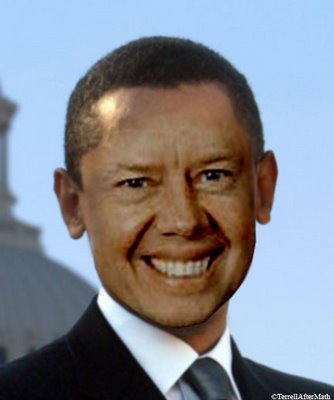
the_bible_jesusThe Portuguese star defends the physical similarity between the actor who plays Satan and the president of the United States.

Although History raised eyebrows for the controversial casting of a President Obama-esque Satan in The Bible mini-series, the actor who plays Jesus calls the situation “hilarious.”

“I don’t think that’s controversial at all, I think that’s so funny,” Diogo Morgado told The Hollywood Reporter. “It’s just funny.”

Mohamen Mehdi Ouazanni, who plays the devil, “did a nice job and it was awesome and never — not even for one second — were we even thinking about that, so I think it’s hilarious,” said Morgado. “At the same time, I think it’s just a sign of how successful the show is” because people are paying attention to “silly things.”

Before Sunday’s installment of The Bible, Ouazanni’s resemblance to Obama was first observed on Twitter by Glenn Beck, instantly sparking headlines about the striking physical similarity between the two.

PHOTO: In History’s ‘The Bible,’ Satan Looks Like President Obama

“This is utter nonsense,” executive producers Mark Burnett and Roma Downey said Monday in a statement, noting that Quazanni “is a highly acclaimed Moroccan actor. He has previously played parts in several biblical epics — including Satanic characters long before Barack Obama was elected as our president.”

The husband-and-wife pair stepped out alongside Morgado on Tuesday night for the opening-night gala for The Bible Experience, an exhibit in downtown Manhattan featuring photography from the mini-series as well as biblical artifacts by way of the Vatican and a giant, two-ton crown of thorns hanging from the ceiling. A spooky Old World ambiance was enhanced by dim lighting, a fog machine and Hans Zimmer‘s musical score in the background as guests wandered through a cavernous space built to seem centuries-old with earthy walls and barely any heat circulating.

“This is a gift to New York City,” mused Burnett of the week-long event, a half-museum/half-marketing gimmick. “I bet [people] would come from California to see this this week. People are gonna come from Canada to see parts of the Dead Sea scrolls.”

When asked about the Obama/Satan flap, the veteran reality TV mogul reiterated that Ouazanni was not cast for his Obama-like visage.

“It’s all about the light,” emphasized Burnett. “Can you ask everyone to tweet Jesus? Because we want everyone to spread the light!”

By Erin Carlson

Filed Under: All Stories, Foreign, Religion

Actor Diogo Morgado Portrays Jesus in ‘The Bible’

March 25, 2013 By Editor Leave a Comment

diogo-morgadoPortuguese actor Diogo Morgado, who plays Jesus in the highly-popular “The Bible” miniseries, recently responded to the recent “Hot Jesus” nickname given to him on social media platforms, saying that although he is flattered, he would prefer to affect someone on a spiritual level.

“I take the [Hot Jesus] nickname as a compliment obviously, but I’m waiting for the good stuff, and the good stuff for me is if someone just nabbed me on the shoulder and said ‘look you did a pretty good job,'” Morgado said in a recent interview with USA Today.

“Something like this more than anything, something like playing Jesus, for me, if only I can have one person go straight to me and say ‘you touched me, and you brought me something I thought I’d lost,’ that would be my best compliment,” Morgado added.

The Portuguese actor’s portrayal of Jesus on the History Channel’s “The Bible” miniseries sparked a wave of Twitter comments with the trending hashtag “HotJesus,” referring to Morgado’s good looks.

The actor, who in spite of his 16 years in television and film was virtually unknown outside of Portugal before his role as Jesus, went on to tell USA Today that he hopes his portrayal of Jesus will bring hope to those living in these “confused times.”

“I think we’re living really confused times. You turn on the news and there’s a lot of violence, but it’s not just violence, it’s getting to the insane point of violence when you don’t have any reasonable explanation for stuff that is happening nowadays. It’s getting to a point that it’s alarming,” Morgado said.

“I think people are just needing for something positive, something that can touch them in a way that can bring them some hope.”

This isn’t the first time Morgado has been complimented for his good looks.

British actor Darwin Shaw, who plays the character of Peter in “The Bible” miniseries, told The Christian Post in a previous interview that along with being a kind person, Morgado is also “incredibly handsome.”

“Diogo is one of the most generous, compassionate and kind actors I have ever met – he’s also incredibly handsome. He’s a great guy. To work with him was a privilege because once we were together, there was already a real chemistry, a real brotherhood, and I hope that is something that comes across on camera,” Shaw told CP.

“The Bible” miniseries, which is produced by Mark Burnett of “Survivor” fame and his wife, Roma Downey from “Touched By An Angel,” has received continuous, record-breaking ratings since its debut on March 3, making it the most watched program in all of television on Sunday nights.

The show will conclude on March 31, Easter Sunday, with a two-hour episode featuring Jesus’ crucifixion and resurrection.

“The Bible” airs on the History Channel at 8 p.m. Eastern Time on Sunday.

By Katherine Weber , Christian Post Reporter

Filed Under: All Stories, Foreign, Religion

US Pastor Imprisoned in Iran Abondoned by Obama

March 22, 2013 By Editor Leave a Comment

Saeed Abedini is seen with his family.The American pastor imprisoned in Iran, in a vivid letter to his wife, described how he was beaten to the point where parts of his face were “swollen three times what they should have been” and was denied medical treatment because he was seen as an “unclean” Christian.

The letter was received by Saeed Abedini’s family this week, though it may have been written weeks ago. The new details come as his family, the attorneys representing them, and several Capitol Hill lawmakers urge the Obama administration to exert more pressure on Iran to release the pastor.In a sign of movement, the U.S. ambassador to the U.N. Human Rights Council on Thursday directly called for Abedini’s release during a meeting in Geneva, which an attorney for the family called the “first pro-active statement by … our administration” in the case.

The letter from Saeed Abedini to his wife Naghmeh described in detail how he’s been mistreated at Iran’s notorious Evin Prison. He described how he saw his face for the first time in the mirror of an elevator.

“I said hi to the person staring back at me because I did not recognize myself,” Abedini wrote. “My hair was shaven, under my eyes were swollen three times what they should have been, my face was swollen, and my beard had grown.”

The pastor explained how, despite his situation, he is trying to focus on “forgiveness.” He said he forgave the “interrogator who beat me” as well as the doctor who “did not give me the medication that I needed.”

Abedini wrote that a nurse would not provide him with treatment because she said “in our religion we are not suppose to touch you, you are unclean.” He wrote that he could not fall to sleep one night because of the pain, as he listened to the sound of “dirty sewer rats with their loud noises and screeches.”

Attorney Jordan Sekulow, though, told Fox News on Friday that he has since received a medical review. Sekulow said Abedini was promised he’d be moved to a hospital outside the prison, though cautioned that the family would have to see that happen to believe it.

Sekulow, meanwhile, drew attention to a statement delivered Thursday in Geneva by Eileen Chamberlain Donahoe, the U.S. representative on the U.N. Human Rights Council.

She said: “Iranian officials continue to restrict these communities’ freedom to practice their religious beliefs free from harassment, threat, or intimidation. Christian pastor Saeed Abedini’s continuing harsh treatment at the hands of Iranian authorities exemplifies this trend.

“We repeat our call for the Government of Iran to release Mr. Abedini, and others who are unjustly imprisoned, and to cease immediately its persecution of all religious minority communities. The United States also repeats its call for the Government of Iran to provide without delay the urgent medical attention Mr. Abedini needs.”

Donahoe came under criticism for neglecting to specifically address the case at a recent meeting in Geneva on Iran’s human rights record. Donahoe instead broadly criticized “the Iranian government’s ceaseless campaign of abuse” against those who dissent. Administration officials had discussed Abedini’s case in public before, but only when questioned about it by reporters and others.

The State Department also declined to provide a witness to testify last week during a Capitol Hill hearing where Naghmeh Abedini spoke.

Rep. Frank Wolf, R-Va., and other lawmakers expressed disappointment at the State Department’s absence. In a letter to Secretary of State John Kerry earlier this week, Wolf and other lawmakers urged him “in the strongest possible terms, to make this case and the broader issue of religious freedom a priority as Secretary of State.”

The wife and her attorneys did meet with State Department officials following last Friday’s hearing in Washington.

Abedini has been held in Iran’s Evin Prison since September of last year and was sentenced to eight years in prison in January — accused of evangelizing and threatening national security.

Naghmeh Abedini met Saeed in 2002 and they married two years later. Both had converted from Islam to Christianity — Saeed became a U.S. citizen in 2010.

The Iranian government does not recognize his American citizenship, though it had enabled him to travel freely between both countries until this past summer, when he was pulled off a bus and placed under house arrest, according to his supporters.

Published March 22, 2013 / FoxNews.com

Filed Under: All Stories, Elections, Ethics, Foreign, Religion

« Previous Page
Next Page »

Federalist Press Dispatch

Get breaking political news, investigations, and uncensored analysis delivered directly to your inbox.

Please wait...

Thank you for subscribing to the Federalist Press Dispatch.

Get free info to help your life

Get free info to help your life

Simple bite-sized guides for life, money, civics, and more . . . because some stuff school just didn’t cover.

Brit Axton Mysteries Series

Brit Axton Mysteries Series

Brit Axton Mysteries is a series of young adult adventure novels that lead young Brit Axton and her friends on whirlwind adventures to uncover hidden secrets and long lost treasures.

Byrna Non-lethal Self Protection

Byrna Non-lethal Self Protection

Byrna offers non-lethal self protection at an affordable price. Watch the short video, or click to learn more!

Understanding Cryptocurrency: Essentials for Building Wealth in Digital Currency

Understanding Cryptocurrency: Essentials for Building Wealth in Digital Currency

Understanding Cryptocurrency serves as a definitive guide for novice investors looking to understand the world of cryptocurrency and harness its potential for financial growth and prosperity.

Real Estate Wealth Strategies During High Inflation

Real Estate Wealth Strategies During High Inflation

Real Estate Wealth Strategies During High Inflation is a comprehensive guide on navigating the real estate market, offering strategies and insights for successful investing, during high inflation and interest rates.

Follow us

  • parler
  • welcome-widgets-menus
  • facebook
  • envato

Privacy Policy

Terms of Service

Economy

If Packing the Supreme Court Is a Good Idea, Why Shouldn’t President Trump Do It?

The Politics of Envy: Why “Tax the Rich” Is an Economic Dead End

When Bill Maher Starts Worrying About Socialism, Democrats Should Pay Attention

Elections

The Fang Fang Files: Democrats Covered Up Eric Swalwell Affair with Chinese Communist Intelligence Officer

If Packing the Supreme Court Is a Good Idea, Why Shouldn’t President Trump Do It?

The Politics of Envy: Why “Tax the Rich” Is an Economic Dead End

Foreign

Sen. Kelly Under Pentagon Review After Revealing Classified Briefing Details to Enemies

Why Is the United States Still Allowing Iran to Threaten the Strait of Hormuz?

May Day in America: A Radical Marxist Tradition Reemerges

Crime

If Packing the Supreme Court Is a Good Idea, Why Shouldn’t President Trump Do It?

When Bill Maher Starts Worrying About Socialism, Democrats Should Pay Attention

Democratic Socialists and Democrats: Is there any Difference?

Science Tech

Peace Through Strength: Trump Forces Iran into Submission

The Climate Scare Revisited: What Happened to the Predictions?

Trump’s Third UFO File Dump Raises the Stakes Again

Reader Responses

  • Linda Livaudais on Trump’s UFO Disclosure Has Changed the Conversation — But Not Yet Answered the Biggest Question
  • T059736 on Trump and Musk Announce Plans to Shut Down USAID
  • C.Josef.D on ‘Pay to Play’ at Clinton Foundation Under Investigation
  • John D Cole on Biden Says ‘You ain’t black’ If You Don’t Vote for Him
  • Ed on U.S. Attorney Huber Moving to Indict Clintons and Others

Copyright © 2026 by Federalist Press · All rights reserved · Website design by RoadRunner CRM · Content Wiriting by GhostWriter · Log in