• Home
  • Mission
  • Federalist Papers
  • Foundation
  • U.S. Constitution
  • Bill of Rights

Federalist Press | Defending Liberty — Informing America

Breaking News and Political Commentary

  • All Stories
  • Economy
  • Elections
  • Entitlement
  • Ethics
  • Foreign
  • Gender
  • Religion
  • Sci-Tech

Paris, Europe, an Islamic Stronghold

March 21, 2013 By Editor Leave a Comment

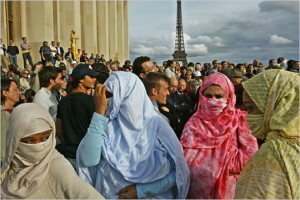
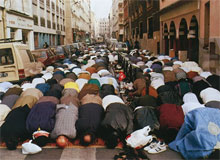
Friday in Paris. A hidden camera shows streets blocked by huge crowds of Muslim worshippers and enforced by a private security force.

This is all illegal in France: the public worship, the blocked streets, and the private security. But the police have been ordered not to intervene.

It shows that even though some in the French government want to get tough with Muslims and ban the burqa, other parts of the French government continue to give Islam a privileged status.

An ordinary French citizen who has been watching the Islamization of Paris decided that the world needed to see what was happening to his city. He used a hidden camera to start posting videos on YouTube. His life has been threatened and so he uses the alias of “Maxime Lepante. ”

Lepante’s View

His camera shows that Muslims “are blocking the streets with barriers. They are praying on the ground. And the inhabitants of this district cannot leave their homes, nor go into their homes during those prayers.”

“The Muslims taking over those streets do not have any authorization. They do not go to the police headquarters, so it’s completely illegal,” he says.

The Muslims in the street have been granted unofficial rights that no Christian group is likely to get under France’s Laicite’, or secularism law.

“It says people have the right to share any belief they want, any religion,” Lepante explained. “But they have to practice at home or in the mosque, synagogues, churches and so on.”

Some say Muslims must pray in the street because they need a larger mosque. But Lepante has observed cars coming from other parts of Paris, and he believes it is a weekly display of growing Muslim power.Muslim_2
“They are coming there to show that they can take over some French streets to show that they can conquer a part of the French territory,” he said.

France’s Islamic Future?

If France faces an Islamic future, a Russian author has already written about it. The novel is called “The Mosque of Notre Dame, 2048,” a bestseller in Russia, not in France.

French publisher Jean Robin said the French media ignored the book because it was politically incorrect.

“Islam is seen as the religion of the poor people, so you can’t say to the poor people, ‘You’re wrong,’ otherwise, you’re a fascist,” Robin explained.

The book lays out a dark future when France has become a Muslim nation, and the famous cathedral has been turned into a mosque.

Whether that plot is farfetched depends on whom you ask. Muslims are said to be no more than 10 percent of the French population, although no one knows for sure because French law prohibits population counts by religion.

But the Muslim birthrate is significantly higher than for the native French. Some Muslim men practice polygamy, with each extra wife having children and collecting a welfare check.

“The problem of Islam is more than a problem of numbers,” said French philosopher Radu Stoenescu, an Islamic expert who debates Muslim leaders on French TV. “The problem is one of principles. It’s an open question. Is Islam an ideology or just a creed?”

“It doesn’t matter how many there are,” he aded. “The problem is the people who follow Islam; they’re somehow in a political party, which has a political agenda, which means basically implementing Sharia and building an Islamic state.”

In Denial or Fed Up

From the 1980s until recently, criticizing or opposing Islam was considered a social taboo, and so the government and media effectively helped Islam spread throughout France.

“We were expecting Islam to adapt to France and it is France adapting to Islam,” Robin said.

About the burqa controversy, one French Muslim man told a reporter that Europeans should respect Muslim dress. One Parisian woman wearing a headscarf said “the veil is in the Koran” and “we only submit to God and nobody else.”

But even if many government elites are in France are in denial over Islam, the people in the streets increasingly are not. Some have become fed up with what they see as the growing Islamization of France.

They’ve started staging pork and wine “aperitifs,” or cocktail parties in the street. They’re patriotic demonstrations meant to strike back against Islam. Another national demonstration is planned for Saturday, Sept. 4.

A Warning to the West

The French parliament debated the burqa law in this year. Jean-Francois Cope, president of the Union for a Popular Movement political party, has a warning for the West and for America.

“We cannot accept the development of such practice because it’s not compatible with the life in a modern society, you see,” he said. “And this question is not only a French question. You will all have to face this challenge. ”

For more insight on the slide toward a post-Christian Western society, check out Dale Hurd’s blog Hurd on the Web.

For more insight on ‘Islamization’ around the world, check out Stakelbeck on Terror.

Reprinted from CBN.com
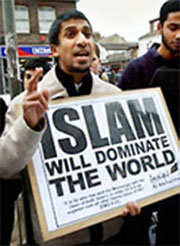
By Dale Hurd, CBN News Sr. Reporter

Filed Under: All Stories, Foreign, Religion

Our Children Forced into Islam?

March 21, 2013 By Editor Leave a Comment

Islam is self-proclaimed to be “the religion of peace,” and in our uncompromising quest for political correctness we deny ourselves the merest observation that “they” may be different from “us” in any measurable respect. Indeed, as Muslims walk the streets of western countries they do so in relative equality, and to the extent they are polite and attempt to blend with the local populations, they are welcomed as fellow citizens of the world, and extended the hand of brotherhood.
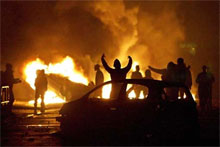
Each of us is free (as of this writing) to see the world from his own view, and we would hope that true bigotry, religious or otherwise, would not be condoned in any civilized society. However, there is a growing elephant in the room, and at some point one of us is going to have to point it out and we will all have to discuss it.

The Federalist Press editors enjoy many connections with friends and associates in Europe, and for years have listened with growing concern as anecdotal stories of increasing troubles with Muslim immigrants have been shared. Political correctness has run completely amok in Europe, and leftist governments and their state controlled media are loathe to admit that Muslim immigrants have gotten the best of them.

Indeed, as Muslim populations swell in Western countries we find certain patterns emerging—patterns which we are beginning to see in the Western hemisphere as well.

As the emphasis on marriage and the traditional family in Western countries has diminished, and the practice of abortion has increased, native local populations have sputtered.

Few seem to understand that the Fertility Rate (FR) of most of Western Europe has fallen below 2.11—the point of sustainability. A rate of 1.8 is considered extremely difficult to recover from, and 1.3 is nearly impossible. At this rate a culture will simply fade to oblivion. As of 2008 these are the Fertility Rates of a few European nations: France-1.8; England-1.6; Greece-1.3; Germany-1.3; Italy-1.2; and Spain-1.1. The average FR in 31 European Union countries is 1.38.

So why is the population of Europe growing so rapidly? Muslim immigration, and Muslim Fertility Rates.

For example, France’s FR of 1.8 is offset by the Muslim FR of 8.1. In fact, the south of France now has more Islamic Mosques than Christian churches. Also, 30% of its children under the age of 21 are Muslims, and the number climbs to 45% in large cities. At these rates, France will be an Islamic Republic within a generation.

In the Netherlands 50% of all newborns are Muslim, and in 10 years the population will approach 50% Muslim. These numbers hold true in Belgium as well.

England, where Muslim men were just discovered to be running sex slavery rings of local white girls, has seen a 30-fold increase in its Muslim population since 1970, and now has over 1,000 mosques.

There is a pattern to Muslim immigration into western countries. First, we see a wholesale drain on social services. In some publicized cases we find Muslim men collecting over $15,000 monthly from state welfare systems, receiving per capita stipends for each of their many children and wives (yes, wives). The social welfare systems of most chic EU members are depleted as a result, adding to the already heavily strained budgets that must pay out large pensions and benefits to union members who retired at young ages.

Then, these “peaceful” Islamic adherents tend to become more demanding and violent as their percentage of population grows in these countries, and leaders and agitators begin to demand “religious rights” (extended privileges and Sharia Law) for Muslims, occupying the streets or rioting and burning in protest.

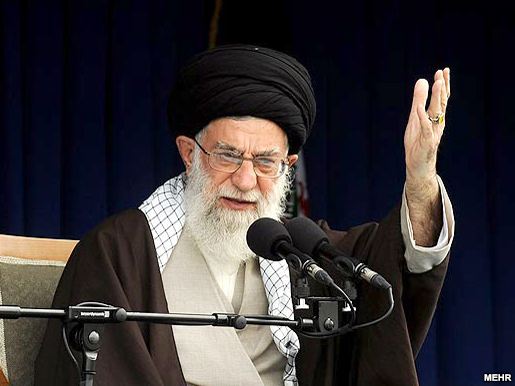

Are western alarmists the only ones who see an imminent takeover of the West?

“There are signs that Allah will grant victory to Islam in Europe without swords, without guns, without conquest. We don’t need terrorists, we don’t need homicide bombers. The fifty-plus million Muslims there will turn it into a Muslim continent within a few decades.” Muammar Gaddafi.

Perhaps Americans can afford complacency, many seem to believe. In fact, Canada, with its FR of 1.6, has had an increase in its population of over 2,000,000 in this past decade. How is that possible? Muslim immigration and FR.

What is America’s FR? It is down to a nearly unrecoverable 1.6. However, with the rapid Latino influx, our combined FR is 2.11—the bare minimum required to sustain a population, albeit a changing one. How about America’s Muslim population, you ask? In 1970 it was 100,000. Since then, it is difficult to tell, because the government doesn’t track them very closely (it’s not PC), but they tell us it is somewhere between a few million and 9,000,000.

Muslims are indeed beginning to become extremely vocal about demanding their “religious rights” in America. Demands for Sharia Law and examples of honor killings are springing up all around us. Liberal PC is enabling the behavior. We have witnessed that if Bill O’Reilly merely mentions on The View that it was Muslims who attacked Americans on 9/11 there is an orchestrated and exaggerated protest exodus of the hosts to enforce their PC speech limits—thus ensuring that no practical discussion occurs about safety or self-preservation.

With the rise of militant Islam in the West, it is time for a serious discussion on the direction we want our nations to take. If we do not make some tough, non-PC decisions soon, our granddaughters will be wearing burkas and will be stoned to death in the streets for whispering the name of Jesus. The current talk of gay marriage will be reduced to public beheadings for homosexuality. This is not speculation, but a mathematical certainty. If we continue at the current rate, Muslims will become the majority populations in all Western countries, and guess how they’ll vote. Violence that invariably attends Islam will be widespread, filling our streets, just as it does every day in countries with majority Muslim populations.

Of course, the liberal sophist will scoff publically at such an assertion; but one day in the streets of a majority Muslim population is all the proof needed to support it.

To those truly peace loving practitioners of Islam who live among us, and who refuse to follow their Eastern leaders into paths of Jihad, Dar-es-Salaam, Sharia, and cleansing violence, we encircle you in arms of brotherhood and welcome you as fellow-citizens. But we are at the point where we need to receive extremely clear declarations of peace and non-violence from any Muslim that seeks a place among us. To blindly pretend that a rogue elephant is not standing in the middle of the room is a foolish and dangerous path.

PUBLIUS

Filed Under: All Stories, Elections, Foreign, Religion

Massachusetts Principal Halts Honors Night – ‘Devastating’ to Other Students

March 21, 2013 By Editor 1 Comment

ipswichA Massachusetts principal has been criticized for canceling his school’s Honors Night, saying it could be ‘devastating’ to the students who worked hard, but fell short of the grades.

MyFoxBoston.com reports that David Fabrizio, principal of Ipswich Middle School, notified parents last week of his plan to eliminate the event.

“The Honors Night, which can be a great sense of pride for the recipients’ families, can also be devastating to a child who has worked extremely hard in a difficult class but who, despite growth, has not been able to maintain a high grade-point average,” Fabrizio penned in his first letter to parents, the station reported.

Fabrizio also said he decided to make the change because academic success can be influenced by the amount of support a student  receives at home and not all students receive the same level of emotional and academic support at home.

Some parents disagree with his philosophy.

“It’s been a tradition in Ipswich, and you’re very proud as a parent to see your child, as well as some of the other children who made, really, some great efforts,” Dave Morin, a parent, told the station.

Fabrizio says he plans to include the honors ceremony with a previously planned end of the year assembly where students will be recognized in front of the entire student body.

Filed Under: All Stories, Entitlement, Ethics

Iran’s Leader Threatens to Level Cities if Israel Attacks

March 21, 2013 By Editor Leave a Comment

iranIran’s leader said in a speech that the country would annihilate the Israeli cities of Tel Aviv and Haifa if it were attacked by Israel, and criticized the U.S. over nuclear talks.

The Supreme Leader Ayatollah Ali Khamenei, who has final say on all key decisions in Iran, says Israel is too small to be called an enemy, and that the United States is the “center of animosity” toward the Islamic republic.

“Sometimes, leaders of the Zionist regime threaten us. They threaten to take military action. They are not in the size to be put in the list of Iranian nation’s enemies,” Khamenei said in comments broadcast live on state TV.

In a strong warning to Israel, Khamenei said that if Israel attacked Iran, the “Islamic Republic will raze Tel Aviv and Haifa to the ground.”

He made the comments on Thursday to a crowd in northeastern Iran on the first day of the new Persian calendar year. His speech in the city of Mashhad was broadcast live on state radio.

Israel, which is believed to have the only nuclear weapons arsenal in the Mideast, has threatened to take military action against Iran if diplomacy fails to stop Iran’s alleged nuclear weapons program.

Iran says its nuclear program is peaceful.

In the speech, Khamenei said he’s not opposed to direct talks with the U.S. to resolve its nuclear standoff with the West.

But he added that he’s not optimistic that such talks would yield results unless Washington stops imposing sanctions against the Islamic Republic.

“The Americans constantly send messages to us through various ways, saying let’s hold (bilateral) talks on the nuclear issue,” Khamenei said. “I’m not optimistic on these talks. Why? Because our previous experiences show that dialogue, in the logic of American gentlemen … means let’s sit down and talk so that you (Iran) accept our views. This is not dialogue. This is imposition and we won’t give in to it.”

Iran is living under stepped-up Western sanctions that include a total oil embargo and banking restrictions that make it increasingly difficult for Iran’s Asian customers to pay for oil deliveries. Iran’s income from oil and gas exports has dropped by about 50 percent as a result of sanctions.

Khamenei said the U.S. has sent messages to Tehran, sometimes in writing, saying it is willing to hold bilateral talks with Tehran separately from the negotiations Iran is holding with five permanent members of the U.N. Security Council plus Germany.

“I’m not optimistic about these talks, but I’m not opposed to it either,” he said.

However, Khamenei said the best way to resolve the standoff would be for the West to recognize Iran’s right to enrich uranium and agree to a monitoring process to ensure that it won’t be used for weapons.

“Iran only wants that the world recognize its enrichment right which is its natural right,” he said.

Khamenei said there is no reason why Tehran should trust the U.S. when Washington doesn’t trust Tehran.

“We have repeatedly told you that we are not after nuclear weapons. You say you don’t believe us. Why should we believe you? When you are not ready to accept an honest and logical remark, why should we accept your words that have been disproved many times?” he asked.

Khamenei alleged that the U.S. wants the nuclear issue to remain unresolved so it will continue to have basis for the sanctions, which he said have harmed, but not crippled the Iranian economy.

“Yes, sanctions have had an effect. If they (U.S.) want to be happy, let them be,” he said.

“Our economy suffers from the problem of being dependent on oil,” he said. “We have to distance our economy (from oil dependence).”

Published March 21, 2013 / FoxNews.com / The Associated Press contributed to this report.

Filed Under: All Stories, Foreign, Religion

Dems Try to Tax Online Sales

March 21, 2013 By Editor Leave a Comment

fair_taxesCurrently in the U.S., state governments are only obligated to collect sales taxes from online retailers that are based in their own states. If an online sales tax bill makes it to law, states could collect from online retailers that don’t reside in their state.

There’s a good chance you’ve heard of the Marketplace Fairness Act (S.336), before. The bill aims to ensure that states receive taxes that they’ve been otherwise missing out on. A similar proposal is up for vote in the Senate this week thanks to an amendment to a Democratic budget resolution from Senators Mike Enzi and Dick Durbin (pictured), who sponsored the bill.

Opponents are slamming the Senators for trying to “sneak” the legislation through. The Hill reports:

Phil Bond, the executive director of the WE R HERE coalition, accused backers of online sales tax measures of trying to “sneak through” their legislation outside regular congressional order.

“There are good reasons this policy hasn’t been considered in the US Senate for over a decade: Taxpayers don’t like it, it turns the Internet into a tax collection platform, it allows state tax collectors to exercise authority far beyond their boundaries and it will put thousands of small businesses out of business,” Bond, a top Commerce Department official under George W. Bush, said in a statement.

The official summary of the Marketplace Fairness Act says:

The Marketplace Fairness Act grants states the authority to compel online and catalog retailers (“remote sellers”), no matter where they are located, to collect sales tax at the time of a transaction – exactly like local retailers are already required to do. However, there is a caveat: States are only granted this authority after they have simplified their sales tax laws.

Simplification is required because of two Supreme Court rulings (Bellas Hess and Quill, described below) cite concern that collecting sales tax for multiple states would be too difficult.

The Marketplace Fairness Act requires that states must simplify their sales tax laws in order to ease those concerns and make multistate sales tax collection easy. Specifically, states seeking collection authority have two options for simplifying their sales tax laws.

Under the Marketplace Fairness Act, states can join others that have already adopted “simplification measures” of the Streamlined Sales and Use Tax Agreement (SSUTA) or they can meet five mandates listed in the bill. States would have to agree to:

  • Notify retailers in advance of any rate changes within the state
  • Designate a single state organization to handle sales tax registrations, filings, and audits
  • Establish a uniform sales tax base for use throughout the state
  • Use destination sourcing to determine sales tax rates for out-of-state purchases (a purchase made by a consumer in California from a retailer in Ohio is taxed at the California rate, and the sales tax collected is remitted to California to fund projects and services there)
  • Provide free software for managing sales tax compliance, and hold retailers harmless for any errors that result from relying on state-provided systems and data

You can take a look at the bill here. Hundreds of national trade associations, state and local trade associations and businesses support the bill. These are listed here. They include Amazon, Autozone, Barnes and Noble, Bed, Bath, & Beyond, Best Buy, Buy.com, Foot Locker, Gap, Home Depot, Kroger, Lowes, Meijer, J.C. Penney, Safeway, Sears, Petsmart, and Walmart, to name a few.

The bill’s site only lists ten opponents, including: eBay, American Catalog Mailers Assocation, Americans For Prosperity, Campaign for Liberty, Center for Freedom and Prosperity, Computer & Communications Industry Association, Competitive Enterprise Institute, Direct Marketing Association, Freedomwworks, Heartland Institute, Heritage Foundation, National Taxpayers Union, NetChoice, R Street, TechNet, and We R Here Coalition.

AT&T, Council on State Taxation, National Cable and Telecommunications Association, National Federation of Independent Business, and Verizon are listed as neutral or undecided.

The main difference between the Marketplace Fairness Act, and what is coming up for vote this week, is that the new proposal doesn’t include the mandatory simplification, and is non-binding, as CNET’s chief political correspondent Declan McCullagh explains.

“It appears to be intended as a clever political hack: secure plenty of votes on a non-binding Internet tax amendment, then use those vote totals to argue there’s sufficient support for S.336 when it’s up for a binding vote later,” he says, before going to quote eBay’s senior director of federal government regulations and global public policy, Brian Bieron:

“The strategy of the bill’s supporters is to offer this general amendment and then claim that all the senators that vote for it support the bill. That is not just a stretch, it is not accurate. But the game plan is to rack up a sizable vote and then make the claim the bill itself should jump over the Finance Committee and go right to the floor.”

Hence the “sneaking” accusations.

Some supporters of the legislation think it’s really just a matter of when, rather than a matter of if, and whatever happens with this week’s vote could have a significant bearing on that.

Either way, brick-and-mortars have ramped up their lobbying for online sales tax, but opponents claim it’s bad for consumers and for small businesses.

Chris Crum – Follow Chris on Twitter, on StumbleUpon, on Pinterest and/or on Google: +Chris Crum.

Filed Under: All Stories, Economy, Entitlement, Ethics

Socialism is Cool (Populist)

March 21, 2013 By Editor 1 Comment

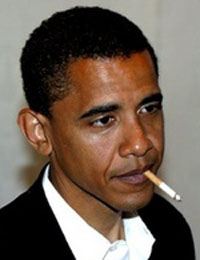
There’s no doubt that Barack Hussein Obama is a populist politician. In many ways he is the every man . . . proving to the masses that indeed, anyone can become the president of the United States of America.
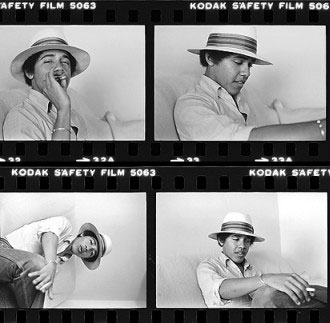
It is a fanciful dream of every American, that each little citizen child can grow up to become the most powerful leader in the world. It is part of our heritage, that no matter how humble the beginnings, or how disadvantaged due to some quirk of life, in this country it is possible to overcome the hurdles and rise to the very top; and in fact, it is true.

In the case of Barack Obama, he was born a minority baby in Hawaii (although he claimed to be born in Kenya when promoting the first of multiple autobiographies) to mixed-race parents (raised by his grandparents), and was saddled with a Muslim name. Although most of his records have been sealed and whisked away to vaults where the vetting process has been declared DOA, he appears to have done well in school at times, and have finished well at ivy league institutions.

Barack Obama appears to have been a fairly common intercity youth, and describes himself as abusing alcohol, marijuana and cocaine, and leaves room to believe there were additional drugs and related activities in the mix.

Obama was a player as a young adult, and describes his out-of-marriage affairs with women of multiple races, although the fact has been recently reported that the identities of these women were mere creations, composites generated for purposes of the books about himself.

Politically, Barack Obama is a Chicago minority street fighter, fitting well into the Democratic machine — “Vote early, vote often!” He describes himself as a “community organizer,” which in retrospect appears to have included an armband of some sort and included duties like registering the Dallas Cowboy Cheerleaders to vote. His politics are those of the ’60s campus radical, as are those of his mentors and appointees. He has exchanged treasury dollars for support and votes in the tradition of his party and as promised, has siphoned trillions of them off to promote his social welfare utopian ideals — most of those dollars ending up in the hands of his cronies. Although this “tax, spend, elect” cycle is short-lived per force, concluding when the treasury is emptied, the tactic often plays well to the electorate, in the short term. That run is about over judging from the 60 percent increase in the national debt in just the first 4 years of Obama’s presidency.

The President has often been seen making the television show circuit, demonstrating to his base that he is indeed the man they were told he was just 4 years ago — before he demonstrated a deaf ear to the citizens of the nation, and turned his tenure into a non-stop vacation cruise around the world.

The President’s White House is reported to be a boy’s club, hostile to working women and focused on sports television programming and drinking beer with other cool guys. The proletariat eats this stuff up.

So is Barack Hussein Obama the coolest president we’ve had in the White House? He’s not the player that Kennedy and Clinton were, and he hasn’t put away as much booze as some of the record holders . . . but all in all, it appears safe to say that he is indeed the most common man that has graced the hallowed sanctum of the people’s house.

Publius

Filed Under: All Stories, Economy, Elections, Entitlement, Ethics

A Failure to Excommunicate

March 20, 2013 By Editor 22 Comments

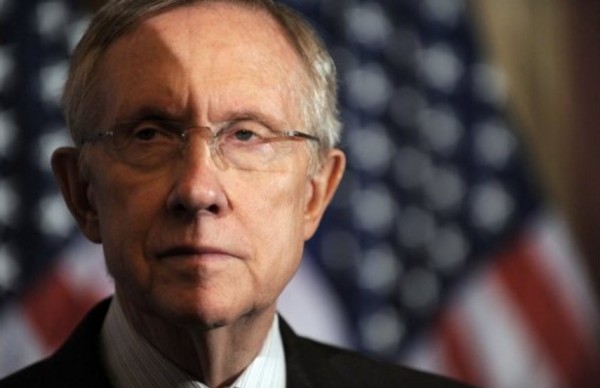
Harry-Reid1Reprinted from May 16, 2012. It shouldn’t surprise many people that most members of the Church of Jesus Christ of Latter-day Saints, commonly referred to as Mormons, are politically conservative. Indeed, LDS Church members believe that the Constitution of the United States is a divinely inspired document, and that adherence to its original meaning constitutes living according to God’s will. Church members adhere to a strict code of morality, which includes not just matters of sex outside of marriage, but extends to personal areas such as how they dress in public, what they view, and even what they ingest into their bodies.

Much whispering behind the scenes has been accumulating because GOP Presidential Nominee Mitt Romney is not only a high profile Mormon, but a very dedicated member and leader of the church. While Romney endures off-mic rumor and innuendo for his membership in the LDS Church, the arguably second most powerful politician in the nation, Senate Majority Leader Harry Reid, receives not an utterance about his lifelong membership in the same church.

What is the difference between Mitt Romney and Harry Reid? Politically speaking, the two couldn’t be further apart on almost every issue. On religious and moral issues, however, some might suggest they are kindred spirits—not most LDS Church members, but others might.

In fact, much of what Harry Reid espouses in his public life is repugnant to LDS-Christian doctrine. High taxes, exorbitant debt, burdensome governmental intrusion and regulation into the lives of citizens, socialistic schemes, anti-family policies, welfare dependence, the funding of anti-Christian arts, organizations and lifestyles are only the tip of a burgeoning and murky iceberg that is growing exponentially beneath the waters of American society under the leadership of Reid and his hard left associates.

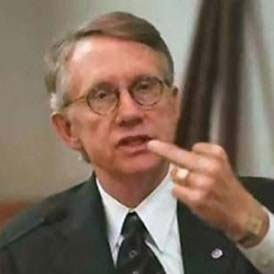
harry_reidSo how does Harry Reid justify his political views and his divergence from the basic tenets of Mormonism? “I don’t believe in abortion,” is his explanation.

That’s it? He doesn’t support abortion in his political life?

I disagree that Harry Reid’s stated opposition to abortion is enough to save him (in a secular or religious way). Like congressmen who attach their pork barrel projects to bills they know will pass without their votes then quietly vote against them so they can claim fiscal responsibility while collecting campaign contributions for success at “bringing home the bacon,” Harry Reid is only fooling himself that he is a good LDS Church member.

There is a reason that most LDS Church members are conservative. It is a question of morality and personal liberty for them. Harry Reid has supported every anti-American, anti-family, anti-decency piece of legislation that has come down the pike. He is responsible for nearly every dollar of the $15.7 trillion debt—and in case he doesn’t understand it, debt robs liberty and creates poverty. Although he personally votes against direct abortion legislation, he supports candidates and elected officials whom he knows will support it—and that’s supporting it.

So what is the real difference between Mitt Romney and Harry Reid regarding their membership in the LDS Church? On the surface, anyway, the difference is that Romney reflects his religious values in his policies while Reid utterly tramples them in his.

For Harry Reid, and all of those who make a pretense of following Judeo-Christian principles while leading our nation, and indeed, the Western world down a path of fiscal and moral destruction, let me share a scripture that you might recognize, and find helpful in your future career.

“I know your works, that you are neither cold nor hot: I would you were cold or hot. So then because you are lukewarm, and neither cold nor hot, I will spew you out of my mouth.” Revelation 3:15-16.

PUBLIUS

Filed Under: All Stories, Economy, Elections, Entitlement, Ethics, Religion

Non-Embryonic Stem Cells Are Curing Disease Now

March 20, 2013 By Editor Leave a Comment

Those who read George Bush’s Decision Points may have been interested to learn that up until the 9/11 attacks the most important issue facing his administration in his opinion was stem cell policy.
The stem cell problem is rooted in the abortion issue. Liberals support embryonic stem cell research because it bolsters their argument that abortion is socially desirable. President Bush echoed the conservative dilemma as he wrestled with the cost/benefits analysis of stem cell research—at what cost would stem cell benefits come?

President Bush wrote that he labored over the issue, holding out hope that adult stem cells (non-embryonic) would become available and the problems inherent in embryonic stem cells would become irrelevant.

According to Roger Nocera, M.D., that day has arrived. In his book Cells That Heal Us From Cradle To Grave: A Quantum Leap in Medical Science (Amazon ebook), Dr. Nocera reveals that useable adult stem cells were discovered in 2003 and have been used to treat serious diseases in clinics around the world since then.

Although Dr. Nocera is a self-described liberal Democrat who supports Roe v. Wade, and admits in the book that the Democrats have been backing the wrong horse on the stem cell issue, because of their misguided devotion to the abortion issue.

The completely naturally occurring adult stem cell discovered in 2003 has been utilized in treatments in offshore clinics—offshore, because stem cell treatment is currently banned by the FDA. This newly discovered adult stem cell is found stored in our own body fat or is left in umbilical cords and thrown out as bio waste.

Many incurable diseases, conditions and injuries are being cured with simple treatments. One of my favorite cases is a middle-aged doctor who needed a heart transplant and would die within a few more months, and was given a simple I.V. with these Healing Cells, and his heart is now as good as new.

This new technology completely vindicates conservatives, and it WILL LOWER HEALTH CARE costs dramatically . . . by cheaply healing serious conditions that currently drag on for years, requiring expensive drugs and medical care.

Publius

Filed Under: All Stories, Economy, Entitlement, Ethics, Sci-Tech

Global Warming, Climate Change, and Big Foot

March 19, 2013 By Editor Leave a Comment

In the 1970s we were told by the media, university professors, Hollywood stars, and NOAA that the earth was slipping into global cooling, the precursor to an imminent ice age. They assured us that it was our own fault – carbon emissions, etc.
When the data just didn’t add up they changed their minds, and stories, and against all logic and acceptable methods of scientific inquiry began to preach the gospel of Global Warming—a religious-like dogma of the left that required strict acceptance of the proposition, regardless of the lack of evidence.

The press, media, and politicos treated us to an incessant barrage of lectures and finger wagging for several years, insisting that global destruction was imminent, and that we had to immediately cut back on Western industrialization and go entirely green if we wanted to survive. Al Gore’s An Inconvenient Truth became the bible of the left, and every social and political consideration came to be filtered through the lens it created. Gore even proffered a petition signed by thousands of “scientists” (most of whom turned out not to be scientists) bolstering his theory. International treaties intended to hand over American sovereignty to international bodies have been waved in our faces and entire economies have been destroyed by the adoption of “green jobs” policies.

Then came Climategate, where it was discovered that climate “scientists” and government employees were actively falsifying data to prove that human activity is causing earth’s weather to change substantially. Why the need to falsify data if it’s true? That has become the trillion dollar question.

We who are impartially considering the data have been disparaged and derided by those who have drunk from the chalice of Climate Change dogma. It is interesting that no one ever asks what our opinion is. In fact, there is a current petition in circulation signed by more than 31,000 real scientists, including more than 9,000 with Ph Ds (we know that because they must certify their degrees on the petition), which certifies:

“We urge the United States government to reject the global warming agreement that was written in Kyoto, Japan in December, 1997, and any other similar proposals. The proposed limits on greenhouse gases would harm the environment, hinder the advance of science and technology, and damage the health and welfare of mankind.

“There is no convincing scientific evidence that human release of carbon dioxide, methane, or other greenhouse gasses is causing or will, in the foreseeable future, cause catastrophic heating of the Earth’s atmosphere and disruption of the Earth’s climate. Moreover, there is substantial scientific evidence that increases in atmospheric carbon dioxide produce many beneficial effects upon the natural plant and animal environments of the Earth.”

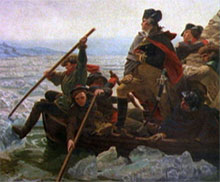
Here is an inconvenient truth for the left. During the early Dark Ages global temperatures were reported to be higher than normal. Then there were the memorable “little ice age” conditions that inundated Europe and North America between 1600 and 1900 with lots of snow and ice. During those centuries witnesses reported that the Thames River in London would freeze so solidly that folks roasted oxen on the ice for months during the winters, and that iceboats could sail down the Hudson River almost as far south as New York City. In fact, the famous December 25, 1776 raid on the British in New Jersey was impeded by a Delaware River choked with ice. (Refer to the famous painting)

When is the last time anyone saw the Delaware choked with ice, or the Thames frozen over? It was over 100 years ago that average temperatures rose to the point that those rivers no longer froze in the winter. Is that due to carbon emissions? Anyone who tells you it is, is just falsifying data.

Publius

Filed Under: All Stories, Economy, Elections, Entitlement, Sci-Tech

Cyprus Lawmakers Reject Bill to Nationalize Bank Deposits

March 19, 2013 By Editor Leave a Comment

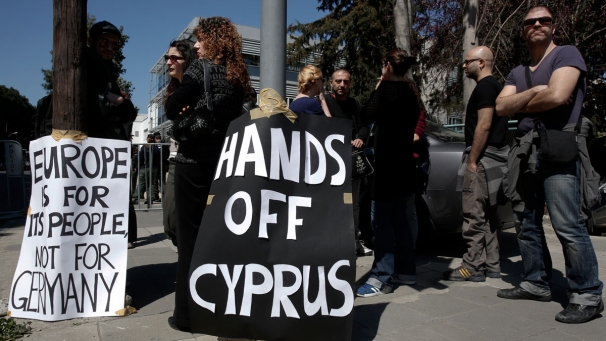
NICOSIA, Cyprus –  Lawmakers in Cyprus rejected a bill Tuesday that aimed to seize part of residents’ bank deposits in order to qualify for an international bailout.

cyprus-bailoutZero lawmakers voted in favor of the bill, and 36 voted against it.

Earlier Tuesday, The government amended its initial proposal to shield small savers from the plan, which aims to raise euro5.8 billion ($7.5 billion) in return for euro10 billion ($12.9 billion) from other eurozone countries and the International Monetary Fund. The total bailout money would go to prop up the country’s banks and public finances.

But even the modification, which will allow those with up to euro20,000 ($25,858) in the bank to escape the confiscation, opposition to the bill remained strong. Four parties and an independent deputy, accounting for 34 of the total 56 seats in Parliament have all said they recommend voting against the bill. The bill needs 29 votes to pass.

With the bill is rejected, Cyprus’ international bailout is now endangered, raising the very real possibility that Cypriot banks could collapse, and the country could face bankruptcy and may even have to leave Europe’s single currency.

Officials have said a “Plan B” should be sought in case the bill is rejected.

Under the amendment, people with between euro20,000 and euro100,000 in the bank would pay a tax of 6.75 percent on their deposits, and those with higher amounts would pay euro9.9 percent. In the initial proposal agreed on in Brussels late Friday, there would have been no exemptions for those with small amounts in the bank.

The plan has been met with fury in Cyprus and has sent jitters across financial markets.

In a heated debate, lawmakers spoke of “raw blackmail” from Europe in forcing Cyprus into the deal, while hundreds of protesters gathered outside Parliament chanting anti-government slogans.

Banks on the island nation will stay shut until Thursday in an effort to prevent a bank run.

In a sign of the scale of disagreement over the deposit charge, the country’s central bank governor, Panicos Demetriades, recommended that no accounts below euro100,000 be touched. That level represents the amount of savings that are supposed to be insured if a bank collapses.

“The credibility of, and trust in the banking sector depends on this,” said Demetriades, who conceded that he expects at least 10 percent of deposits to be withdrawn when the banks eventually re-open.

Failure to pass the bill could mean no bailout money from the eurozone and IMF and lead to Cyprus’s bankruptcy, which could reignite concerns in financial markets over the single currency’s future. That would likely put deposits in the country’s banks under even more threat.

Although Cyprus is the smallest eurozone country to be bailed out, the details of the plan sent shockwaves through the single currency area as it was the first time savers’ banks accounts have been directly targeted. Other bailed out countries such as Greece, Ireland and Portugal have raised funds by imposing new taxes.

Proponents of the deposit seizure argue that this way gets foreigners who have taken advantage of Cyprus’s low-tax regime to share the cost of the bailout of the banks, which have been hit hard by their over-exposure to bad Greek debt.

About a third of all deposits in Cypriot banks are believed to be held by Russians.

Finance Minister Michalis Sarris was flying to Moscow Tuesday afternoon to meet with his Russian counterpart.

Andreas Charalambous, a senior official at the ministry, said the aim is to extend repayment of a euro2.5 billion loan Russia granted Cyprus in late 2011 when the country could no longer borrow from international markets.

He said Cyprus was also looking for “potential interest for further investment in the country.”

Opponents say a blanket charge on people’s bank accounts will hurt ordinary Cypriots more, and could shake the confidence of all in the country’s banking sector. And by going after deposits, European policymakers have set a precedent that could be repeated in the future. The worry of bank runs across Europe lies at the heart of market concerns.

Charalambous said Cypriot authorities believe depositors should be protected, but that a wholesale exemption for those below euro100,000 would mean a “disproportionate” burden on large savers, and a “very detrimental” knock-on effect on economic growth.

“Because of the size of the estimated (bailout) needs, the burden on those above euro100,000 would be such that it would again impact small people because it would destroy the ability of the country to attract foreign investment,” Charalambous said.

In a Monday night teleconference, eurozone finance ministers concluded that small depositors should not be hit as hard as others. They said Cyprus should stagger the seizures more, but insisted that the overall take should stay the same.

President Nicos Anastasiades, who was elected less than a month ago, told German Chancellor Angela Merkel Monday night that “the possibility of reducing the requirements from self-raised funds is being explored,” a Cypriot government spokesman said.

The two leaders were expected to speak again on Tuesday, he added.

Christine Lagarde, the head of the International Monetary Fund which is participating in Cyprus’s bailout, said in Frankfurt that the IMF was “extremely supportive of the Cypriot authorities’ intentions to introduce more progressive rates in the one-off tax.”

Published March 19, 2013 / Associated Press

Filed Under: All Stories, Economy, Entitlement, Foreign

California Businesses Fuming Over Retroactive $120M Tax

March 19, 2013 By Editor Leave a Comment

California’s top-end taxpayers — already steamed over a recent hike in the nation’s highest state income tax — are now fuming over a new $120 million retroactive tax grab on small business owners.

california_taxIn December, the state’s tax authority determined that a tax break claimed over the past few years by 2,500 entrepreneurs and stockholders of California-based small businesses is no longer valid and sent out notices of payment.

“How would you feel if you made a decision, which was made four years ago, (and) you absolutely knew was legally correct and four years later a governing body came in and said, ‘no, it’s not correct, now you owe us a bunch more money. And we’re going to charge you interest on money you didn’t even know you owed’,” Brian Overstreet told Fox News from his office north of San Francisco.

Last year, Overstreet and his fellow investors sold Sagient Research Systems and immediately reported the sale to the California Franchise Tax Board, the state’s version of the IRS. “It was good for the shareholders, it was good for the employees and good for those of us who founded it,” Overstreet said about the sale of the data mining company. “We paid the tax based on the law at the time.”

But the FTB changed its interpretation of the law after a state appeals court ruled unconstitutional a qualifying provision of the break requiring companies to maintain 80 percent of their workforce in California. Instead of asking the legislature for guidance on what to do, the FTB suspended the break in its entirety and ordered anyone who’s claimed it in the last five years to pay up.

“What that translates into is tens of thousands, if not literally hundreds of thousands, of potential jobs,” Overstreet contends.

Overstreet said he’s learned more about the workings of state government in the last two months than he ever knew before and he’s become the point person for others like him who were surprised by the FTB’s decision. “It’s going to cause not only significant financial hardship but real personal stress on a lot of people who shouldn’t be worried about this,” he said. “They did what is right. They paid their taxes. They should be off working away at their next business — instead they’re having to spend their time fighting this stuff.”

Overstreet wouldn’t disclose the exact amount the FTB says he owes but said it was “well into the six figures,” and calls it a sucker punch from the state.

The taxpayers fighting the FTB won an early victory in their fight when the tax board announced a temporary delay in issuing actual bills, technically called Notices of Proposed Assessments. It’s believed the additional time is to allow the state’s political leaders time to figure out a solution.

“Once the revenue is identified, those folks up in Sacramento will figure out how to spend it already,” warns former state Sen. George Runner. “And that’s what makes this so difficult. Even though it has this great bipartisan support as being wrong.”

Earlier this month, lawmakers from both parties introduced legislation that would force the FTB to scrap the retroactive tax bills. “Californians planned and based their actions on the language of the law as it existed,” Democratic Sen. Ted Lieu said in a statement. “Going backward in time and changing the rules innocent taxpayers relied upon violates the very essence of the rule of law.”

Republican Assemblyman Jeff Gorell’s companion bill would prohibit the state from charging interest and penalties in similar situations in the future.

“We want to unwind this poor decision and bring relief to small business owners throughout the state, while also setting prohibitions against this kind of surprise tax increase again for the future.”

What’s not as clear is what Gov. Jerry Brown thinks of the issue. “Quite frankly, we haven’t heard from the governor on this and the governor could solve this,” Runner, a Republican, said. “Ultimately, the legislature can try to fix it, but ultimately the bill still has to end up on the governor’s desk.”

Brook Taylor, a spokesman with the governor’s business development office, told Fox News in an email that the tax credit “provided a real boost to entrepreneurs” and that the court’s ruling was unfortunate.  Taylor added that, “we are reviewing the situation to determine how best to help these business owners given the court’s decision.”

California’s high tax rates, strong environmental regulations and a Democratic lock on many public offices have led some to conclude the state is anti-business. Texas Gov. Rick Perry, among other state executives, has made repeated overtures to the state’s business leaders to relocate. Those criticisms have been regularly rebuffed by Brown and his staff.

During a recent dust-up over a radio ad promoting Texas, Brown reportedly said, “you go where the gold is” and that Perry is “not going to Lubbock, or whatever those places are that make up that state.”

What’s not addressed by the pending legislation is what to do about the future of the tax credit. It’s been around for 20 years to promote job-growth and investment — especially in the computer technology and bio-research industries. “California has always prided itself in the ability to be that incubator for high-tech, for entrepreneurial investment,” Runner said. “And this just goes to the core of that. Undermines our credibility, if you will, on that particular issue.”

Overstreet’s main focus has been on retroactive part of the FTB’s action but he also said if lawmakers allow for the tax break to go away entirely it will have consequences for the state. “As a going-forward problem if entrepreneurs are no longer allowed this kind of incentive, there’s no longer any reason for us to intentionally grow our companies here in California. We are going to take our business to where it is the cheapest and most effective place to hire people.”

By Lee Ross / Published March 19, 2013 / FoxNews.com

Filed Under: All Stories, Economy, Elections, Entitlement, Ethics

Cyprus’ Decision to Seize Bank Deposits

March 19, 2013 By Editor Leave a Comment

PARIS –  Lawmakers in Cyprus are still scrambling for a way to raise €5.8 billion ($7.5 billion) to help pay for an international bailout of the country’s banks and government.

cyprusA plan to seize up to 10 percent of people’s savings has been met with fury and it has raised concern, if not panic, in the rest of Europe about the security of bank deposits in times of financial turmoil.

On Tuesday, Cypriot lawmakers are scheduled to vote a revised plan that would not be so burdensome for people with less than €100,000 in the bank. Any plan must be approved by the other eurozone countries, which would then commit €10 billion in rescue loans to Cyprus.

Banks in Cyprus will remain shut until Thursday to give political leaders time to hash out a deal.

Here’s a look at the plan and the problems it may pose.

HEY, HOW CAN THEY DO THAT?

As a member of the euro currency, Cyprus can to raise or lower taxes whenever it wants. It isn’t the first time that a eurozone nation has raised taxes to cope with mounting debt and to prop up struggling banks. Residents of Greece, Portugal and Ireland — all bailout recipients — have seen their tax bills skyrocket in recent years as those countries tried to reduce their debts. But Cyprus is charting new ground here, and there could be legal — and political — challenges.

AND HOW EXACTLY WILL IT WORK?

Banks have already acted to seal off the amount of the levy — a 6.75 percent tax on deposits under €100,000 and 9.9 percent on those above — so depositors can’t access it. Banks will remain closed until Thursday to avoid a rush of withdrawals while lawmakers finalize the move. They will vote on Tuesday, but some are seeking modifications, mainly to lower the tax rate on deposits under €100,000. To do that, however, they have to raise the rate for the larger depositors, since the overall scheme has to raise a total of €5.8 billion.

HAS THIS EVER HAPPENED BEFORE?

So far in the euro crisis, depositors have been protected. But European countries have taxed bank deposits before. In the 1990s, Italy levied a tax on every bank account to stave off the collapse of its lire currency. The rate, however, was miniscule — 0.06 percent — compared to what Cyprus is enacting. Iceland — another island with an outsized financial sector, although worse weather — also relied on depositors to prop up its banks. When the crisis hit there in 2008, Iceland protected its domestic deposits but reneged on deposit insurance for overseas, Internet-based accounts held by British and Dutch. Those two governments stepped in to help their citizens to the tune of $5 billion. The U.K. and the Netherlands sued Iceland unsuccessfully in a European court to get their money back, but Iceland has nevertheless started to repay some of that money.

European officials are promising this Cyprus is a unique case, and they are right in one aspect: Cypriot banks are overwhelmingly funded by deposits, not bondholders. So it wouldn’t have been very fruitful to go after bondholders.

WHO IS AFFECTED?

All people with money in Cypriot banks — except those with money in Greek branches, which will be sold to Greek banks. EU and IMF creditors clearly wanted to protect struggling Greece, but perhaps also saw that Greece is the most likely place in the eurozone for a bank run. Protecting depositors there minimizes that possibility. Of the more than €68 billion on deposit in Cypriot banks, foreigners hold about 40 percent — and most of those are Russians. Cyprus could have only gone after non-EU depositors, but it may have been hard to distinguish between Cypriot and Russian savers, said Jacob Kirkegaard, senior fellow at the Peterson Institute for International Economics in Washington. That is because many Russians have dual citizenship and many Russian businesses are registered on the island. Kirkegaard said Cypriots may paradoxically welcome this measure since the government just managed to widen its tax base to include a lot of Russians; the taxes levied in Greece, Portugal and Ireland were for residents alone to shoulder.

WHY DID CYPRUS NEED A BAILOUT?

Cyprus built its economy in recent years by becoming a financial center, much the way Ireland and Iceland before it did. Its banks offered Internet accounts to foreigners, were renowned for their service, provided substantial privacy to clients and had very low taxes. It worked so well that Cyprus’ banking industry ballooned to nearly eight times the country’s gross domestic product at the height of the boom. In December, it was still more than seven times Cyprus’ €17.5 billion GDP. Russians — looking for warmer climes, lower tax rates and shared culture in the form of Orthodox Christianity — are thought to hold the majority of those accounts, with about €20 billion in the island’s banks.

But Cyprus’ banks held a lot of Greek debt and suffered significant losses when they took a writedown of those bonds as part of the Greek bailout. Much of Cyprus’ bailout money will be used to recapitalize Cypriot banks to prevent them from collapsing. Like other eurozone countries, Cyprus has also seen its deficit and debt explode as growth has ground to a halt. And with the banking system so large, the government wouldn’t have been able to bail it out even in a healthy economy.

WHY DO RUSSIANS KEEP SO MUCH MONEY IN CYPRUS?

Russian businessmen have preferred to place their savings in offshore jurisdictions, partly to escape political uncertainty and corruption in Russia. Cyprus offers a 10 percent corporate tax rate and relatively stable political situation. Cyprus is also believed to be a top destination for money-laundering. It is much safer for a corrupt Russian official to keep proceeds from illegal activities abroad, hiding information about their fortunes and holdings away from the prying eyes of Russian banking regulators. Russian officials estimated that about $49 billion, which is equivalent to 2.5 percent of Russia’s gross domestic product, was wired to foreign accounts illegally last year.

WHAT HAS THE MARKET REACTION BEEN?

Stock markets and the euro dropped on Monday but not too much. Kirkegaard says that the decision to tap depositors indicates that the European Central Bank is confident that the risk of a bank run elsewhere in the eurozone is low — and by excluding Greek branches of Cypriot banks, they have reduced the possibility even further.

But Heather Conley, director of Europe program for the Center for Strategic and International Studies, says it’s hard to know the far-reaching implications of this one-off deal. The “exceptions” created to solve Europe’s debt crisis are adding up, she said. And some investors may look at this late-night, three-day-weekend deal and see what she saw: a dress rehearsal for a country dropping out of the euro.

___

Published March 19, 2013 / Associated Press / AP Writer Menelaos Hadjicostis contributed to this report from Nicosia, Cyprus.

Filed Under: All Stories, Economy, Elections, Entitlement, Foreign

UN Reopens Talks on NRA-opposed Arms Treaty

March 18, 2013 By Editor Leave a Comment

Negotiators will reconvene this week to try to hammer out a landmark U.N. treaty designed to regulate the multibillion-dollar global arms trade amid objections from a bipartisan group of legislators and the most powerful gun-rights lobbying group in the U.S.

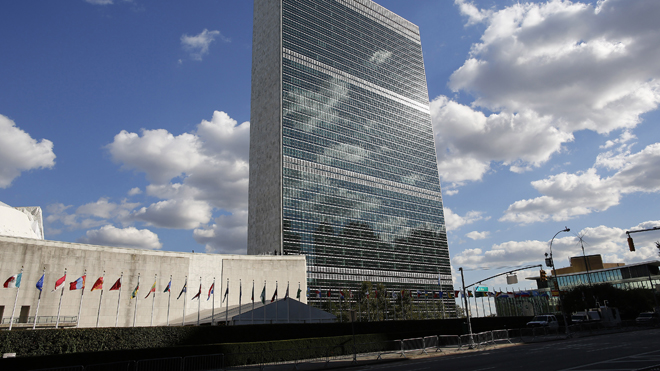
Clouds are reflected off the Secretariat Building of the UN headquarters during the 67th United Nations General Assembly, in New YorkGovernmental representatives will meet in New York starting Monday to try to reach consensus on the Arms Trade Treaty, which would require all countries to establish national regulations to control the transfer of conventional arms and to regulate arms brokers.

The draft treaty under consideration does not control the domestic use of weapons in any country, but it would prohibit states that ratify the treaty from transferring conventional weapons if they would violate arms embargoes or if they would promote acts of genocide, crimes against humanity or war crimes.

In considering whether to authorize the export of arms, the draft says a country must evaluate whether the weapon would be used to violate international human rights or humanitarian laws or be used by terrorists, organized crime or for corrupt practices.

Many countries, including the United States, control arms exports, but there has never been an international treaty regulating the estimated $60 billion global arms trade. For more than a decade, activists and some governments have been pushing for international rules to try to keep illicit weapons out of the hands of terrorists, insurgent fighters and organized crime.

Hopes of reaching agreement on what would be a landmark treaty were dashed last July when the United States said it needed more time to consider the proposed accord — then Russia and China also asked for a delay.

The National Rifle Association has portrayed the treaty as a threat to gun ownership rights enshrined in the U.S. Constitution. The politically controversial issue of gun regulations has re-emerged since a gunman opened fire on Dec. 14 at an elementary school in Newtown, Conn., killing 20 children and six educators.

Last July, the NRA’s CEO Wayne LaPierre told the U.N. that “the NRA wants no part of any treaty that infringes on the precious right of lawful Americans to keep and bear arms.” He added that “any treaty that includes civilian firearms ownership in its scope will be met with the NRA’s greatest force of opposition.”

On Thursday, Rep. Mike Kelly, R-Pa., introduced a bipartisan resolution opposing the treaty, which states the proposal “places free democracies and totalitarian regimes on a basis of equality” and represents a national security threat.

“As the greatest defender of liberty and freedom in the world – and we have been for the last 236 years – why would we ever sit down with bad actors and let them decide what our policy will be going forward? [It is a] bad, bad idea. It doesn’t make sense,” Kelly said at a press conference Thursday.

An identical companion resolution was introduced last week by Sen. Jerry Moran of Kansas, according to Kelly’s office.

Secretary of State John Kerry said in a statement Friday that the United States looks forward to working with other countries to reach consensus on an Arms Trade Treaty “that helps address the adverse effects of the international arms trade on global peace and stability” by helping to stem the illicit flow of weapons across borders.

He stressed that the U.S. will not support a treaty that would be inconsistent with U.S. law and the right of Americans under the Constitution to bear firearms, or a treaty that would impose new requirements on the U.S. domestic trade in firearms and U.S. exporters.

“The United States could only be party to an Arms Trade Treaty that addresses international transfers of conventional arms solely,” Kerry said.

Kerry said that while the international arms trade affects every country, more than 100 nations don’t have a system for controlling international arms transfers.

“We support a treaty that will bring all countries closer to existing international best practices, which we already observe, while preserving national decisions to transfer conventional arms responsibly,” he said.

Kerry said that means responsible nations should have control systems that reduce the risk that conventional arms transfers will be used “to carry out the world’s worst crimes, including those involving terrorism, and serious human rights violations.”

Amnesty International’s Deputy Executive Director Frank Jannuzi said President Barack Obama “must not be cowed or intimidated by the U.S. gun lobby and the NRA.”

Jannuzi added: “The unfettered trade of conventional arms has contributed to the deaths of more than 500,000, the displacement of millions, widespread rape and the recruitment and exploitation of children as soldiers. The global arms trade must be regulated, and the United States — the world’s largest exporter — should lead the way.”

U.N. Secretary-General Ban Ki-moon said he is confident that the U.N.’s 193 member states will overcome their differences during the upcoming negotiations and muster the political will to reach agreement on a treaty. The U.N. chief reiterated his support for a treaty that regulates international transfers of both weapons and ammunition and sets common standards for exporting states.

Kerry’s statement made no mention of the key issue of ammunition.

Jannuzi said the draft treaty in July had a provision that would ban the export of ammunition in cases where a country decided that the export of weapons was prohibited.

Published March 18, 2013 / FoxNews.com /The Associated Press contributed to this report.

Filed Under: All Stories, Elections, Ethics, Foreign

Colorado Sheriff Says New Gun Laws Won’t Be Enforced

March 17, 2013 By Editor Leave a Comment

Weld County Sheriff John Cooke won’t enforce new state gun measures expected to be signed into law by Democratic Gov. John Hickenlooper, arguing the proposed firearms restrictions give a “false sense of security.”

colo_sheriffLawmakers in Colorado on Friday approved a landmark expansion of background checks on firearm purchases. Earlier in the week, Colorado lawmakers approved a 15-round limit on ammunition magazines.

Both measures are awaiting the expected approval of the governor.

Cooke told GreeleyTribune.com that Democrats in the state legislature are uninformed and scrambling in response to the Aurora movie theater shooting and other recent tragedies.

“They’re feel-good, knee-jerk reactions that are unenforceable,” he told the news outlet.

The bill passed Friday expands cases when a $10 criminal background check would be required to legally transfer a gun. Republicans have opposed the bill, calling it an undue burden on law-abiding gun owners.

Cooke said the proposed firearms transfer requirement would not keep guns out of the hands of criminals, according to the GreeleyTribune.com report.

The sheriff told the news outlet that he and other county sheriffs “won’t bother enforcing” the laws because it won’t be possible to keep track of how gun owners are complying with the new requirements.

Cooke is joined in his opposition to the proposals by El Paso County Sheriff Terry Maketa, who told an angry packed crowd at a meeting on Thursday in Colorado Springs he would stand firm against the bills.

“I can’t tell you when those were sold, bought and purchased. As far as I’m concerned, they were all pre-July 1 if the governor does sign this bill,” he said.

Maketa said the proposed laws were hastily crafted and at least one would be unenforceable. A number of Colorado sheriffs are concerned the laws could lead to registration of gun owners, he said.

Maketa said his office keeps records of every concealed carry permit holder in the county as required by law, but he would never share it.

He said he would destroy the database if anyone tried to get their hands on it and would intervene if government agents started arresting county residents for exercising their constitutional rights.

The vice president praised passage of the bill on Friday.

“Congrats to Colorado House and Senate for passing universal background checks,” read a tweet sent by the office of Vice President Joe Biden from his official (at)VP account.

It was followed by another tweet referring to the theater shooting that read, “The families of Aurora deserved a vote and got one. Now U.S. Congress must act too.”

Congress is also considering a number of new firearm restrictions.

Colorado is the first state outside the East Coast to significantly ratchet back gun rights after the theater and school shootings. Colorado’s gun debate was being watched closely because it’s considered a swing state with both a gun-loving frontier past and an unfortunate history of mass shootings, including the 1999 Columbine High School attack.

Expanded checks have been a top priority for Hickenlooper, who called for the proposal during his State of the State address in January.

Both chambers previously approved the expanded checks in slightly different forms. However, both had to agree on an identical bill before passing it to the governor, so a second round of voting was required.

Democrats seemed relieved that Colorado’s protracted gun-control debate was nearing an end.

The GOP unsuccessfully tried some last-minute legislative maneuvers on Friday to sink the background-check measure before it was passed 19-14 by the Senate.

Democrats grew frustrated at GOP attempts to imagine scenarios that would trigger background-checks. From 4-H members learning gun safety but needing to borrow a shotgun, to neighbors on weeklong elk-hunting trips, Republicans argued the bill would ensnare harmless gun users.

Democrats insisted that existing exemptions in the bill would cover most scenarios the GOP imagined. The bill’s sponsor, Senate Democratic Leader Morgan Carroll, told Republicans that Democrats had enough votes to pass the measure but extended debate to make small changes requested by Republicans.

Published March 17, 2013  FoxNews.com / The Associated Press contributed to this report.

Filed Under: All Stories, Elections, Ethics

Senator Claims Benghazi Survivors ‘told to be quiet’ by Administration

March 16, 2013 By Editor Leave a Comment

Republican Sen. Lindsey Graham, in an extensive interview with Fox News, alleged that the injured survivors of the Benghazi terror attack have been “told to be quiet” and feel they can’t come forward to tell their stories — as he urged the House to subpoena the administration for details if necessary.

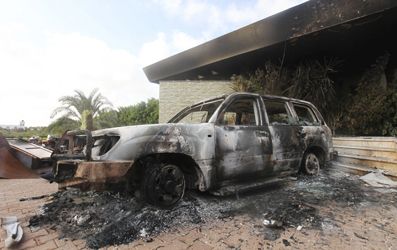
Libya_Consul_DamageThe South Carolina senator said he’s “had contact” with some of the survivors, calling their story “chilling.” He told Fox News that “the bottom line is they feel that they can’t come forth, they’ve been told to be quiet.”
The White House is denying any attempt to exert pressure on the surviving victims.

“I’m sure that the White House is not preventing anyone from speaking,” White House Press Secretary Jay Carney said, when asked about the survivors.

But Graham said he thinks the administration is “trying to cover it up,” citing the valuable information the survivors hold.

“The best evidence of what happened in Benghazi is not a bunch of politicians in Washington trying to cover their political ass,” Graham said. “This is the people who lived through the debacle, and I’m going to do all I can to get them before the Congress and American people.”

He continued: “We cannot let this administration or any other administration get away with hiding from the American people and Congress, people who were there in real time to tell the story.”

Graham continued to voice concern about the inaccurate or incomplete accounts that came from the Obama administration in the days following the attack. He is among a handful of Republican lawmakers pressing for access to and more information about the survivors.

But he had pointed words for the House Republican leadership, as he urged them to issue subpoenas if the administration does not release the names of the survivors.

“To our leadership in the House, you’re gonna have to up your game on Benghazi,” he said.

For his part, Graham vowed to “make life difficult in the Senate” in order to get the information he wants, suggesting that would involve holding up nominations.

“(The public needs) to hear from people who were on the ground, their desperate situation. They need to understand from people who were there for months how bad it was getting and how frustrated they were that nobody would listen to them and provide aid when they were requested,” Graham said. “This is a story of an administration deaf and blind to the reality of what people were living with every day in Libya.”

He said they should be able to “tell their story without fear,” accusing the administration of “hiding from the American people and Congress the primary source of truth in Benghazi – people who lived through it.”

A congressional source tells Fox News that Hill staffers investigating the attack believe about 37 personnel were in Benghazi on behalf of the State Department and CIA on Sept. 11. With the deaths of Ambassador Chris Stevens and three others, about 33 people were evacuated. Of them, a State Department official confirmed there were three diplomatic security agents and one contractor who were injured in the assault — one seriously.

A diplomatic security source told Fox News the State Department diplomatic security agent who was in the most serious condition suffered a severe head injury during the second wave of the attack at the annex.
This agent was described as the likely State Department employee visited at Walter Reed Medical Center by Secretary of State John Kerry in January.

While not denying the details, the State Department official offered no comment on the nature of the injuries or whether the agent was visited by Kerry or Hillary Clinton before she left office.

Leading Republicans in the Senate and House have been calling on the State Department to identify the injured and make them available to congressional investigators. So far, they say their calls have gone unanswered.

Rep. Jason Chaffetz, R-Utah, said the administration has provided “zero” documents on the matter and has not provided names of those attacked.

Rep. Frank Wolf, R-Va., has gathered about 60 signatures in support of a select committee to investigate the Benghazi terrorist attack. Wolf has said the committee is the most thorough and efficient approach to resolving the lingering underlying questions rather than the competing and overlapping committee jurisdictions.

Wolf, along with Rep. Dana Rohrabacher, R-Calif., and leading Senate Republicans Graham, John McCain of Arizona, and Kelly Ayotte of New Hampshire have pressed the State Department for answers.

Published March 15, 2013 / FoxNews.com  / Fox News’ Bret Baier and Catherine Herridge contributed to this report.

Filed Under: All Stories, Elections, Ethics, Foreign

What’s the Problem with a $16.6 Trillion Debt?

March 15, 2013 By Editor Leave a Comment

President Obama and his associates on the left follow the Keynesian theory of economics, the idea that when economies wane, government deficit spending will reignite the flame. To that end the Obama administration has spent trillions of dollars in 4 years, around 40 percent of which has been borrowed, and on which the country is now paying interest.

The national debt stood at $10 trillion when Barack Obama moved into the Oval Office just four short years ago. That nearly incomprehensible amount represented the unbridled deficit spending of generations of left-leaning presidents and congresses—Democratic and Republican.

Today the national debt stands at $16.6 trillion, more than a 60 percent increase in so short a time. If the congress complies with the President’s demands for increased spending, the national debt will exceed $18 trillion by next year.

What’s the problem, you ask?

When Americans turn off the alarm clock and hustle off to work, the first $1.2 billion they generate every day must be siphoned off of the economy just to pay the current interest on the national debt. That amount grows each day as additional money is borrowed to run the government, and as unpaid interest on the debt compounds.

The federal budget is up to $3.8 trillion a year, with multiple stimulus packages filled with crony payoffs and pork barrel spending wasting additional trillions, without any economic return to the American people. The economy is worsening, with real unemployment and underemployment over 15 percent.

Government leaders should have put the country on a fast-track to pay off the national debt 20 years ago . . . and 10 years ago . . . and 3 years ago. Those on the left boisterously proclaim that the only answer is to raise taxes. We challenge the left to demonstrate to the public when raising taxes has ever improved the economy. In fact, it has never happened. It is when taxes are slashed that money is freed up and businesses invest in new jobs, putting people to work and heating up the economy. President Kennedy proved this, as did Ronald Reagan.

Time after time Keynesian economics has failed. So why do our universities still tout it as the model for our own economy? Why are our government leaders drawing all available dollars, current and future, into the abyss of federal spending? How many jobs were created with the shovel ready projects promised by President Obama as he highjacked nearly $900 billion in the first stimulus package?

Debt creates poverty. Ever family knows this. Those who frequent the check cashing-payday loans establishments have learned the hard way that it is a recipe for financial disaster. So when will our government leaders learn the lesson? We recall well as Jimmy Carter addressed the nation and scratched his head in confusion as he explained that he had implemented all of the university approved, liberal orthodox policies, yet the country appeared to be languishing in a “malaise.” These are people that don’t seem to learn from past mistakes. Debt equals poverty. Perhaps this is why Americans are becoming poorer with every passing day.

Publius

Filed Under: All Stories, Economy, Elections, Entitlement, Ethics

Egyptian Christians Describe Torture at the Hands of Libyan Captors

March 15, 2013 By Editor Leave a Comment

A group of Egyptian Christians who were detained in Libya where they had gone for work say they were tortured to the point they wanted to die.

coptsThe Copts, who were swept up last month in a raid on a Benghazi market and held on charges of proselytizing because they had Christian symbols on their stalls, told MidEast Christian News the para-police organization the Ansar el-Sharia forced them to make pro-Islam declarations and insult the late Coptic Pope Shenouda.  The claims came a day after another Copt arrested in the roundup was buried after dying while in Libyan custody. His family says he was tortured, as well.

“I will never forget the torture my colleague, Matta Younan, suffered when he refused to say ‘Pope Shenouda was despicable,’” said Amgad Makar Zaki, 26, who had worked in Libya since 2003. The group of as many as 100 immigrants from neighboring Egypt was held for nearly a month before being deported back home.
Younan’s life was threatened and he was beaten over the head with a stick until a police officer told the torturers to stop.

“From time to time, an Islamic preacher came to tell us about Islam and question our Christian faith and the Bible,” added Zaki. “We constantly heard them shouting ‘Obama, Obama, all of us are Osama’, in reference to al-Qaeda’s late leader Osama bin Laden.”

Zaki told the news service the Libyan Islamists arrested the priest of a Benghazi Christian church, shaving his mustache and torturing him.

Copts, who make up as much as 10 percent of Egypt’s population, have demonstrated against the Muslim Brotherhood government of Mohamed Morsi, saying it did little diplomatically to protect the rights of its Christian citizens who were working in Libya.

“I was deeply affected by the position of the Egyptian embassy,” said Zaki. “Some of us contacted the Egyptian ambassador to intervene and he said he could not do anything.”

Sherif Tawwab Nabil, a 15-year-old student, said his father went to work in Libya so he could provide for his family. The son relayed that while his father was selling clothes on a table in one of the markets in Benghazi, dozens of bearded men attacked the area and arrested Christians after checking their right hands for customary tattoos of the cross.

Atef Nadi Habib, a 33-year-old vendor from Minya, said Copts in Libya face violent oppression never seen during the reign of strongman Col. Muammar Qaddafi, who was ousted in a U.S.-backed revolution in 2011.

“I have worked in Libya for 13 years, and I hold a passport, a residence permit and all my documents are legal,” Habib said. “Conditions were stable, but suddenly the situation changed and Copts began to be subjected to constant threats.”

Habib said the tormentors forced the men to strip and repeat the phrase “Allahu Akbar.” He said the captives repeated the phrase ‘because God is great in all religions.’ But when they were ordered to state the two tenets of Islam – There is no god but Allah and Mohammad is His Messenger, they pronounced the first statement only until they were tortured further and relented.

Published March 15, 2013 / FoxNews.com

Filed Under: All Stories, Ethics, Foreign, Religion

“Fairness” in Taxes and Redistribution

March 15, 2013 By Editor Leave a Comment

As the propaganda press stirs up the occupying proletariat in our nation, and our streets become filled with couch potatoes demanding their fair share of that which has been earned by others, the insanity and impossibility of the scene serves as ample proof that too much weed indeed dulls the human brain’s ability to reason.

The 99 percent demand that they be supported by the 1 percent. They demand that taxation be applied “fairly.”

Indeed, 47 percent of the country pays no federal income taxes whatsoever, and the top 25 percent of earners pay 87 percent of the total burden. The top 1 percent pay 36% of all federal income taxes, while the top 5 percent pay 58%.

In fact, this distribution scheme is unfair, but it is not those who now bear a significantly higher portion of the burden who should be made to shoulder even more of the load.

There is a story that I heard years ago about the fairness of the distribution of tax burdens that I think will be instructive. It’s precise origin is unknown as far as I know, but I would like to give proper credit if I could find the person who developed it.

Suppose that every day ten men go out for beer and the bill for all ten comes to $100. If they paid their bill the way we pay our taxes, it would go something like this:

The first four men (the poorest) would pay nothing.
The fifth would pay $1.
The sixth would pay $3.
The seventh would pay $7.
The eighth would pay $12.
The ninth would pay $18.
The tenth man (the richest) would pay $59.
So, that’s what they decided to do. The ten men drank in the bar every day and seemed quite happy with the arrangement, until one day, the owner threw them a curve. ‘Since you are all such good customers, he said, ‘I’m going to reduce the cost of your daily beer by $20. Drinks for the ten now cost just $80.

The group still wanted to pay their bill the way we pay our taxes so the first four men were unaffected. They would still drink for free. But what about the other six men – the paying customers? How could they divide the $20 windfall so that everyone would get his ‘fair share?’ They realized that $20 divided by six is $3.33. But if they subtracted that from everybody’s share, then the fifth man and the sixth man would each end up being paid to drink his beer. So, the bar owner suggested that it would be fair to reduce each man’s bill by roughly the same amount, and he proceeded to work out the amounts each should pay.

And so:

The fifth man, like the first four, now paid nothing (100% savings).
The sixth now paid $2 instead of $3 (33%savings).
The seventh now pay $5 instead of $7 (28%savings).
The eighth now paid $9 instead of $12 (25% savings).
The ninth now paid $14 instead of $18 (22% savings).
The tenth now paid $49 instead of $59 (16% savings).
Each of the six was better off than before. And the first four continued to drink for free. But once outside the restaurant, the men began to compare their savings.

‘I only got a dollar out of the $20,’declared the sixth man. He pointed to the tenth man,’ but he got $10!’

‘Yeah, that’s right,’ exclaimed the fifth man. ‘I only saved a dollar, too. It’s unfair that he got ten times more than I!’

‘That’s true!!’ shouted the seventh man. ‘Why should he get $10 back when I got only two? The wealthy get all the breaks!’

‘Wait a minute,’ yelled the first four men in unison. ‘We didn’t get anything at all. The system exploits the poor!’

The nine men surrounded the tenth and beat him up.

The next night the tenth man didn’t show up for drinks, so the nine sat down and had beers without him. But when it came time to pay the bill, they discovered something important. They didn’t have enough money between all of them for even half of the bill!

And that, boys and girls, journalists and college professors, is how our tax system works. The people who pay the highest taxes get the most benefit from a tax reduction. Tax them too much, attack them for being wealthy, and they just may not show up anymore. In fact, they might start drinking overseas where the atmosphere is somewhat friendlier.

Publius

Filed Under: All Stories, Economy, Elections, Entitlement, Ethics

State Department Ducks Hearing on American Pastor Imprisoned in Iran

March 15, 2013 By Editor Leave a Comment

The State Department ducked a hearing Friday that will focus on the case of imprisoned American pastor Saeed Abedini, just days after the leading U.S. representative to the U.N. Human Rights Council declined to specifically address the pastor’s case during a meeting on Iran’s human rights record.

pastor_iranRep. Frank Wolf, R-Va., chairman of the Capitol Hill commission holding the hearing, slammed the Obama administration for turning down the invitation to testify.

“It is amazing,” Wolf told FoxNews.com. “I can’t, almost, believe it.”

The hearing, which began Friday morning, focuses on the plight of religious minorities in Iran. Slated to testify are the group representing the Abedini family in the U.S. as well as Abedini’s wife, Naghmeh.

The Tom Lantos Human Rights Commission reached out to the State Department last Friday in a bid to bring in a State Department witness to speak on the lead-off panel.

A Wolf aide said despite repeated attempts they didn’t hear back from the department until Thursday, when the department said no one was available.

Wolf voiced skepticism at the excuse. “The building is loaded with people,” he said of the State Department.

“The very fact that the United States government is not speaking out sends a very powerful message,” Wolf said.

Abedini converted from Islam to Christianity in 2000 and became a U.S. citizen in 2010 after he married his American wife. The Iranian government does not recognize his American citizenship, though it had enabled him to travel freely between both countries until this past summer, when he was pulled off a bus and placed under house arrest, according to his supporters.

The Obama administration has publicly called for Abedini’s release. But Naghmeh Abedini recently told Fox News that she has not received a phone call from President Obama or the secretary of state.

In prepared testimony for Friday’s hearing, she plans to say she is “disappointed” with the U.S. government.

“I am disappointed that our president and our State Department have not fully engaged this case – disappointed that this great country is not doing more to free my husband, a U.S. citizen. We are both proud to be American citizens. And I expect more from our government,” she plans to say.

Jay Sekulow, chief counsel at the American Center for Law and Justice which represents the family of the pastor, called the State Department’s decision not to attend “extremely troubling and offensive to the many who face life-threatening abuse at the hands of the Iranian government.”

“The State Department’s decision to snub this commission cannot be seen as anything less than a wanton disregard to stand up and speak out for those who cannot,” he said in a statement.

The hearing comes after the U.N. Human Rights Council held a meeting in Geneva on Monday that focused on Iran’s human rights record. At that meeting, the European Union delegation specifically called for the release of “prisoners of conscience,” including Abedini and others.

The U.S. representative, though, did not mention Abedini by name. Ambassador Eileen Chamberlain Donahoe instead broadly criticized “the Iranian government’s ceaseless campaign of abuse” against those who dissent.

“We remind the government of Iran their obligation to allow individuals to exercise their rights to freedom of expression and association and to allow individuals and groups to maintain contact and cooperation with the mandates of this Council,” she said.

She also called the findings of a new report by the Special Rapporteur “serious” and “indicative of an ongoing and intensifying crackdown on human rights defenders and civil society actors.”

That report included a section on the Abedini case.

The State Department, when asked why Donahoe did not herself raise the Abedini case, noted that the U.S. delegation focused on that report, “which details the Iranian government’s ceaseless campaign of abuse against all who criticize or oppose it.”

A State Department official also said that in Geneva, “we made pointed reference to a number of our concerns regarding Iran, along with Syria, China, Cuba and North Korea.”

The official said religious freedom is a “top priority” of the administration, and the “White House and State Department have repeatedly and publicly called for Mr. Abedini’s release.”

“We continue to raise Mr. Abedini’s case with a variety of international actors to help raise awareness of his case and secure his release,” the official said.

But Wolf said the decision “not to even show up” at Friday’s hearing betrays what he described as “an inherent bias in the State Department against people of faith.”

Wolf wanted to hear from Suzan Johnson Cook, ambassador-at-large for international religious freedom, or an official in the human rights division. He said he specifically wanted to ask the witness what is being done to secure Abedini’s release.

The Obama administration has addressed his case in the past, when questioned by the press.

State Department spokeswoman Victoria Nuland said on March 7 that the administration is “deeply concerned that the Iranians have not yet granted access to him by our Swiss protecting power” and continues to believe “he should be released immediately.”

She has previously voiced concern about the fairness and transparency of his trial and claimed the administration is “actively engaged” in the case.

White House Press Secretary Jay Carney has said the same, and earlier this year he condemned “Iran’s continued violation of the universal right of freedom or religion.”

Abedini has been held in Iran’s brutal Evin prison since September of last year and was sentenced to eight years in prison in January – accused of evangelizing and threatening national security. The U.N. report said Abedini spent four weeks in solitary confinement and was subjected to tactics like sleep deprivation, after he was arrested in September. The report said he was then transferred to another ward where he was reportedly beaten and initially denied access to medical treatment.

His wife and their two children are in Idaho, though his wife traveled to Washington on Friday for the hearing.

Wolf said he can only assume the State Department’s message to Americans abroad is: “Just don’t get arrested in a foreign country.”

By Judson Berger / Published March 15, 2013 / FoxNews.com

Filed Under: All Stories, Foreign, Religion

Senate Dems Poised to Advance Gun Ban, Seek Obama’s Help in NRA Battle

March 14, 2013 By Editor Leave a Comment

WASHINGTON –  Senate Democrats are poised to pass a renewed and strengthened assault-weapons ban out of committee Thursday as part of a package of measures advancing to the floor, but are appealing to President Obama to help battle opposition from Republicans and gun-rights supporters.

Dianne_FeinsteinThe Senate Judiciary Committee, after advancing bills earlier in the week to enact near-universal background checks and combat gun trafficking, on Thursday morning will take up what is arguably the most controversial measure drafted since the Newtown, Conn., shooting.

Sen. Dianne Feinstein’s effort to revive an assault-weapons ban, as well as a ban on large-capacity magazines, has revived a tense debate over gun rights in Washington and across the country. The panel seemed likely to approve the measure Thursday on a party-line vote. But once it reaches the full Senate — probably in April — the measure faces heavy opposition by Republicans and some moderate Democrats, as well.

Feinstein acknowledged she’d need more backing if it is to stand a chance on the floor — even then, it’s hard to imagine a circumstance where the Republican-controlled House would allow the measure to proceed.

“I’d like to see everybody doing more,” bill sponsor Sen. Dianne Feinstein, D-Calif., said Wednesday when asked if she’d like more assistance from Obama. “Yes, absolutely, we need help. We have the 800-pound gorilla out there” — a reference to the potent National Rifle Association.

Obama made an assault weapons ban part of the gun curbs he proposed in January, a month after a shooter with an assault rifle killed 20 first-graders and six educators at a school in Newtown, Conn. Feinstein and others have argued that such firearms are used in a disproportionate number of mass shootings and shouldn’t be available to civilians.

The prohibition has emerged as one of the most controversial of the gun restrictions being considered in Congress. Foes of barring the weapons say law-abiding citizens should not lose their Second Amendment right to own the weapons, which they say are popular for self-defense, hunting and collecting.

Feinstein’s bill would also ban large-capacity ammunition magazines carrying more than 10 rounds, which she and her allies say allow shooters to inflict more casualties before pausing to reload, which is when they might be stopped. Adam Lanza, the Newtown gunman, was said to have had 30-round magazines.

The measure’s passage by the Judiciary panel has been a foregone conclusion for some time. It will be far more vulnerable in the full Senate, where Democrats are expected to need 60 votes for passage through the 100-member chamber. That is where the NRA and other pro-gun groups are working hard for the ban’s defeat.

“We are focused on the next step of the legislative process,” Chris W. Cox, the NRA’s chief lobbyist, said Wednesday.

There are 53 Democrats plus two independents who generally side with them. Republicans seem ready to oppose the ban overwhelmingly, and Feinstein can’t count on a half-dozen Democrats from Republican-leaning states who face re-election next year.

The ban also stands little chance of approval in the GOP-controlled House.

Feinstein’s bill would ban semi-automatic weapons — guns that fire one round and automatically reload — that can take a detachable magazine and have at least one military feature like a pistol grip.

It specifically bans 157 named weapons. But in an effort to avoid antagonizing those who use them for sports, the measure allows 2,258 rifles and shotguns that are frequently used by hunters.

It also exempts any weapons that are lawfully owned whenever the bill is enacted.

Feinstein was a leader in passage of a 1994 ban on assault weapons and high-capacity magazines. Congress failed to renew it when it expired in 2004.

There are no definitive figures on assault weapons or high-capacity ammunition magazines in the U.S., since there are no government registries of firearms and Congress has curbed federal research on guns since the late 1990s.

When the previous assault weapons ban took effect in 1994, there were an estimated 1.5 million assault weapons and at least 25 million large-capacity magazines that were privately owned in the U.S.

Proponents of banning the weapons cite studies showing that once the assault weapons ban took hold, the portion of gun crimes using those firearms dropped by up to 72 percent in six cities surveyed. They also argue that each assault weapon taken off the streets reduces the potential for mass shootings.

Opponents cite studies showing that assault weapons have been used in fewer than 1 in 10 crimes involving firearms and argue that eliminating those weapons would put only a minor dent in gun violence. High-capacity magazines are involved in up to a quarter of gun crimes.

The Judiciary Committee has already approved three other measures expanding the requirement for background checks for gun buyers; toughening federal laws against illegal gun traffickers and those who purchase weapons for people barred from owning them; and increasing aid for school safety.

The Associated Press contributed to this report.

Filed Under: All Stories, Economy, Elections, Entitlement, Ethics

« Previous Page
Next Page »

Federalist Press Dispatch

Get breaking political news, investigations, and uncensored analysis delivered directly to your inbox.

Please wait...

Thank you for subscribing to the Federalist Press Dispatch.

Get free info to help your life

Get free info to help your life

Simple bite-sized guides for life, money, civics, and more . . . because some stuff school just didn’t cover.

Brit Axton Mysteries Series

Brit Axton Mysteries Series

Brit Axton Mysteries is a series of young adult adventure novels that lead young Brit Axton and her friends on whirlwind adventures to uncover hidden secrets and long lost treasures.

Byrna Non-lethal Self Protection

Byrna Non-lethal Self Protection

Byrna offers non-lethal self protection at an affordable price. Watch the short video, or click to learn more!

Understanding Cryptocurrency: Essentials for Building Wealth in Digital Currency

Understanding Cryptocurrency: Essentials for Building Wealth in Digital Currency

Understanding Cryptocurrency serves as a definitive guide for novice investors looking to understand the world of cryptocurrency and harness its potential for financial growth and prosperity.

Real Estate Wealth Strategies During High Inflation

Real Estate Wealth Strategies During High Inflation

Real Estate Wealth Strategies During High Inflation is a comprehensive guide on navigating the real estate market, offering strategies and insights for successful investing, during high inflation and interest rates.

Follow us

  • parler
  • welcome-widgets-menus
  • facebook
  • envato

Privacy Policy

Terms of Service

Economy

If Packing the Supreme Court Is a Good Idea, Why Shouldn’t President Trump Do It?

The Politics of Envy: Why “Tax the Rich” Is an Economic Dead End

When Bill Maher Starts Worrying About Socialism, Democrats Should Pay Attention

Elections

The Fang Fang Files: Democrats Covered Up Eric Swalwell Affair with Chinese Communist Intelligence Officer

If Packing the Supreme Court Is a Good Idea, Why Shouldn’t President Trump Do It?

The Politics of Envy: Why “Tax the Rich” Is an Economic Dead End

Foreign

Sen. Kelly Under Pentagon Review After Revealing Classified Briefing Details to Enemies

Why Is the United States Still Allowing Iran to Threaten the Strait of Hormuz?

May Day in America: A Radical Marxist Tradition Reemerges

Crime

If Packing the Supreme Court Is a Good Idea, Why Shouldn’t President Trump Do It?

When Bill Maher Starts Worrying About Socialism, Democrats Should Pay Attention

Democratic Socialists and Democrats: Is there any Difference?

Science Tech

Peace Through Strength: Trump Forces Iran into Submission

The Climate Scare Revisited: What Happened to the Predictions?

Trump’s Third UFO File Dump Raises the Stakes Again

Reader Responses

  • Linda Livaudais on Trump’s UFO Disclosure Has Changed the Conversation — But Not Yet Answered the Biggest Question
  • T059736 on Trump and Musk Announce Plans to Shut Down USAID
  • C.Josef.D on ‘Pay to Play’ at Clinton Foundation Under Investigation
  • John D Cole on Biden Says ‘You ain’t black’ If You Don’t Vote for Him
  • Ed on U.S. Attorney Huber Moving to Indict Clintons and Others

Copyright © 2026 by Federalist Press · All rights reserved · Website design by RoadRunner CRM · Content Wiriting by GhostWriter · Log in