• Home
  • Mission
  • Federalist Papers
  • Foundation
  • U.S. Constitution
  • Bill of Rights

Federalist Press | Defending Liberty — Informing America

Breaking News and Political Commentary

  • All Stories
  • Economy
  • Elections
  • Entitlement
  • Ethics
  • Foreign
  • Gender
  • Religion
  • Sci-Tech

ARGENTINE CARDINAL JORGE BERGOGLIO ELECTED POPE, WILL BE KNOWN AS POPE FRANCIS

March 13, 2013 By Editor Leave a Comment

White smoke billowed from the Vatican’s Sistine Chapel Wednesday, indicating the cardinals have selected a new pope after two days of voting.

pope_francis_firstCardinals have elected a successor to Benedict XVI, who stunned the Catholic world last month by becoming the first pope in 600 years to resign. Crowds packing St. Peter’s Square were seen waving flags and were cheering the announcement as bells were ringing.

Chants of “Long live the pope!” arose from the throngs of faithful, many with tears in their eyes. Crowds went wild as the Vatican and Italian military bands marched through the square and up the steps of the basilica, followed by Swiss Guards in silver helmets and full regalia.

The new pope, who has yet to be identified, became the winner after receiving at least 77 votes, which is more than two thirds of the cardinals.

The new pope is expected to appear on the balcony of St. Peter’s Basilica within an hour of the vote, after a church official announces “Habemus Papum” — “We have a pope” — and gives the name of the new pontiff in Latin.

Currently inside St. Peter’s Basilica, the elected cardinal will have been asked “Do you accept your canonical election as Supreme Pontiff?”

After giving his approval, the new pope is then asked which name he would like to be called, and other cardinals will approach him to make acts of homage and obedience.

The new pope will also have to be fitted into new robes, and there will be some time taken for prayer and reflection.

Cardinal Protodeacon Jean-Louis Pierre Tauran, of France, will then step out on the balcony of St. Peter’s Basilica and reveal the pope’s identity to the world.

Elected on the fifth ballot, the new pope was chosen in one of the fastest conclaves in years, remarkable given there was no clear front-runner going into the vote and that the church had been in turmoil following the upheaval unleashed by Pope Benedict XVI’s surprise resignation.

The conclave also played out against revelations of mismanagement, petty bickering, infighting and corruption in the Holy See bureaucracy. Those revelations, exposed by the leaks of papal documents last year, had divided the College of Cardinals into camps seeking a radical reform of the Holy See’s governance and those defending the status quo.

The names mentioned most often as “papabile” — a cardinal who has the stuff of a pope — include Cardinal Angelo Scola, the archbishop of Milan, an intellect in the vein of Benedict but with a more outgoing personality, and Cardinal Marc Ouellet, the Canadian head of the Vatican’s important bishops’ office who is also scholarly but reserved like Benedict.

Brazilian Cardinal Odilo Scherer is liked by the Vatican bureaucracy but not by all of his countrymen. And Cardinal Peter Erdo of Hungary has the backing of European cardinals who have twice elected him as head of the European bishops’ conference.

On the more pastoral side is Cardinal Sean O’Malley of Boston, the favorite of the Italian press, and Cardinal Timothy Dolan, the back-slapping, outgoing archbishop of New York who has admitted himself that his Italian is pretty bad — a drawback for a job that is conducted almost exclusively in the language.

For comparison’s sake, cardinals elected Benedict XVI on the fourth ballot in 2005 — but he was the clear front-runner going into the vote. Pope John Paul II was elected on the eighth ballot in 1978 to become the first non-Italian pope in 455 years.

The Vatican spokesman, the Rev. Federico Lombardi said it was a “good hypothesis” that the new pope would be installed next Tuesday, on the feast of St. Joseph, patron saint of the universal church. The installation Mass is attended by heads of state from around the world, requiring at least a few days’ notice.

Benedict XVI would not attend, he said.

Thousands of people braved a chilly rain on Wednesday morning to watch the 6-foot-high copper chimney on the chapel roof for the smoke signals telling them whether the cardinals had settled on a choice. Nuns recited the rosary, while children splashed in puddles.

The Vatican on Wednesday divulged the secret recipe used: potassium perchlorate, anthracene, which is a derivative of coal tar, and sulfur for the black smoke; potassium chlorate, lactose and a pine resin for the white smoke.

The chemicals were contained in five units of a cartridge that is placed inside the stove of the Sistine Chapel. When activated, the five blocks ignite one after another for about a minute apiece, creating the steady stream of smoke that accompanies the natural smoke from the burned ballot papers.

Despite the great plumes of white and black smoke that poured out of the chimney, neither the Sistine frescoes nor the cardinals inside the chapel suffered any smoke damage, Lombardi said.

The Associated Press contributed to this report.
Filed Under: All Stories, Foreign, Religion

The True Champions of American Blacks

March 13, 2013 By Editor Leave a Comment

Under the British system, a system where the king could do no wrong, and all subjects were essentially his private property, indentured servitude and slavery were common. It is how many young people escaped the class poverty of Europe, by indenturing themselves until the age of 18, or later, then receiving their freedom. Others were indentured to repay family debt. Many of these became successful free citizens under the system, while many never escaped the bonds of servitude. Europeans had developed quite a system of slave trading before the foundations of America, and under the British Empire slaves were tasked with working the vast agricultural holdings of the colonies, including those in the New World.

abraham_lincolnMost of the founders were very hostile to the system of servitude, and although they existed within it, they sought to extinguish it. When the founders declared our liberty from Great Britain, they did so with the intent of retaining the new nation’s faith and credit. Huge holdings were offered as guarantee of repayment of war loans, including vast agricultural empires, which included the slaves that worked them. The slavery question was hotly debated in the forming nation, and it is the one failing of the founders that they were unable to win the day against slavery—due mainly to the collateralization of debt issue—but could only “kick the can down the road,” as our current government does daily.

The intent of the founders was to phase out slavery, but agricultural interests in the southern states resisted all attempts. Finally, the Republican Party was formed and at the peril of national civil war, its candidate, Abraham Lincoln, ran on the platform that slavery must finally be abolished. Over a half million Americans lost their lives in the ensuing conflict, but the issue was officially, if not finally settled. In fact, hundreds of Republican whites and blacks were murdered in the South even after the Civil War, during “Reconstruction.”

Republicans in the 1950s and 1960s attempted to enforce voting and civil rights to the descendants of African slaves emancipated during the Civil War, but they were blocked by the Democrats and Southern state “Dixiecrats,” who blocked passage while they blocked black students from entering Southern universities. Who were these Democrats who filibustered and voted against civil rights and voting rights for blacks? John F. Kennedy, Al Gore, Sr., Lyndon B. Johnson, George Wallace, and Senate Majority Leader Robert Byrd, otherwise known as the Kleagle and Exalted Cyclops in the Ku Klux Klan, to name a few.

It was when “progressives” adopted the charlatan policy that they “adopted” African Americans and other “minorities” as their charges. In the name of the oppressed, the disenfranchised and the downtrodden, most of whom were that way because of the old prejudices of the Southern Democrats or have become that way through the taxation and confiscatory policies of the expanded left leaning US government, “progressives” have created a fatherless and helpless nation of minorities in America. Once all left leaning politicians received the Memo that all things were possible in the name of the downtrodden, those very politicians who had so vehemently opposed voting and civil rights for American minorities suddenly became their “champions.”

The Republican voting and civil rights bills were immediately redubbed Democratic legislation, and were passed, with several new powers being given to the federal government in the deal.  The “Great Society” was born and American blacks instantly went from struggling to get into the middle class to dropping directly into the abyss.  American minorities are well on their way to becoming completely dependent on government handouts, and feel beholden to politicians who keep them on the public dole.

Does every American liberal or moderate set out with these leftist results as their goal? No. They are fooled by their leadership, who have their own secret agenda, as recently lamented by Bob Beckel, Liberal Commentator:

“We liberals made a terrible mistake, going back 30 years ago.  We made a dependent society because we thought we were doing the right thing.  We had things like public housing, and we had welfare payments, and all that bred dependence.”

African-Americans would do well to return their support to those who have their collective well-being and personal liberty at heart.

Publius

Filed Under: All Stories, Economy, Elections, Entitlement, Ethics

The $6 Trillion Lie

March 13, 2013 By Editor Leave a Comment

We observed a brief exchange in social media between a liberal and conservative, based on a quote posted by the liberal: “A nation that continues year after year to spend more money on military defense than on programs of social uplift is approaching spiritual death.” Martin Luther King, Jr.

The implication is the same always proffered by the left–that government wastes its revenues on defense spending at the expense of social programs, and should reduce spending on defense and increase spending on social programs.

The argument, on its surface, is one that causes the good-hearted to stop and reflect. Certainly, we all want to assist those in dire circumstances, and as a society we have made a social pact to protect those who have fallen from a secure position in life. We seek to lift up the weak, and to champion the oppressed.

But is it true that we spend more on defense than on social uplift?

As we look at the question, we must first ask ourselves, what is the role of government? For instance, is it the duty of the San Francisco city government to provide aircraft carriers in the Pacific Ocean? We all know it is not. But why is it not? Because different levels of government have different duties to their citizens. With all levels of government working together to provide for the needs of their citizens, so the theory goes, all needs are covered.

So, starting at the top, what is the duty of the federal government to its citizens? The constitution mandates that the federal government be delegated certain duties by the states and their citizens, duties, like national military defense, that cannot be provided by state or local governments very well. Those duties, and powers to fulfill them, are limited by the constitution. These limited powers enable it to provide for the common defense, free the flow of commerce, coin money, establish weights and measures, provide for immigration, bankruptcies, postal services, patents and copyrights, declare wars, establish a Navy and Army, and to establish duties, imposts and excises to pay for the national government’s activities. That’s it.

So if the federal government has no constitutional delegation to provide schools, hospitals or firefighters, how do we get those? We get them from state and local governments. In fact, at the state and local level we find almost all “social uplift” programs. Do states, counties and cities have to provide social uplift programs? No. Do they choose to? Yes.

So how much money do all levels of government spend each year to pay for all levels of government and the services they provide? Here is what we will be spending in the next year:

Federal Gross Spending $3.8 trillion
Intergovernmental $-0.7 trillion
State Direct Spending $1.6 trillion
Local Direct Spending $1.7 trillion
Total Spending $6.4 trillion

Armed with this information we can now make some simple comparisons. For instance–How much is the defense budget? It is $830 billion, or $0.83 trillion. As anyone can see, defense is only 14% of total spending. But how does defense spending stack up to educational spending? In this same time frame we will spend approximately the same amount on each (see our article of June 11, 2012, NEA Report Card: F).

So if America spends around 14% of its annual taxes on defense, and a like amount on education, where does the remaining 72% go? It goes to healthcare ($1.1 trillion), welfare ($0.8 trillion), public employee pensions ($1.1 trillion), etc.

Those on the left have created a myth of government spending that they share among themselves that says that most taxes go to defense spending (which actually pays for the employment of millions of Americans), and social programs get the leftover crumbs. In fact, it is not true at all–it is quite the opposite.

All of those $ trillions are up for grabs to an array of government employee unions, special interests, and administration cronies and contributors, and are funding all manner of social and anti-social programs and movements. This is why Mitt Romney, noting that the federal government borrows 40% of its budget every year (to be paid by a future generation), indicated in the first presidential debate that government spending must be pared back to essentials until the economy returns to full employment.

With all of those fingers in the $6.4 trillion pie (which does not include unfunded obligations), it may be a little difficult for statesmen to serve the American people without offending a few hogs at the trough.

PUBLIUS

Filed Under: All Stories, Economy, Elections, Entitlement, Ethics

Former Administration Insider Skewers Obama National Security Team

March 13, 2013 By Editor Leave a Comment

An administration riven with infighting. A commander-in-chief given to “dithering” on critical wartime decisions. A suspicious and devious White House staff erecting a “Berlin Wall” around a secluded and standoffish president, shielding him from those advisers — particularly at the Department of State — willing to convey unpleasant truths.

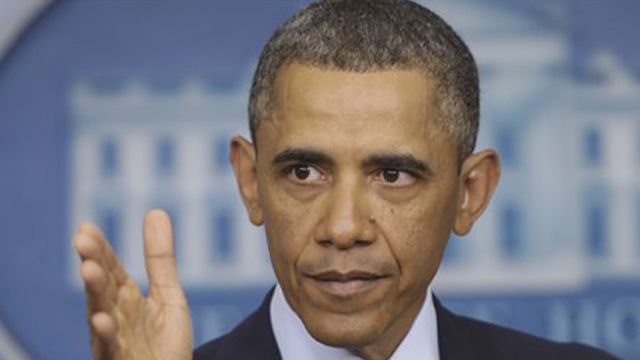
barack_obamaIt all sounds rather like the sensational literature that proliferated in the mid-to-late 1970s to chronicle the collapsed presidency of Richard Nixon — including the description of a White House “Berlin Wall,” originally applied, with great fanfare, to those much-maligned (and eventually imprisoned) Nixon aides H.R. Haldeman and John Ehrlichman.

Instead, it is President Obama’s turn to watch as former aides and journalists rush into print — with a warp speed that eluded the insider memoirists of the 1970s — their detailed and dishy accounts of the first Obama term.

A forthcoming book by former foreign policy aide Vali Nasr paints the above portrait, describing a president whose decisions “from start to finish were guided by politics.”

Nasr was a rising academic star, one of the leading scholarly voices on Iran and the Mideast, when the late Richard Holbrooke tapped him, at the dawn of the Obama administration, to join Holbrooke at a newly created office of the State Department: SRAP, short for Special Representative for Afghanistan and Pakistan.

‘The president had a truly disturbing habit of funneling major foreign-policy decisions through a small cabal of relatively inexperienced White House advisors whose turf was strictly politics.’   – Vali Nasr, former foreign policy aide

The voluble, outsized Holbrooke, one of the most celebrated diplomats of his age, always on the short list to become secretary of state but never chosen for the job, was expected to bring his formidable talents — and ego — to bear on the problem of integrating more fully the often contradictory policies applied to the two nations so central to U.S. counterterrorism and national security.

But by the time he died from a ruptured aorta, in December 2010, Holbrooke had been systematically marginalized by the Obama White House, Vasr writes. Due out next month, Vasr’s book “The Dispensable Nation: American Foreign Policy in Retreat” (Doubleday) depicts Holbrooke and his boss, Secretary of State Hillary Clinton, waging an often unsuccessful battle to pierce the “Berlin Wall” and present their views to the president. The book charges that White House aides used targeted leaks and other means to “undermine” Holbrooke — and worked hard to cut Clinton out of critical policymaking, too.

“Those in Obama’s inner circle, veterans of his election campaign, were suspicious of Clinton,” Nasr writes in an excerpt published on ForeignPolicy.com. “Even after Clinton proved she was a team player, they remained concerned about her popularity and feared that she could overshadow the president. … Had it not been for Clinton’s tenacity and the respect she commanded, the State Department would have had no influence on policymaking whatsoever.”

State Department spokesmen pushed back hard against Nasr’s charges. “We have an excellent working relationship with our White House and interagency colleagues,” Patrick Ventrell told reporters at the March 4 press briefing. “So we really stand behind the record of the progress we’ve made in Afghanistan.”

Ventrell’s boss, spokeswoman Victoria Nuland, said at the March 8 briefing that she “would reject … completely” the notion that Holbrooke had been sidelined by the National Security Council. “If you know Richard Holbrooke at all,” she told reporters, “you know that he was a formidable force in that job, as he had been in all previous jobs.”

Perhaps most arresting, however, is Nasr’s portrayal of President Obama. The commander-in-chief is depicted here as “dithering” on key Afghan war decisions, tasking national security aides with the same questions, rephrased in minor ways, over and over. Nasr also casts Obama as quick to abandon foreign policy promises made on the campaign trail and too reliant on individuals unqualified to weigh in on foreign policy.

“The president had a truly disturbing habit,” Nasr writes, “of funneling major foreign-policy decisions through a small cabal of relatively inexperienced White House advisers whose turf was strictly politics. … His actions from start to finish were guided by politics. … It was no surprise that our AfPak policy took one step forward and two steps back.”

Donald Camp, a retired Foreign Service officer who served under three presidents, worked on AfPak policy as both the principal deputy assistant secretary of state for South and Central Asia and as senior director for that region on the Obama National Security Council. Camp told Fox News that the excerpts from Nasr’s book appear to show that the author was perhaps unduly colored by the experiences of his boss, Holbrooke.

“President Obama is very much — was very much involved in those days in making Afghanistan and Pakistan policy,” Camp said in an interview this month. “And I believe that he sought out all views; and there were differing views in the interagency (process), and he made the final decision.”

Camp took specific issue with Nasr’s allegation that then-National Security Adviser Gen. James Jones improperly offered Pakistan a civilian nuclear deal, similar to the kind that the U.S. negotiated with India over several years, in exchange for Islamabad escalating its counter-terrorism efforts. Camp said he traveled with Jones to Islamabad, and that the general knew better than to imagine such a deal could pass muster with the U.S. Congress. “It was just not in the cards,” Camp told Fox News, “and James Jones would not have made that kind of proposal.”

Jones did not respond to requests for comment.

By James Rosen / Published March 12, 2013 / FoxNews.com

Filed Under: All Stories, Elections, Ethics, Foreign

Former Rep. Giffords’ Husband’s Purchase of Rifle Draws Online Criticism

March 13, 2013 By Editor Leave a Comment

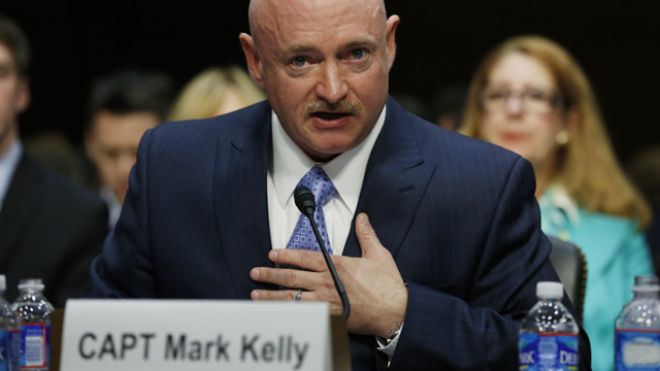
PHOENIX –  The husband of former U.S. Rep. Gabrielle Giffords generated nearly 4,000 comments on Facebook from people on both sides of the gun debate after he posted a photo of himself buying a military-style rifle — a purchase he made to demonstrate how easy it is to obtain the kind of firearms he’s lobbying Congress to ban.

Mark_KellyA background check took only a matter of minutes to complete, Mark Kelly said in the Facebook post, adding that it’s scary to think people can buy similar guns without background checks at gun shows or on the Internet.

It didn’t take long for gun-rights supporters to accuse Kelly of being a hypocrite for buying an AR-15-style rifle and a 45.-caliber handgun. Many of the Facebook comments focused on his motivations and the rules for purchasing such guns.

Kelly and Giffords started a gun control advocacy group, Americans for Responsible Solutions, amid the wave of recent mass shootings. They have been touring the country in recent months in support of expanded background checks for gun purchases.

Kelly bought the guns at a Tucson shop the day before he appeared with his wife at the supermarket where she was wounded during a shooting rampage that left six dead and 12 others injured two years ago.

The public event last week was the first time the survivors had come together since the January 2011 shooting.

Giffords resigned from Congress last year as she continues to recover from her injuries.

The AR-15 is among 157 military-style weapons that would be banned under a bill pending before the U.S. Senate Judiciary Committee. Kelly, a former astronaut, said he intends to eventually hand in the rifle to Tucson police.

Doug MacKinlay is the owner of Diamondback Police Supply, the shop where Kelly bought the guns. He said Kelly bought the rifle on March 5 but couldn’t immediately take possession of it because the shop had bought it from a customer. As a result, the store is required by a Tucson ordinance to hold the gun for 20 days to give the city enough time to make sure the weapon wasn’t used in a crime, MacKinlay said.

MacKinlay said Kelly never revealed to the store’s staff why he was buying the guns and added that it would be wrong to refuse to sell a gun to someone because of their personal views.

“He is a U.S. citizen, an Arizona citizen and expressing his Second Amendment right to purchase and own a firearm,” MacKinlay said.

Todd Rathner, a lobbyist for the National Rifle Association’s affiliate in Arizona and a national NRA board member, questioned the point that Kelly was trying to make in buying the guns, saying a model citizen such as Kelly should be able to buy a gun relatively quickly. He also noted that such a purchase could have been a good investment as the value of those types of weapon soars amid heightened demand from gun owners.

“If you believe him, it’s a cheap publicity stunt,” Rathner said. “If you don’t, then he was speculating on the value of the rifle because he knew the prices would be inflated.”

The advocacy group started by Giffords and Kelly had no immediate comment Tuesday on Kelly’s gun buys.

But the group released a statement from Kelly on the Senate Judiciary Committee’s approval Tuesday of a proposal to expand federal firearms background checks to nearly all gun purchases. Kelly said the 10-8 vote was a huge step in keeping guns out of the hands of criminals and mentally ill people. Kelly’s statement didn’t address the controversy over his own gun buys.

Kelly, a former astronaut who plans to keep the handgun, told CNN on Monday that it was important for him to have firsthand information on the ease of buying guns such as the AR-15 and that he looks forward to buying a firearm at a gun show in the future. Kelly and Giffords have long been supporters of gun rights and owned handguns themselves.

Published March 13, 2013 / Associated Press

Filed Under: All Stories, Elections, Ethics

House Republican Plan Aims to Balance Budget in 10 Years, Without Tax Hikes

March 12, 2013 By Editor Leave a Comment

House Republicans unveiled an ambitious cost-cutting plan Tuesday that would balance the budget in 10 years without raising taxes, while repealing ObamaCare and overhauling entitlements — a document Democrats are sure to reject but could be used as a negotiating tool in talks with President Obama.

paul_ryanRep. Paul Ryan, R-Wis., chairman of the House Budget Committee, is sticking by controversial proposals, including one to give future Medicare retirees the option of using government payments for private health care plans.

The plan warns of a looming debt crisis, and endeavors to pay off the debt by 2050.

“It’s not too late,” the plan says. “This budget provides an exit ramp from the current mess.”

Democrats preemptively panned Ryan’s spending plan, with House Democratic Whip Steny Hoyer, D-Md., saying it relies on “spurious budget trickery.”

“His past budgets have included lofty rhetoric about deficit savings, but very few actual details of how those savings are found,” Hoyer said in an op-ed in Politico.

Senate Democrats promise to offer a counterproposal on Wednesday with higher spending on domestic programs and additional tax hikes on top of the higher rates imposed on top-bracket earners in January. It will, in turn, arrive as a dead letter in the GOP-controlled House.

But this year’s dueling GOP and Democratic budget proposals are more about defining political differences than submitting a plan that can pass Congress unchanged.

The exercise comes even as President Obama was to travel to Capitol Hill on Tuesday to meet with Senate Democrats in an attempt to resuscitate his failed efforts for bipartisanship.

Ryan, who became a national GOP figure as the losing vice presidential nominee last year, has for now settled back into his wonkish role as Budget Committee chairman and chief tutor for dozens of relatively junior Republicans. His budget helps to undergird Republican claims that the government does not need to raise taxes in order to bring down the deficit.

The plan would achieve $4.6 trillion in deficit reduction over 10 years. It also aims to simplify the tax code, consolidating the seven income-tax brackets into two, with a top rate of 25 percent.

“We’re introducing a budget that balances in 10 years — without raising taxes,” Ryan said in an op-ed in The Wall Street Journal. “How do we do it? We stop spending money the government doesn’t have.” All told, Ryan’s plan would slash $4.6 trillion in spending over the coming decade.

“On the current path, we’ll spend $46 trillion over the next 10 years. Under our proposal, we’ll spend $41 trillion,” Ryan said. “On the current path, spending will increase by 5 percent each year. Under our proposal, it will increase by 3.4 percent.”

The plan calls for a 10 percent reduction in the federal workforce by 2015, as well as changes to give states more flexibility on Medicaid, the health care program for low-income Americans. It would also repeal the federal health care overhaul, particularly targeting the expansion of Medicaid and government subsidies meant to help millions buy private insurance.

The House Budget Committee has scheduled a vote on the soon-to-be-released measure Wednesday, and the Senate Budget panel is slated to vote Thursday on rival legislation by new Budget Committee Chairwoman Patty Murray, D-Wash., who promises new tax revenues but few cuts from domestic programs like Medicare and Medicaid.

“We are working toward fair and balanced, which is what the American public has said time and time again that they want,” Murray said. “We need to make sure that everybody participates in getting us to a budget that deals with our debt and our deficit responsibly.”

For his part, Ryan has resurrected a controversial Medicare proposal that replaces traditional Medicare for those currently under 55 with a government subsidy to buy health insurance on the open market. Critics of the plan say the subsidies won’t grow with inflation fast enough and would shove thousands of dollars in higher premiums onto seniors before very long.

The House GOP plan again proposes sharp cuts to Medicaid, tighter food stamp eligibility rules and more than $1 trillion in savings over a decade by repealing Obama’s signature overhaul of the U.S. health care system. It seeks to preserve the Pentagon budget, but only at the expense of proposing domestic agency budgets that may prove too low for GOP moderates and the pragmatists atop the Appropriations Committee responsible for guiding them into law.

Even as it proposes repealing ObamaCare, the Ryan plan banks more than $700 billion in the health care law’s cuts to Medicare providers over a decade — just as more than $600 billion in tax hikes on the wealthy enacted in January make it easier for Ryan’s budget to predict balance.

At the White House, Press Secretary Jay Carney was asked about Obama’s failure to submit a budget on time.

“The president has always believed that deficit reduction is not a goal unto itself,” Carney said. “The proposals he’s put forward keep the No. 1 objective in mind, which is economic growth and job creation, not deficit reduction solely for the purpose of reducing the deficit.”

As the two sides battle over future-year budgets, top Senate Democrats and Republicans late Monday released a catchall government funding bill for the ongoing fiscal year that denies Obama new money for implementing signature first-term accomplishments like new regulations on Wall Street and his expansion of government health care subsidies, but provides modest additional funding for domestic priorities like health research and highway projects.

Monday’s measure was the product of bipartisan negotiations and is the legislative vehicle to fund the day-to-day operations of government through Sept. 30 — and prevent a government shutdown when current funding runs out March 27.

It sets a path for government after across-the-board spending cuts that took effect March 1. In most cases the minor changes in agency budgets amount to housekeeping within a trillion-dollar cap for the day-to-day operations of agencies in the current budget year.

Passage in the Senate this week seems routine and could presage an end to a mostly overlooked battle between House Republicans and Obama and his Senate Democratic allies over the annual spending bills required to fund federal agency operations.

Published March 12, 2013  FoxNews.com

The Associated Press contributed to this report.

Filed Under: All Stories, Economy, Elections, Entitlement, Ethics

Cincinnati Poll Worker Charged with Voting Half Dozen Times in November

March 12, 2013 By Editor Leave a Comment

She admitted voting twice in the presidential election last November, and now, Obama supporter Melowese Richardson has been indicted for allegedly voting at least six times. She also is charged with illegal voting in 2008 and 2011.

voter_fraudThe 58-year-old veteran Cincinnati poll worker, indicted Monday, faces eight counts of voter fraud. Two others, one of whom is a nun, have been charged separately.

Richardson had admitted on camera to a local TV station, “Yes, I voted twice,” claiming she was concerned that her vote would not count. She also said there “was no intent on my part to commit any voter fraud.”

“I’ll fight it for Mr. Obama and Mr. Obama’s right to sit as president of the United States,” she proclaimed in the interview.

Officials charged that she voted in her own name by absentee ballot and also in person at the polls, but Hamilton County Prosecuting Attorney Joseph Deters said she also is charged with voting in the name of five other people in various elections.

“This is not North Korea,” Deters said in a statement announcing the indictments. “Elections are a serious business and the foundation of our democracy. In the scheme of things, individual votes may not seem important, but this could not be further from the truth. Every vote is important and every voter and candidate needs to have faith in our system. The charges today should let people know that we take this seriously.”

Richardson made national headlines when the Hamilton County Board of Elections announced that it was investigating whether she voted up to half a dozen times, including on behalf of her granddaughter, India Richardson.

India told Fox News that her grandmother did indeed vote in her name, telling us that “it wasn’t a big deal.”

But voting twice or in another person’s name is illegal.

Prosecutors say the five other people for whom Richardson cast ballots are all relatives.

Sister Marguerite Kloos also faces one count of illegal voting, for allegedly submitting an absentee ballot in the name of a fellow nun, Sister Rose Marie Hewitt, who had died before absentee ballots were sent out. She is accused of opening Sister Hewitt’s ballot, forging her signature and mailing it to the Board of Elections as a vote.

The 54-year-old Kloos has resigned as the dean of the Division of Arts and Humanities at the College of Mount St. Joseph in Cincinnati, where she still serves as an associate professor of religious and pastoral studies.

Kloos was not indicted but faces what is known as an information, because her lawyer contacted prosecutors and she agreed to cooperate and plead guilty.

“As a valued member of the Mount community, our thoughts are with her during this difficult time,” the college said in a written statement. “We respect her privacy and will not comment further on this matter at this time.”

Russell Glassop, 75, also is charged with illegal voting.  He is accused of voting on behalf of his wife, who died before election day.

But it was Richardson’s case, and the possibility of repeated votes, that shocked many. She faces up to 12 years in prison if convicted. Efforts to contact her and her lawyer have been unsuccessful.

The Hamilton County Board of Elections recently held hearings on cases of possible double voting and voter fraud, part of a statewide review ordered by Secretary of State John Husted. He called on all 88 counties to review complaints of fraud, as well as voter disenfranchisement.

“Every voter must play by the rules, and if they don’t they will be held accountable,” Husted, a Republican, said in a written statement. “For voters to have confidence in our elections, we must prosecute every case of voter fraud in Ohio.”

Last month, Husted told Fox News that Richardson’s case was especially troubling, because “it appears she not only attempted to vote more than once, but was actually successful at it and having those additional votes counted.”

“Most attempts are caught by the system. But there are cases that do slip through, as this one does, and we need to make sure that we really send a strong message, that if you do this, you are going to be held accountable,” Husted said. “It might mean fines, it might mean jail time.”

Hamilton County prosecutors are investigating three additional cases of possible voter fraud.

By Eric Shawn / Published March 11, 2013 / FoxNews.com

Filed Under: All Stories, Elections, Ethics

Iran Puts Five Christians on Trial for Their Faith

March 11, 2013 By Editor Leave a Comment

Five Iranian Christian converts who were detained late last year will reportedly begin trial in Iran’s Revolutionary Court this week, according to a human rights group following the case.

Iran_ChristiansThe five men were among seven arrested in October when security forces raided an underground house church in the city of Shiraz during a prayer session. They will be tried at the Revolutionary Court in Shiraz’s Fars Province on charges of disturbing public order, evangelizing, threatening national security and engaging in Internet activity that threatens the government, according to Christian Solidarity Worldwide, a religious persecution watchdog group.

“Judging from recent cases, it is likely that, at the very least, those detained may face lengthy prison sentences,” said CSW spokesperson Kiri Kankhwende.

According to Kankhwende, the crackdown against Christian converts and house churches parallels a general increase in repression against many, including journalists, religious and cultural minorities and others as the government is leading up to June’s presidential elections.

The five imprisoned men, Mohammad Roghangir, Surush Saraie, Eskandar Rezaie, Shahin Lahooti and Massoud Rezaie are members of the Church of Iran denomination, one of the country’s largest house church movements.

“There has been a noticeable increase in the harassment, arrests, trials and imprisonments of converts to Christianity, particularly since the beginning of 2012,” Kankhwende said. “Any movement that differs from or offers an alternative to orthodox Shia Islam, and any persons who chooses to follow an alternative belief system, are interpreted as a challenge to the very state itself.”

The underground church network has been rapidly growing in Iran as a place where converts from Islam to Christianity can pray as they are forbidden to attend services at formal churches.

Alongside the growing network of home churches has been the increase in violent crackdowns and raids on these communities and arrests made on Christian converts, among them the internationalized case of Pastor Youcef Nadarkhani, held for almost three years on charges of apostasy and more recently American Pastor Saeed Abedini who is currently serving an eight-year sentence for evangelizing and threatening national security.

“House churches are growing because the converts have nowhere else to go,” said Tiffany Barrans, international legal director at the American Center for Law and Justice,

“When you’re a convert to Christianity in Iran, you can’t go worship at the church on the corner, because conversion is not acceptable. If they were allowed to go to an official place of worship, there wouldn’t be a house church movement,” Barrans said.

“Essentially they have created the house church problem and now use it to persecute its own people.”

Barrans and the ACLJ are also the U.S.-based family attorneys for Pastor Saeed Abedini,  held in Iran’s notoriously brutal Evin prison since September 2012 as his wife and two young children fear for him at their home in Idaho.

More than a decade ago, Abedini worked as a Christian leader and community organizer developing Iran’s underground home church communities for Christian converts who are forbidden from praying in public churches. He was arrested in 2005, but released after pledging never to evangelize in Iran again. When he left his wife and two kids in Idaho last summer to return to Iran to help build a state-run, secular orphanage, Iranian police pulled him off a bus and imprisoned him.

After months of imprisonment without any notice of charges, Abedini was sentenced at the beginning of this year to eight years in prison, as his family and attorneys continue to pressure the State Department and other public and private groups to facilitate his release.

Under Shariah, or Islamic law, a Muslim who converts to Christianity is on a par with someone waging war against Islam. Death sentences for such individuals are prescribed by fatwas, or legal decrees, and reinforced by Iran’s Constitution, which allows judges to rely on fatwas for determining charges and sentencing on crimes not addressed in the Iranian penal code.

All religious minorities in Iran, including Bahais, Zoroastrians, Jews and Christians, have faced various forms of persecution and political and social marginalization throughout the regime’s 30-year reign. But the government saves its harshest retribution for those who have abandoned Islam.

By Lisa Daftari / Published March 11, 2013 / FoxNews.com

Filed Under: All Stories, Ethics, Foreign, Religion

NY Judge Halts Bloomberg Ban on Large Sugary Drinks

March 11, 2013 By Editor Leave a Comment

soda_banA state judge on Monday stopped Mayor Michael Bloomberg’s administration from banning New York City restaurants and other venues from selling large sugary drinks, a major defeat for the mayor who has made public a health initiatives a cornerstone of his tenure at City Hall.

The city is “enjoined and permanently restrained from implementing or enforcing the new regulations,” New York Supreme Court Judge Milton Tingling decided Monday.

The regulations are “fraught with arbitrary and capricious consequences,” the judge wrote. “The simple reading of the rule leads to the earlier acknowledged uneven enforcement even within a particular city block, much less the city as a whole….the loopholes in this rule effectively defeat the state purpose of the rule.”

Published March 11, 2013 / The Wall Street Journal

Filed Under: All Stories, Economy, Ethics

Lawmakers Eye New Taxes on Guns, Ammo in Latest Wave of Legislation

March 11, 2013 By Editor Leave a Comment

If you can’t ban ’em, tax ’em.

Lawmakers looking to more tightly regulate firearms in the wake of the Newtown school shooting and other massacres are moving at the state and federal levels to introduce new taxes on firearms and ammunition.

gun_banThe proposals range from the modest — a proposed 5 percent tax in New Jersey — to the steep — a proposed 50 percent ammo tax in Maryland. The bills follow efforts to ban assault weapons and high-capacity magazines and expand background checks, measures that have had mixed success at the state level.

The taxes — much like so-called “sin taxes,” like those on cigarettes — serve a dual purpose. They can deter buyers, while using the extra revenue for favored programs. In this case, the sponsors want to direct the money toward mental health services, police training and victims’ treatment.

But firearms groups say a “sin tax” on firearms wrongly punishes law-abiding gun owners.

“If anything, gun owners ought to be getting a tax rebate for helping reduce crime,” said Lawrence Keane, senior vice president and general counsel for the National Shooting Sports Foundation.

He said the purpose of the taxes is to “frustrate and limit the exercise of the Second Amendment.” While noting some of the revenue from these taxes and fees would go to victims’ services, Keane said those paying the tax are mostly not those responsible for gun crime.

“We’re obviously extremely opposed to try to tax the lawful exercise of the Second Amendment rights by law-abiding Americans,” he told FoxNews.com.

Firearms manufacturers already pay a federal tax, which goes toward wildlife conservation. A tax on sales would make firearms costlier.

At the federal level, Rep. Linda Sanchez, D-Calif., proposed a bill that would impose a 10 percent tax on “any concealable” firearm. The revenue would be used to help fund a national gun buyback program. The bill is still in committee.

At the state level in California, Democratic state Rep. Roger Dickinson last month introduced a bill to impose a 5-cent tax on every bullet.

“A limited tax on ammunition is a small price to pay for better mental health care for children in our state,” he said in a recent statement. The revenue from the tax would go toward screening young people for mental illness.

Several other states have introduced similar measures. Massachusetts state Rep. David Linsky is pushing a 25 percent sales tax on ammunition and firearms. Maryland state Rep. Jon Cardin has introduced a bill imposing a 50 percent tax on ammo, and an annual $25 gun registration fee.

And according to the Las Vegas Review Journal, Assembly Majority Leader William Horne is pushing a draft bill that would include a $25 per gun sales tax, in addition to a 2-cent tax for every round of ammunition.

The tax proposals are just one element of a multi-front campaign by pro-gun control lawmakers to rein in firearms.

While some states — particularly Colorado — have moved full-steam ahead with new gun regulation, the movement on Capitol Hill has been more restrained. A Senate committee last week voted to enhance penalties on illegal gun buys, but other bills are still on hold.

President Obama, who got the ball rolling on gun legislation but has not said much publicly on the topic since, plans to speak to supporters and donors on Wednesday in Washington — where he is expected to touch on the gun control issue.

By Judson Berger / Published March 11, 2013 / FoxNews.com

Filed Under: All Stories, Elections

US Missile Shield Defends Against Ballistic Threats

March 10, 2013 By Editor Leave a Comment

A missile flies toward U.S. air space in the dark of night. The threat is detected from outer space, and a missile soars in response out of the Pacific Ocean — and within minutes the threat is vaporized.

missle_shieldThis is no movie: It’s just an ordinary day for the U.S. Navy, which is actively testing the might of a system designed to keep the homeland safe.

Using space-based satellite sensors orbiting the Earth, the Navy’s Aegis Ballistic Missile Defense System (BMD) recently achieved its first live-fire medium-range ballistic missile intercept.

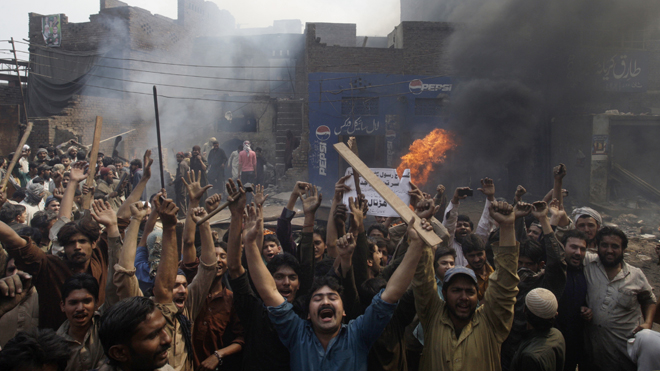
In mere minutes the target was vaporized, one missile striking another like a bullet hitting a second bullet in flight.

Aegis-equipped ships can simultaneously attack targets on land, ships and submarines, all while automatically unleashing defenses against enemy aircraft and missiles threatening the fleet, forces or homeland. And the system will remain robust despite budget cuts from sequestration: On Tuesday, March 5, Lockheed Martin was awarded a five-year, $100.7 million contract to maintain and upgrade the Aegis combat system.

Testing
In the wee hours of Valentine’s Day at 4:10 a.m. ET, the Pacific Missile Range Facility in Hawaii launched a medium range ballistic missile that headed northwest over the Pacific Ocean — the 30th test of the system since 2002.

Up in outer space, the Space Tracking and Surveillance System detected and tracked the “threat.”  It sent the data back down to Earth to the USS Lake Eerie out at sea.

The ship processed the threat data and launched a Raytheon-made SM-3 Block IA missile, a defensive weapon that can destroy short- to intermediate-range ballistic missiles.

In mere minutes the target was vaporized, one missile striking another like a bullet hitting a second bullet in flight. The impact is like a 10-ton truck traveling at 600 mph colliding with a wall, Raytheon says.

Ballistic Missile Threat
Over the past five years, more than 1,200 ballistic missiles have been added to the world’s arsenal, according to the Missile Defense Agency. The total outside the United States, NATO, Russia and China has now risen over 5,900 missiles.

The MDA estimates that hundreds of missiles and launchers are within range of deployed U.S. forces right now.

Advanced ballistic missile technology is now far more widely available to countries hostile to the U.S., and the threat of hostile non-state groups is growing.

Iran’s short and medium range missile stockpile has grown, for example. In August 2012, Iran revealed a new upgraded short-range ballistic missile called Fateh-110 or Conqueror.

In 2009, the Revolutionary Guards tested the Shahab-3 and Sajjil rockets, believed to have ranges of approximately 1,240 miles, meaning they could strike targets in Israel and U.S. bases in the Gulf.

North Korea’s Taepodong-1 could reach Japan and South Korea — as well as U.S. bases, like Okinawa in the region. The Taepodong-2 has a 25 percent greater range, and if eventually successful could reach the U.S. homeland. Its first launch in 2006 appeared to be a failure and its second appearance in 2009 fared no better.

But a leaked 2011 U.N. report seemed to suggest Iran and North Korea were swapping notes on ballistic missile development.

U.S. Ballistic Missile Defense System
American missile defense technology is designed to meet ballistic missile threats at all ranges from short to long, thanks to a “layered defense.”

The BMD system has three main components: detection, interception, and a communications and battle management network.

For target detection and tracking, there are networked sensors and ground- and sea-based radars in addition to the space-based sensors.

Ground- or sea-based interceptors launch missiles to destroy the target.

The third piece, the network, provides commanders with links between the sensors and the interceptor missiles.

Space-based detection and tracking is particularly important because it allows a larger area to be defended. It also enables threats to be intercepted at a longer range than if only ground-based detection systems were used.

Almost one year ago in April 2011, the first successful use of the space-based sensors was demonstrated.

Aegis Ballistic Missile Defense
Aegis Ballistic Missile Defense is the sea-based component of BMD.

To defend the homeland, Aegis ships patrol, detect and track ballistic missiles. The ships provide data to other Navy BMD ships and ground-based Midcourse Defense interceptors like Fort Greely in Alaska and Vandenberg Air Force Base in California.

As of November 2012, there were 26 Aegis BMD combatants, comprising cruisers and destroyers, assigned to both the Pacific and Atlantic Fleet.

The MDA and the Navy are working together to increase the number of Aegis ships.

By Allison Barrie / War Games / Published March 07, 2013 / FoxNews.com

Ballet dancer turned defense specialist Allison Barrie has traveled around the world covering the military, terrorism, weapons advancements and life on the front line. You can reach her at wargames@foxnews.com or follow her on Twitter @Allison_Barrie.

missle_shield_2

Filed Under: All Stories, Foreign, Sci-Tech

Hundreds of Christians Clash with Pakistani Police after Homes Burned by Muslim Mob

March 10, 2013 By Editor Leave a Comment

LAHORE, Pakistan –  Hundreds of Christians protesting the burning of their homes by a Muslim mob over alleged blasphemous remarks made against the Islam’s Prophet Muhammad clashed with police on Sunday in eastern and southern Pakistan.

Around 150 people have been arrested for setting dozens of Christian houses on fire in the eastern city of Lahore after a non-Muslim was accused of making offensive comments about the prophet, police said.

PakistanChristians across the country rallied against the incident, but the main demonstrations were in Lahore, the southern port city of Karachi, the capital, Islamabad, and the adjoining city of Rawalpindi.

The Christian demonstrators blocked a main highway in Lahore and police fired tear gas shells to disperse the protesters who demanded assistance from the government, said police official Malik Awais. He said the protesters damaged several vehicles, uprooted a fence along the road and burned an electricity generator.

Seven policemen were injured when the protesters pelted them with stones, he said. He said the police, who used tear gas and batons to disperse the crowd, detained six of the protesters.

Government spokesman Pervaiz Rasheed promised the government would help hem rebuild their houses, but the Christians expressed dissatisfaction with the way the government was handling the incident.

“I have been robbed of all of my life’s savings,” Yousuf Masih said, standing close to his burned house. He said the government’s announcement that it would give 200,000 rupees ($2,000) compensation to each family was a joke.

Awais, the police officer said, the protesters demanded the government raise the compensation amount from 200,000 rupees ($2,000) to 1 million rupees ($10,000).

In Karachi, more than 1,000 protesters blocked a road in a main market and damaged about 25 vehicles, said police officer Ali Raza. He said some of the protesters also attacked 10 shops and looted valuables and cash. He said the police beat back the protesters and fired tear gas shells to disperse them. At least two protesters were taken into custody, he said.

The protests are a response to an incident that began on Friday after a Muslim accused a Christian man of blasphemy — an offense that in Pakistan is punished by life in prison or death. On Saturday, a mob of angry Muslims rampaged through the Christian neighborhood in Lahore, burning about 170 houses.

The Christian man is in police custody pending an investigation into the allegations. Those who rioted are being investigated for alleged arson, robbery, theft, and terrorism, said police officer Abdur Rehman.

The Pakistani police usually arrest rioters to tamp down public anger, but those accused are rarely convicted and the law is often misused to settle personal disputes and rivalries.

Akram Gill, a local bishop in the Lahore Christian community, said the incident had more to do with personal enmity between two men — one Christian and one Muslim — than blasphemy. He said the men got into a brawl after drinking late one night, and in the morning the Muslim man made up the blasphemy story as payback.

Such accusations of blasphemy in the past have prompted huge crowds to take the law into their own hands. Once an accusation is made it’s difficult to get it reversed, partly because law enforcement officials and politicians do not want to be seen as being soft on blasphemers.

According to Human Rights Watch, there are at least 16 people on death row in Pakistan for blasphemy and another 20 are serving life sentences.

Last year, there was a rare reversal of a blasphemy case. A teenage Christian girl with suspected mental disabilities was accused of burning pages of the Quran. But she was later released after a huge domestic and international outcry about her treatment. A local cleric where she lived was arrested and accused of planting the pages in her bag to incriminate her, a rare example of the accuser facing legal consequences. However, he was later freed on bail.

Also on Sunday, a suspected U.S. missile strike killed a foreign militant who was riding on horseback in Datta Khel in North Waziristan, according to three Pakistani intelligence officials who spoke anonymously because they were not authorized to talk to the media.

Published March 10, 2013 / Associated Press

Filed Under: All Stories, Foreign, Religion

North Korea vows nuclear attack on US, saying Washington will be ‘engulfed in a sea of fire’

March 7, 2013 By Editor Leave a Comment

Reprinted from article published March 07, 2013, FoxNews.com

North Korea amplified its threatening rhetoric as the U.N. Security Council approved new sweeping sanctions, vowing to launch a first-strike nuclear attack against the United States and threatening to engulf Washington in a “sea of fire.”

NorthKoreaNukeTestAn unidentified spokesman for Pyongyang’s Foreign Ministry said the North will exercise its right for “a preemptive nuclear attack to destroy the strongholds of the aggressors” because Washington is pushing to start a nuclear war against the North.

At a mass rally in Pyongyang on Thursday, Army Gen. Kang Pyo Yong told the crowd that North Korea is ready to fire long-range nuclear-armed missiles at Washington.

“Intercontinental ballistic missiles and various other missiles, which have already set their striking targets, are now armed with lighter, smaller and diversified nuclear warheads and are placed on a standby status,” Kang said. “When we shell (the missiles), Washington, which is the stronghold of evils, …. will be engulfed in a sea of fire.”

U.S. Ambassador to the U.N. Susan Rice reacted to the warnings Thursday, saying North Korea will “achieve nothing” with threats and provocations.

The U.N. Security Council unanimously endorsed a fourth round of sanctions against Pyongyang in a fresh attempt to rein in its nuclear and ballistic missile programs.

The vote Thursday by the U.N.’s most powerful body on a resolution drafted by North Korea’s closest ally, China, and the United States sends a powerful message to North Korea that the international community condemns its ballistic missile and nuclear tests — and its repeated violation of Security Council resolutions.

The new sanctions are aimed at making it more difficult for North Korea to finance and obtain material for its weapons programs.

North Korean threats have become more common as tensions have escalated following a rocket launch by Pyongyang in December and its third nuclear test on Feb. 12. Both acts defied three Security Council resolutions that bar North Korea from testing or using nuclear or ballistic missile technology and from importing or exporting material for these programs.

North Korea accused the U.S. of leading efforts to slap sanctions on North Korea. The statement said the new sanctions would only advance the timing for North Korea to fulfill previous vows to take “powerful second and third countermeasures” against its enemies.

The statement said North Korea “strongly warns the U.N. Security Council not to make another big blunder like the one in the past when it earned the inveterate grudge of the Korean nation by acting as a war servant for the U.S. in 1950.”

North Korea demanded the U.N. Security Council immediately dismantle the American-led U.N. Command that’s based in Seoul and move to end the state of war that exists on the Korean Peninsula, which continues six decades after fighting stopped because an armistice, not a peace treaty, ended the war.

In anticipation of the resolution’s adoption, North Korea earlier in the week threatened to cancel the 1953 cease-fire that ended the Korean War.

The Associated Press contributed to this report.

Filed Under: All Stories, Foreign

Leaked email adds fuel to claims White House playing politics over impact of cuts

March 6, 2013 By Editor Leave a Comment

Reprinted from Foxnews.com, March 06, 2013.

A leaked email from an Agriculture Department field officer adds fuel to claims President Obama’s political strategy is to make the billions in recent federal budget cuts as painful as possible to win the public opinion battle against Republicans.

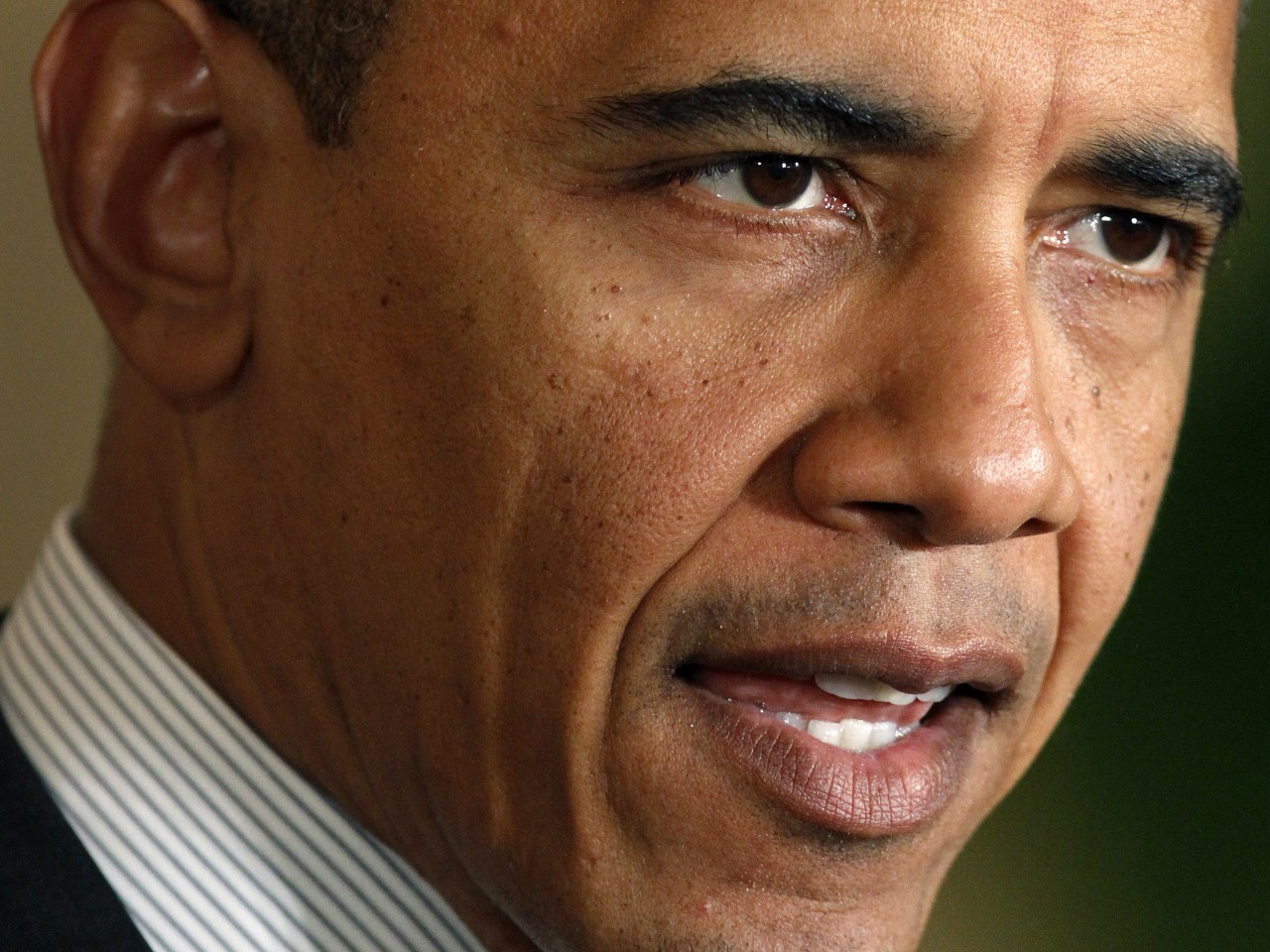
obama_closeupThe email, circulated around Capitol Hill, was sent Monday by Charles Brown, a director at the agency’s Animal and Plant Health Inspection Service office in Raleigh, N.C. He appears to tell his regional team about a response to his recent question on the amount of latitude he has in making cuts.

According to the partially redacted email, the response came from the Agriculture Department’s budget office and in part states: “However you manage that reduction, you need to make sure you are not contradicting what we said the impact would be.”

The response noted that the administration had already told Congress that the APHIS would “eliminate assistance to producers in 24 states in managing wildlife damage to the aquaculture industry” without additional funds.

Arkansas Republican Rep. Tim Griffin said the administration’s response to Brown’s email shows a bid to undermine efforts to replace the cuts, known as sequester, with less onerous ones.

“This email confirms what many Americans have suspected: The Obama administration is doing everything they can to make sure their worst predictions come true and to maximize the pain of the sequester cuts for political gain,” Griffin said in a statement.

Griffin told Fox News on Wednesday that the bosses effectively said “you can’t do anything that is inconsistent with the negative impact that we’ve told everybody these cuts are going to have.”

Under the 2011 deal reached by Obama and Congress, the cuts are supposed to be across the board, meaning government officials have limited flexibility in moving around money.

The administration in recent weeks has made doomsday predictions about the impact of the cuts. And the White House so far has appeared unwilling to accept a Republican offer to give the president more autonomy in making the cuts, covering $85 billion this fiscal year, to help reduce the impact on some of the most essential or hardest-hit programs or agencies.

Some political strategists say the president hopes the cuts hurt enough to compel Republican lawmakers seeking re-election next year to end them by agreeing to more tax increases.

On Sunday, Gene Sperling, the White House’s top economic adviser, suggested Republicans would indeed make this decision.

“Our hope is, as more Republicans start to see this pain in their own districts, they will choose bipartisan compromise over this absolutist position,” he said.

Agriculture Secretary Tom Vilsack, during a House hearing Tuesday, was asked by South Dakota Republican Rep. Kristi Noem about the Brown e-mail.

Vilsack said he was unaware of the email but denied the administration has a policy of being inflexible and maximizing the cuts’ impact.

“I wouldn’t say that we’ve said no to flexibility,” Vilsack said. “But there are certain circumstances where we don’t have flexibility.”

“I’m hopeful that isn’t an agenda that has been put forward,” Noem said.

Filed Under: All Stories, Economy, Elections, Entitlement, Ethics

Dictator Hugo Chavez Dead

March 5, 2013 By Editor Leave a Comment

The dictator of Venezuela, Hugo Chavez, has died.

Hugo_ChavezIt was reported in the Venezuelan press earlier today that their president was suffering from a complication of infection, a normal result of the chemotherapy that the strongman was receiving for cancer.

Vice President Nicolas Maduro announced the sudden and unexpected death of the anti-American dictator this afternoon, claiming that the infection may have been the result of US skulduggery.

While freedom loving people around the globe could only hope that a despot like Chavez would meet with an untimely death, it is now yet to be seen if the people of Venezuela manage to throw off the shackles of totalitarianism and install competent leadership.

PUBLIUS


Filed Under: All Stories, Foreign

White House retreats from doomsday spending cuts predictions, but keeps blame on Republicans

March 4, 2013 By Editor Leave a Comment

Reprinted March 03, 2013 from FoxNews.com

The White House is retreating from its doomsday predictions about the impact of the $85 billion in federal spending cuts as they enter a second week — with Republican leaders appearing at least satisfied about delivering on their promise to limit government spending and hold down taxes.

sperling_geneGene Sperling, the White House’s top economic adviser, repeatedly said Sunday the cuts will not hurt as much on “Day One” as they will over the long haul.

“Nobody ever suggested that this … was going to have all its impact in the first few days,” he told “NBC’s “Meet the Press.” “It is a slow grind.”

His remarks are in contrast to weeks of President Obama and his Cabinet warning that the cuts will result in furloughs or pay cuts for middle-class wage-earners such as teachers, Capitol Hill janitors and air traffic controllers, which they said could cause 90-minute delays at major U.S. airports.

Sperling declined at least twice to directly answer questions about whether the worst-case-scenario rhetoric has hurt the president’s credibility on the issue. He instead stuck to his argument that independent economists forecast the cuts will result in 750,000 fewer jobs and that corporate executives now anticipate slower economic growth.

Senate Republican Leader Mitch McConnell told CNN’s “State of the Union” Americans absorbed similar cuts once already this year.

“This modest reduction of 2.4 percent in spending over the next six months is a little more than the average American experienced just two months ago, when their own pay went down when the payroll tax holiday expired,” the Kentucky Republican said.

Congress agreed to the cuts, known as sequester, in 2011 after failing to agree on more measure reductions — to defense and some domestic spending. However, the cuts were intended to be so drastic that Democrats and Republicans would be forced to compromise before they started.

Still, Sperling rejected several Republican-backed plans and said no compromise would be reached unless the party agrees to tax increases.

Sen. Kelly Ayotte, R-N.H., responded by saying Congress agreed to such increases in January “at the president’s request” and questioned why Obama and other Democrats will not agree to additional spending cuts.

She argued for potential pay freezes for federal employees and reforms to the federal food stamps program.

“There’s a whole host of ideas to cut spending” without jeopardizing security, Ayotte said on ABC’s “This Week.”

However, she also said she would consider tax reform that comes with entitlement reforms. But she would not agree to revenue increases to pay for additional government spending.

Earlier on the show, Sperling said Republican strategy is flawed because the cuts will take resources from several of the party’s most valued positions — including national defense and border security.

“This is not a win for Republicans,” Sperling said. “This cuts into military preparedness.”

He hinted Sunday at Democrats’ likely strategy for retaking the House in 2014.

“Our hope is as more Republicans start to see this pain in their own districts, they will choose bipartisan compromise over this absolutist position,” he said.

Sperling also dismissed a plan backed by at least some Republicans to give the president some flexibility in the cuts.

“It’s like saying you have to cut off three of your fingers but you can choose which ones,” he said.

Sperling also addressed an email sent to Bob Woodward in which he said The Washington Post reporter might “regret” writing a story that said Obama has “moved the goal posts” on sequester.

He told ABC that he and Woodward share a mutual respect and he hopes they can “put this behind us.”

Sen. Lindsey Graham, R-S.C., told CBS’ “Face the Nation” that any tax increases were unacceptable.

“I’m not going to do any more small deals,” he said. “I’m not going to raise taxes to fix sequestration. We don’t need to raise taxes to fund the government.”

All of this comes ahead of a new, March 27 deadline that could spell a government shutdown and a debt-ceiling clash coming in May.

House Speaker John Boehner said his chamber would move this week to pass a measure to keep government open through Sept. 30.

McConnell said a government shutdown was unlikely to come from his side of Capitol Hill. The White House said it would dodge the shutdown and roll back the cuts, which hit domestic and defense spending in equal share.

Sperling said the White House is committed to trying to find a way that Republicans and Democrats can reach a compromise.

The billions in cuts apply to the remainder of fiscal 2013, which ends Sept. 30. But without a deal they will continue slashing government spending by about $1 trillion more over a 10-year period.

Filed Under: All Stories, Economy, Elections, Entitlement, Ethics

Woodward blasts Obama “madness” in handling cuts

March 4, 2013 By Editor Leave a Comment

By Susan Heavey, WASHINGTON | Reprinted from Reuters

Journalist Bob Woodward on Wednesday criticized Barack Obama’s handling of the automatic U.S. budget cuts set to take effect this week, calling the president’s decision to hold back on military deployments “madness.”

arrogance_obamaHis comments continued what has become a running dispute between Woodward, perhaps the country’s best-known print journalist, and the Democratic White House over who is responsible for the across-the-board cuts scheduled to begin on Friday.

Last week, Woodward published an opinion piece in the Washington Post – where he is an associate editor – saying the administration was “wrong” to blame the cuts on Republicans.

That drew retorts from White House press secretary Jay Carney, who in posts on Twitter and later in comments to reporters blamed the budget stalemate on Republican opposition to including increased revenues in any deal to replace the cuts.

The $85 billion across-the-board budget cuts were mandated by Congress and the White House as part of the August 2011 deal to avoid a government default. The reductions are split between defense spending and domestic programs.

Woodward, who first gained fame in the 1970s from exposing the Watergate scandal during the administration of President Richard Nixon, wrote a detailed account in his 2012 book, “The Price of Politics,” of the August 2011 deal that led to the cuts.

On Wednesday he attacked Obama for drawing national security into the budget debate.

“So we now have the president going out (saying) ‘Because of this piece of paper and this agreement, I can’t do what I need to do to protect the country.’ That’s a kind of madness that I haven’t seen in a long time,” Woodward told MSNBC on Wednesday.

On Tuesday, Obama warned of threats to Navy readiness in a visit to the Newport News Shipbuilding shipyard in Virginia, where maintenance to the aircraft carrier USS Abraham Lincoln has been delayed by the budget crisis.

Earlier this month, the Pentagon said it was delaying deployment of another carrier, the USS Harry Truman, to the Middle East because of funding.

Obama’s decision to drag the military into the budget fight likely would not have happened in previous administrations, Republican or Democratic, Woodward added on MSNBC’s “Morning Joe” program.

(Reporting by Susan Heavey; Editing by Fred Barbash and Eric Beech)

Filed Under: All Stories, Economy, Elections, Entitlement, Ethics

Bob Woodward: Obama’s sequester deal-changer

March 2, 2013 By Editor Leave a Comment

Reprinted from The Washington Post: Bob Woodward (woodwardb@washpost.com) is an associate editor of The Post. His latest book is “The Price of Politics.” Evelyn M. Duffy contributed to this column.

Misunderstanding, misstatements and all the classic contortions of partisan message management surround the sequester, the term for the $85 billion in ugly and largely irrational federal spending cuts set by law to begin Friday.

What is the non-budget wonk to make of this? Who is responsible? What really happened?

The finger-pointing began during the third presidential debate last fall, on Oct. 22, when President Obama blamed Congress. “The sequester is not something that I’ve proposed,” Obama said. “It is something that Congress has proposed.”The White House chief of staff at the time, Jack Lew, who had been budget director during the negotiations that set up the sequester in 2011, backed up the president two days later.“There was an insistence on the part of Republicans in Congress for there to be some automatic trigger,” Lew said while campaigning in Florida. It “was very much rooted in the Republican congressional insistence that there be an automatic measure.”

The president and Lew had this wrong. My extensive reporting for my book “The Price of Politics” shows that the automatic spending cuts were initiated by the White House and were the brainchild of Lew and White House congressional relations chief Rob Nabors — probably the foremost experts on budget issues in the senior ranks of the federal government.

Obama personally approved of the plan for Lew and Nabors to propose the sequester to Senate Majority Leader Harry Reid (D-Nev.). They did so at 2:30 p.m. July 27, 2011, according to interviews with two senior White House aides who were directly involved.

Nabors has told others that they checked with the president before going to see Reid. A mandatory sequester was the only action-forcing mechanism they could devise. Nabors has said, “We didn’t actually think it would be that hard to convince them” — Reid and the Republicans — to adopt the sequester. “It really was the only thing we had. There was not a lot of other options left on the table.”

A majority of Republicans did vote for the Budget Control Act that summer, which included the sequester. Key Republican staffers said they didn’t even initially know what a sequester was — because the concept stemmed from the budget wars of the 1980s, when they were not in government.

At the Feb. 13 Senate Finance Committee hearing on Lew’s nomination to become Treasury secretary, Sen. Richard Burr (R-N.C.) asked Lew about the account in my book: “Woodward credits you with originating the plan for sequestration. Was he right or wrong?”

“It’s a little more complicated than that,” Lew responded, “and even in his account, it was a little more complicated than that. We were in a negotiation where the failure would have meant the default of the government of the United States.”

“Did you make the suggestion?” Burr asked.

“Well, what I did was said that with all other options closed, we needed to look for an option where we could agree on how to resolve our differences. And we went back to the 1984 plan that Senator [Phil] Gramm and Senator [Warren] Rudman worked on and said that that would be a basis for having a consequence that would be so unacceptable to everyone that we would be able to get action.”


Filed Under: All Stories, Economy, Elections, Entitlement

Who’s to blame for sequestration frustration?

March 2, 2013 By Editor Leave a Comment

Reprinted from Your World, Neil Cavuto

It’s not me. It’s the GOP.

The president laying the blame for this sequestration frustration, on Republicans blocking everything in creation.

They allowed these cuts to happen, not him, who did everything in his power not to let them happen.

obama_blame_gameThey’re stubborn for not wanting tax hikes, because they’ve already given in on taxes in a prior deal. He’s not stubborn for suddenly wanting to include tax hikes, even though Bob Woodward confirms, they weren’t supposed to be part of this deal.

Republicans are playing games by always bringing these things to the brink. But he’s not by holding a hastily arranged PR meeting with them at the White House on the day we hit the brink.

They’re playing to the press when they all but call the meeting kabuki theater. He’s not when he talks to the press right afterwards to insist a meeting that lasted mere minutes wasn’t kabuki theater.

Look, I understand, each side is entitled to its agenda. But neither side is entitled to its own set of facts. Because the fact is Republicans didn’t come up with sequestration as a back-up plan. The president did. And the fact is Republicans didn’t scare the nation into thinking we’d all be eating horsemeat because beef inspectors would start disappearing. The president did. Even though he knew beef inspectors would not start disappearing.

It just amazes me to hear the president today joke about others who say an apocalypse will come, when he was the guy who all but said the apocalypse was here.

If memory serves me right wasn’t the president the one who said our airport security was hanging in the balance?

Wasn’t he the one who stood in front of firemen and policemen, whose jobs he said were at stake, even though they aren’t paid by the federal government, so they can’t be at stake?

Wasn’t his education secretary the guy who had to take back that, tens of thousands of teachers’ jobs lost line?

And his homeland security secretary the one who said our border security was on the line?

Over the line. Over the top.

It takes two to tango.

I’m just saying, would it kill the media to at least try to be fair? If you’re going to call Republicans intransigent because they only want spending cuts, why is the other side not because they only want tax hikes?

And if you’re going to say republicans won’t compromise, even though they already did on taxes, would it kill you to say the same of Democrats, who have yet to budge on spending?

Leaving aside 85 billion in cuts in a $3.8 trillion budget is chicken feed, hearing this lopsided, one-sided, hopelessly blind-sided approach to facts that is just chicken… fit.

Filed Under: All Stories, Economy, Elections, Entitlement

Lincoln’s Lost Opportunities

March 1, 2013 By Editor Leave a Comment

Trashing red-state values has cost Disney and Fox millions of dollars.

By Mark Joseph, Reprinted from National review Online.

LincolnBy Hollywood standards, Lincoln has done respectable business at the box office and Daniel Day-Lewis’s performance as America’s 16th president is stunning, but a botched marketing campaign and a lack of ideological diversity among those who made the film have left tens, perhaps hundreds of millions of dollars on the table — money that could have lined the coffers of legendary director Steven Spielberg and his partners, Disney and 20th Century Fox.

First, there was the team that brought forth this film about the president who founded the Republican party, a team led by the blue-state heroes Steven Spielberg, screenwriter Tony Kushner, author Doris Kearns Goodwin, and Daniel Day-Lewis. To understand the message that the makeup of this team sent to Lincoln’s natural fan base, one would have to imagine the reaction had the gay community learned that Milk, the biopic about one of the most beloved members of its community, was going to be directed by Clint Eastwood, star Mel Gibson, be based on a book by David Barton, with a screenplay written by Dinesh D’Souza.

And if that lineup of blue-state heroes wasn’t enough to discourage interest from red-state Lincoln fans, Mr. Spielberg probably sealed the deal when he directly insulted them, declaring: “The parties traded political places over the last 150 years. That in itself is a great story, how the Republican party went from a progressive party in 1865, and how the Democrats were represented in the picture, to the way it’s just the opposite today.”

Red-staters didn’t miss the insult: “Did Steven Spielberg say the GOP is just like the slave-holding South?” asked Warner Todd Huston at the conservative BigHollywood.com.

There is another surefire way to keep traditionalist audiences away from a movie, and the makers of Lincoln played that card as well: bad language. According to a Hollywood Reporter poll released last year, it is Lincoln’s natural fan base that is most offended by cursing in movies, with a whopping 79 percent of Republicans saying that American movies feature too many four-letter words.

Traditionalists took Spielberg to task on this front: “Sadly, the movie also contains about 40 obscenities and profanities, including four ‘f’ words and more than 10 GDs,” noted MovieGuide, a site that a good number of traditionalists consult before attending movies. Another reviewer, at Christian Answers, observed: “I was particularly sensitive to the use of the LORD’s name, but there is also a lot of vulgarity, with numerous f***, son of a bi***, da**, cr**, pi**, sh**, he** throughout the movie. There were also uses of the name of Jesus in a profane manner. Mostly, I was very disappointed that there were over 10 uses of ‘g** d***.’”

Declining to give Lincoln its much-sought-after seal of approval, the influential Dove Foundation also questioned the veracity of the cursing, noting that “the language they feature in the film (and this includes Lincoln cursing as well) does not line up with the morals and language of the time period.” Indeed, the historical record casts doubt on the notion that Lincoln cursed the way Spielberg and Kushner imagined. Lincoln personally meted out punishment to his troops who used profanity, on one occasion ordering that Captain Jesse Armstrong be docked a month’s pay for merely calling a fellow soldier a “damned liar” and “damned sh**ass.”

And it’s not only conservatives who have criticized Lincoln’s potty mouth. In an interview after the film’s release, the Civil War historian and Lincoln biographer James McPherson, who met with Spielberg and Kushner to provide background for the screenplay, noted: “Lincoln rarely if ever used profanity, and some of the dialogue calls for him to do that. I thought that was a bit jarring.”

Inserting profanity ahistorically and attempting to tell traditionalist stories even while various cast and crew members insult those who form the film’s natural audience may sound like bad business moves, but they’re common practice in Hollywood, in spite of their box-office consequences. In this case, they surely cost Lincoln some amount of foot traffic, if a 48-year-old named Leigh who posted her concerns at Christian Answers is any indication:

I refuse to pay for and go to a movie where God’s name is taken in vain. There are numerous Web sites out there which will tell you positive and negative aspects of a movie, so that you don’t unknowingly subject yourself or your family to movie content that all Christians should refuse to be a part of. I believe Lincoln would be horrified to know how he was portrayed, and the profanity that Steven Spielberg forced his character to say.

The film’s marketing campaign was equally obtuse as cast and crew members fanned out across mainstream media for appearances on The Charlie Rose Show, Oprah, and various NPR, MSNBC, and PBS programs, while ignoring The O’Reilly Factor, Hannity, Huckabee, Limbaugh, Beck, the 700 Club (of the Christian Broadcasting Network), and other red-state favorites.

Presented with the opportunity to make a film that accurately reflected the morals of Lincoln’s time instead of ours and to develop and market the film in a manner that would appeal to all Americans, center, right, and left, Mr. Spielberg instead chose another path, one that will almost certainly see his film honored at the Oscars, but that will also forfeit big bucks in box-office receipts. The 79 percent of Americans who, according to Gallup, make up the center-right majority of the nation are showing their displeasure with Lincoln by voting with their feet and asking important questions: Why would moviegoers shell out money to see a picture that seems to intentionally offend their core values? Why would traditionalists pay any attention to filmmakers who think their communities are beneath them and not even worth a minimum of outreach?

Lincoln’s box-office numbers are falling short of their potential, which shows — once again — that Hollywood still has a lot of work to do if it wants to better understand its customers.

— Mark Joseph is an author and producer whose most recent book is The Lion, the Professor, and the Movies: Narnia’s Journey to the Big Screen.

Filed Under: All Stories, Elections

« Previous Page
Next Page »

Federalist Press Dispatch

Get breaking political news, investigations, and uncensored analysis delivered directly to your inbox.

Please wait...

Thank you for subscribing to the Federalist Press Dispatch.

Get free info to help your life

Get free info to help your life

Simple bite-sized guides for life, money, civics, and more . . . because some stuff school just didn’t cover.

Brit Axton Mysteries Series

Brit Axton Mysteries Series

Brit Axton Mysteries is a series of young adult adventure novels that lead young Brit Axton and her friends on whirlwind adventures to uncover hidden secrets and long lost treasures.

Byrna Non-lethal Self Protection

Byrna Non-lethal Self Protection

Byrna offers non-lethal self protection at an affordable price. Watch the short video, or click to learn more!

Understanding Cryptocurrency: Essentials for Building Wealth in Digital Currency

Understanding Cryptocurrency: Essentials for Building Wealth in Digital Currency

Understanding Cryptocurrency serves as a definitive guide for novice investors looking to understand the world of cryptocurrency and harness its potential for financial growth and prosperity.

Real Estate Wealth Strategies During High Inflation

Real Estate Wealth Strategies During High Inflation

Real Estate Wealth Strategies During High Inflation is a comprehensive guide on navigating the real estate market, offering strategies and insights for successful investing, during high inflation and interest rates.

Follow us

  • parler
  • welcome-widgets-menus
  • facebook
  • envato

Privacy Policy

Terms of Service

Economy

If Packing the Supreme Court Is a Good Idea, Why Shouldn’t President Trump Do It?

The Politics of Envy: Why “Tax the Rich” Is an Economic Dead End

When Bill Maher Starts Worrying About Socialism, Democrats Should Pay Attention

Elections

The Fang Fang Files: Democrats Covered Up Eric Swalwell Affair with Chinese Communist Intelligence Officer

If Packing the Supreme Court Is a Good Idea, Why Shouldn’t President Trump Do It?

The Politics of Envy: Why “Tax the Rich” Is an Economic Dead End

Foreign

Sen. Kelly Under Pentagon Review After Revealing Classified Briefing Details to Enemies

Why Is the United States Still Allowing Iran to Threaten the Strait of Hormuz?

May Day in America: A Radical Marxist Tradition Reemerges

Crime

If Packing the Supreme Court Is a Good Idea, Why Shouldn’t President Trump Do It?

When Bill Maher Starts Worrying About Socialism, Democrats Should Pay Attention

Democratic Socialists and Democrats: Is there any Difference?

Science Tech

Peace Through Strength: Trump Forces Iran into Submission

The Climate Scare Revisited: What Happened to the Predictions?

Trump’s Third UFO File Dump Raises the Stakes Again

Reader Responses

  • Linda Livaudais on Trump’s UFO Disclosure Has Changed the Conversation — But Not Yet Answered the Biggest Question
  • T059736 on Trump and Musk Announce Plans to Shut Down USAID
  • C.Josef.D on ‘Pay to Play’ at Clinton Foundation Under Investigation
  • John D Cole on Biden Says ‘You ain’t black’ If You Don’t Vote for Him
  • Ed on U.S. Attorney Huber Moving to Indict Clintons and Others

Copyright © 2026 by Federalist Press · All rights reserved · Website design by RoadRunner CRM · Content Wiriting by GhostWriter · Log in