
After a months-long, deep investigation into suspected foreign meddling in the U.S. election, the Federal Bureau of Investigation has determined that Donald Trump has no ties to the Russian government.
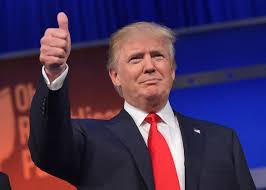 Federal officials conducted a wide investigation throughout the summer looking for financial connections between Trump and his operatives and the Russian government in connection with the hacking of Democrat party computers but found nothing, according to The New York Times.
Upon the conclusion of the investigation, the FBI decided that, contrary to claims by Democrats, the hacking may have been aimed at disrupting the election but was not intended to ensure the election of Donald Trump.
The allegations of Trump’s computer ties to the Russian bank were made in an article posted to the liberal Slate.com website.
But news that the FBI is now discounting any such ties coming on the heels of FBI Director Comey’s decision to open another investigation into Hillary Clinton’s email scandal represents a double blow to the Democrats.
As part of the revelations, it was reported that earlier this year the FBI began investigating a possible connection between Trump and Alfa Bank, the largest private commercial bank in Russia. The Bureau was alerted to a series of electronic connections between a server owned by the Trump organization and two servers registered to Alfa Bank. The links were at first thought “questionable,” but after its long investigation the FBI determined, “there could be an innocuous explanation, like a marketing email or spam, for the computer contacts,” the Times reported.
The Trump campaign reiterated that the investigation had proven what they already knew.
Trump campaign press secretary Hope Hicks noted, “First of all, it’s not a secret server. The email server, set up for marketing purposes and operated by a third-party, has not been used since 2010.” Hicks added that the traffic on that server is not used for the sort of email communications that could be employed for any sort of collusion.
Alfa Bank also released a statement denying any ties to Trump.
“Neither Alfa Bank nor its principals, including Mikhail Fridman and Petr Aven, have or have had any contact with Mr. Trump or his organizations,” the statement read. “Fridman and Aven have never met Mr. Trump nor have they or Alfa Bank had any business dealings with him. Neither Alfa nor its officers have sent Mr. Trump or his organizations any emails, information or money. Alfa Bank does not have and has never had any special or exclusive internet connection with Mr. Trump or his entities.”
Now it appears that the FBI has confirmed these statements.
Follow Warner Todd Huston on Twitter @warnerthuston or email the author at igcolonel@hotmail.com.
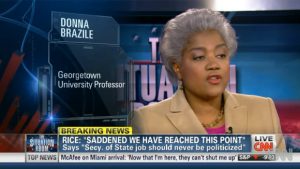 Another leaked email has emerged showing Democratic National Committee boss and former CNN contributor Donna Brazile sharing a debate question in advance with the Hillary Clinton campaign — despite Brazile’s persistent claims to the contrary.
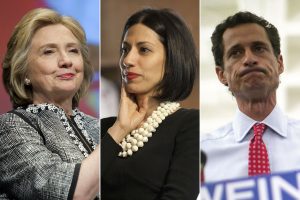 The FBI announced Friday it had uncovered news emails related to its investigation of former secretary of state Hillary Clinton‘s handling of classified information while conducting a separate investigation into the pervy sexting habits of former Democratic congressman Anthony Weiner. Weiner of course is the estranged husband of Hillary’s closest aide, Huma Abedin who herself figures prominently in Clinton’s email scandals.
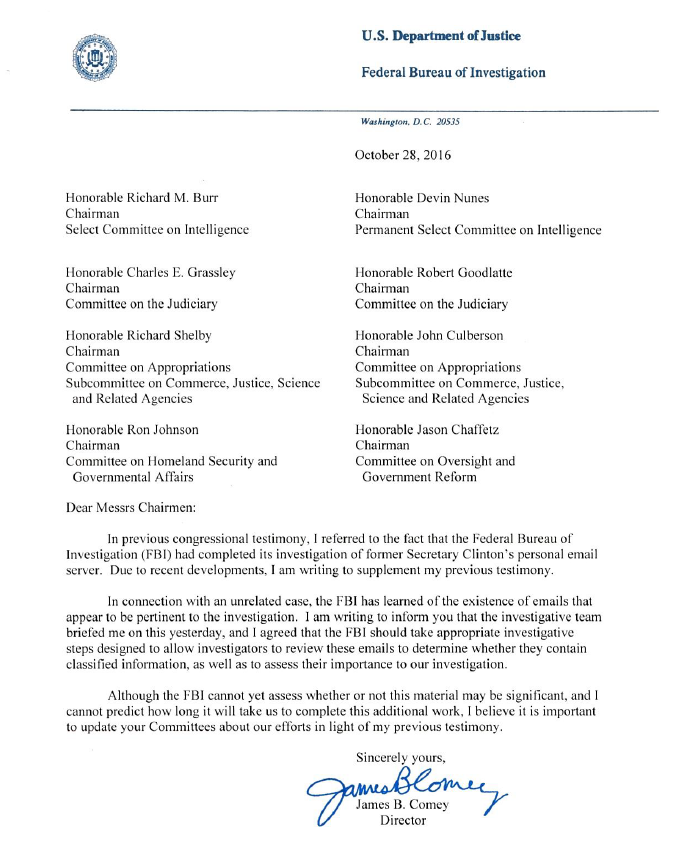
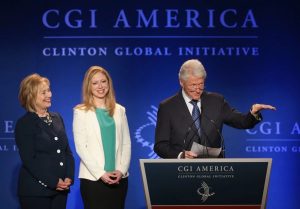 Donald Trump and fellow Republicans are reviving long-simmering allegations of murky deals and ‘pay-to-play’ surrounding the Clintons, in the wake of new revelations from WikiLeaks-published emails about how the family, their foundation and the Hillary Clinton State Department operated alongside each other.
 PORTLAND, Ore. –
 Here’s a rundown of what’s been revealed so far from the continuing release by Wikileaks of Clinton campaign emails. (This is an update of an earlier compilation.)
 The state of Utah is historically a solid red state, its heavily Mormon population identifying best with the pro-Christian, pro-life, limited government and spending philosophies of the Republican party. This election year, however, the voters of the state of Utah appear to be enamored of the idea of a protest vote, wherein they demonstrate their dislike for the superficially flawed Republican presidential candidate Donald Trump by voting for independent third-party candidate Evan McMullin.
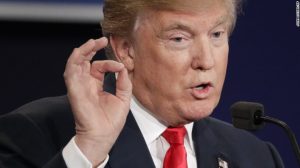 Early results from their final debate are in, and Donald Trump remains barely ahead of Hillary Clinton in the White House Watch.
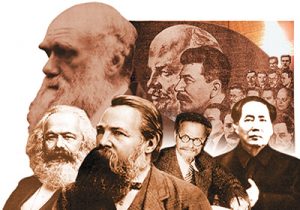 American education is failing thousands of students every year. But this crisis is not just about poor scores in math and reading. It is a deeper failure, leaving entire generations of Americans without the most basic knowledge of the country’s past and its civic institutions.
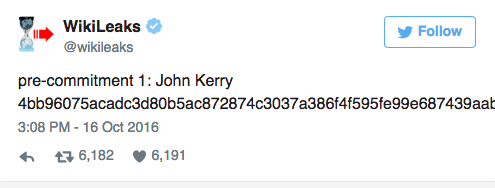
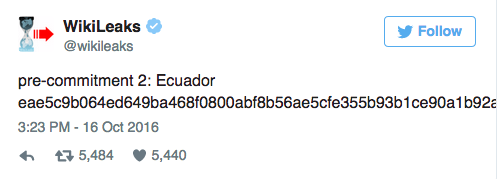
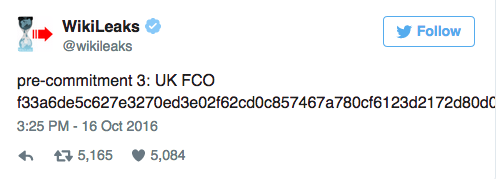
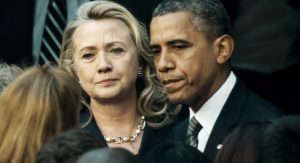 I had planned on taking a day off from the blog, but developments with the Wikileaks email dump obliged me to stay on the job. Late last night a friend informed me that Julian Assange’s internet access had been disrupted. Let me give you a bit of background on Assange and Wikileaks. Julian Assange is an Australian citizen, computer programmer by occupation, who created the organization known as Wikileaks. Since its inception over ten years ago, Wikileaks has been dedicated to hacking into private government and business computer systems, and releasing to the public confidential information. The organization claims no political bias, and only releases information that it decides is in the public interest. You may recall that former U.S. Army soldier Bradley Manning was Court-martialed for sharing Top Secret military intelligence with Assange and Wikileaks. While Wikileaks was making a name for itself in the Bradley Manning affair, Assange found himself in “unrelated” difficulty with the Swedish police. Two women accuse Assange of sexual assault, relating to the time period that Assange was living in Sweden. Assange, who was in England when the accusations became public, has been hiding out at the Ecuadorian Embassy in London in order to avoid extradition to Sweden to face trial. While he has been holed up in the Embassy of Ecuador, Assange has continued to control Wikileaks. In fact, Assange claimed that Wikileaks had hacked into Hillary Clinton’s server when she was Secretary of State, and that Wikileaks intended to release these emails in October, just prior to the U.S. presidential election.
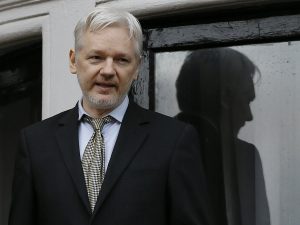 When October rolled around, and Wikileaks started releasing Clinton emails, the U.S. media was busy giving airtime and legitimacy to a string of slanderous, false stories about Donald Trump. A number of us noted with anger the “coincidental” timing of the stories about Trump, but we also realized that the media could not distract the American public forever. The Wikileaks emails would eventually be disseminated, and barring any unforeseen developments, the release would take place before the November election. Imagine my surprise when I discovered Sunday night, that Assange’s email access had been disconnected, just prior to the release of another batch of emails. Wikileaks, which claims to have other methods of sharing the emails, announced that Assange’s access was terminated by the government of Ecuador. I have also read that the CIA was involved, but I doubt the verac
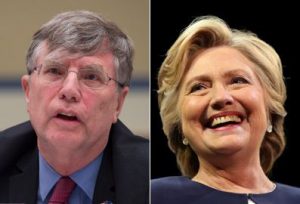 A senior State Department official proposed a “quid pro quo” to convince the FBI to strip the classification on an email from Hillary Clinton’s server – and repeatedly tried to “influence” the bureau’s decision when his offer was denied, even taking his plea up the chain of command, according to newly released FBI documents.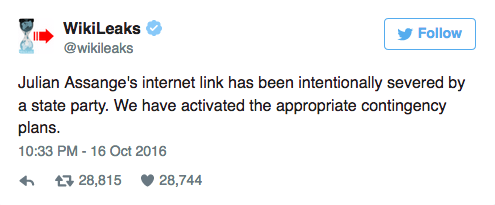
 The Constitution has long been subject to attacks from individuals hostile to its guarantees of freedom, economic opportunity, and limited government, but in recent days no other provision has been as widely and intensely attacked as the First Amendment.
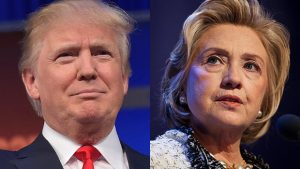 In the second debate of the 2016 presidential race, Trump came back strong, obviously deciding that the “gentleman” approach he had adopted for the first debate had not worked well in his favor.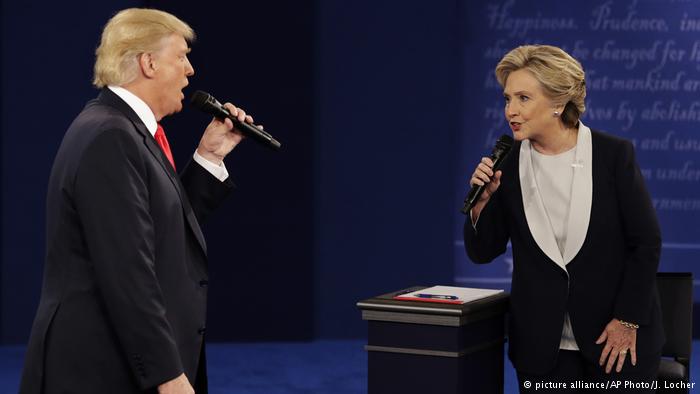
 On Thursday, the National Academies of Sciences, Engineering, and Medicine will release its report on “The Economic and Fiscal Consequences of Immigration.” According to the report, first generation immigrants as a group increase the nation’s fiscal deficit. In other words, the government benefits they receive exceed the taxes paid.
 Thus, as each adult immigrant without a high school diploma enters the country, the government would need to immediately put aside and invest $231,000 to cover the future net fiscal cost (total benefits minus total taxes) of that immigrant.
 The Obama administration opposes states verifying citizenship status of registered voters. Inquiries into voter fraud are typically met with derision from both government and the media—and in at least one instance with prosecution. Prosecutors don’t prioritize voter fraud, while convictions only garner light sentences.
 Some recent cases cited by the panelists demonstrate the reality of voter fraud.

 Federal lawmakers seeking to pinpoint the number of illegal immigrants who successfully sneak across the southern border ordered up a report from the Department of Homeland Security, but the agency refuses to release it and instead cites a misleading statistic that overstates the number who are nabbed, sources told Fox News.
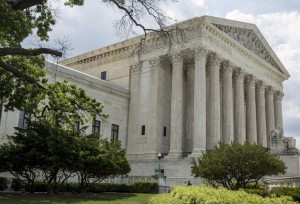 Sen. Chuck Schumer has reminded us just how important the upcoming presidential election will be in shaping the federal judiciary, calling getting a progressive Supreme Court his “number one goal.”
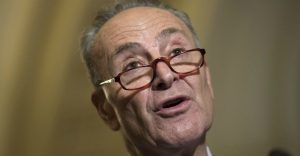 As Roll Call reported, Schumer “predicted that the Shelby County decision on voting rights would be overturned by a Supreme Court with the kind of progressive justices he would prioritize confirming as majority leader.”
Reader Responses