An administration riven with infighting. A commander-in-chief given to “dithering” on critical wartime decisions. A suspicious and devious White House staff erecting a “Berlin Wall” around a secluded and standoffish president, shielding him from those advisers — particularly at the Department of State — willing to convey unpleasant truths.
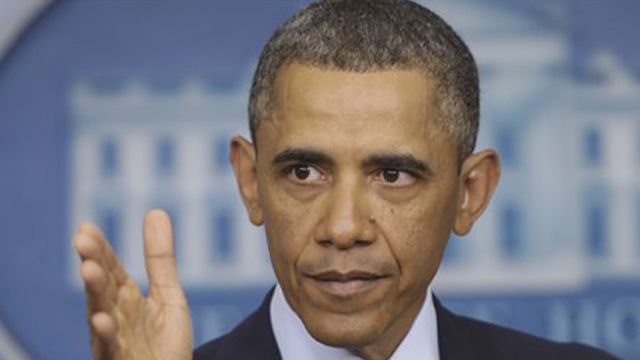 It all sounds rather like the sensational literature that proliferated in the mid-to-late 1970s to chronicle the collapsed presidency of Richard Nixon — including the description of a White House “Berlin Wall,” originally applied, with great fanfare, to those much-maligned (and eventually imprisoned) Nixon aides H.R. Haldeman and John Ehrlichman.
Instead, it is President Obama’s turn to watch as former aides and journalists rush into print — with a warp speed that eluded the insider memoirists of the 1970s — their detailed and dishy accounts of the first Obama term.
A forthcoming book by former foreign policy aide Vali Nasr paints the above portrait, describing a president whose decisions “from start to finish were guided by politics.”
Nasr was a rising academic star, one of the leading scholarly voices on Iran and the Mideast, when the late Richard Holbrooke tapped him, at the dawn of the Obama administration, to join Holbrooke at a newly created office of the State Department: SRAP, short for Special Representative for Afghanistan and Pakistan.
‘The president had a truly disturbing habit of funneling major foreign-policy decisions through a small cabal of relatively inexperienced White House advisors whose turf was strictly politics.’ – Vali Nasr, former foreign policy aide
The voluble, outsized Holbrooke, one of the most celebrated diplomats of his age, always on the short list to become secretary of state but never chosen for the job, was expected to bring his formidable talents — and ego — to bear on the problem of integrating more fully the often contradictory policies applied to the two nations so central to U.S. counterterrorism and national security.
But by the time he died from a ruptured aorta, in December 2010, Holbrooke had been systematically marginalized by the Obama White House, Vasr writes. Due out next month, Vasr’s book “The Dispensable Nation: American Foreign Policy in Retreat” (Doubleday) depicts Holbrooke and his boss, Secretary of State Hillary Clinton, waging an often unsuccessful battle to pierce the “Berlin Wall” and present their views to the president. The book charges that White House aides used targeted leaks and other means to “undermine” Holbrooke — and worked hard to cut Clinton out of critical policymaking, too.
“Those in Obama’s inner circle, veterans of his election campaign, were suspicious of Clinton,” Nasr writes in an excerpt published on ForeignPolicy.com. “Even after Clinton proved she was a team player, they remained concerned about her popularity and feared that she could overshadow the president. … Had it not been for Clinton’s tenacity and the respect she commanded, the State Department would have had no influence on policymaking whatsoever.”
State Department spokesmen pushed back hard against Nasr’s charges. “We have an excellent working relationship with our White House and interagency colleagues,” Patrick Ventrell told reporters at the March 4 press briefing. “So we really stand behind the record of the progress we’ve made in Afghanistan.”
Ventrell’s boss, spokeswoman Victoria Nuland, said at the March 8 briefing that she “would reject … completely” the notion that Holbrooke had been sidelined by the National Security Council. “If you know Richard Holbrooke at all,” she told reporters, “you know that he was a formidable force in that job, as he had been in all previous jobs.”
Perhaps most arresting, however, is Nasr’s portrayal of President Obama. The commander-in-chief is depicted here as “dithering” on key Afghan war decisions, tasking national security aides with the same questions, rephrased in minor ways, over and over. Nasr also casts Obama as quick to abandon foreign policy promises made on the campaign trail and too reliant on individuals unqualified to weigh in on foreign policy.
“The president had a truly disturbing habit,” Nasr writes, “of funneling major foreign-policy decisions through a small cabal of relatively inexperienced White House advisers whose turf was strictly politics. … His actions from start to finish were guided by politics. … It was no surprise that our AfPak policy took one step forward and two steps back.”
Donald Camp, a retired Foreign Service officer who served under three presidents, worked on AfPak policy as both the principal deputy assistant secretary of state for South and Central Asia and as senior director for that region on the Obama National Security Council. Camp told Fox News that the excerpts from Nasr’s book appear to show that the author was perhaps unduly colored by the experiences of his boss, Holbrooke.
“President Obama is very much — was very much involved in those days in making Afghanistan and Pakistan policy,” Camp said in an interview this month. “And I believe that he sought out all views; and there were differing views in the interagency (process), and he made the final decision.”
Camp took specific issue with Nasr’s allegation that then-National Security Adviser Gen. James Jones improperly offered Pakistan a civilian nuclear deal, similar to the kind that the U.S. negotiated with India over several years, in exchange for Islamabad escalating its counter-terrorism efforts. Camp said he traveled with Jones to Islamabad, and that the general knew better than to imagine such a deal could pass muster with the U.S. Congress. “It was just not in the cards,” Camp told Fox News, “and James Jones would not have made that kind of proposal.”
Jones did not respond to requests for comment.
By James Rosen / Published March 12, 2013 / FoxNews.com



 email, the response came from the Agriculture Department’s budget office and in part states: “However you manage that reduction, you need to make sure you are not contradicting what we said the impact would be.”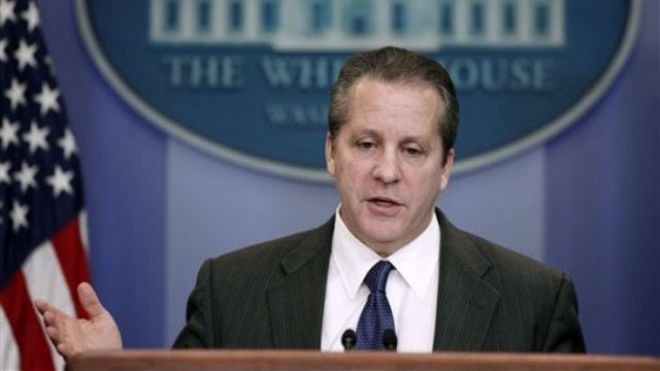


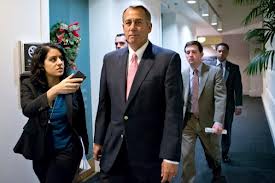 At a time when the American people can no longer afford politics as usual, and re-elected a GOP majority in the House to protect them from socialistic tax increases, the GOP led House has caved on a Senate bill that substantially raises taxes on many Americans.
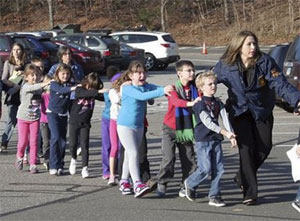 A few days ago a young Hispanic man from Portland, Oregon stole a semi-automatic rifle and went into a suburban shopping mall to kill as many people as he could. Coward.
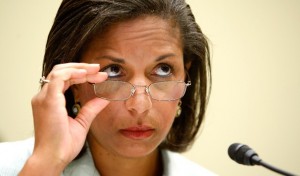 “Today, I made the decision that it was the best thing for our country, for the American people that I not continue to be considered by the president for nomination of secretary of state,” Rice said.
 Following one of the worst performances for an American president in this nation’s history, Americans awarded Barack Obama a second term. What was the pitch from the far left that got him re-elected following four years of economic upheaval and government socialization of the medical industry?
 The Federalist Press suggests that the GOP consider adopting a democratic party long-term strategy. Indeed, democrats have exercised control of American government for much of the past 100 years by long-term planning—which became necessary following the beating they took in the Civil War and post-war reconstruction, as republicans freed the slaves and passed and enforced the civil rights amendments.
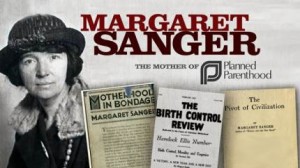 Planned Parenthood was founded by Margaret Sanger, and like-minded racists, like Dr. S. Adolphus Knopf and Lothrop Stoddard, a Harvard graduate and the author of The Rising Tide of Color against White Supremacy. Margaret Sanger was an ardent proponent of sterilizing those she considered “unfit,” which would be the “salvation of American civilization.” Who was unfit? Those of African descent.
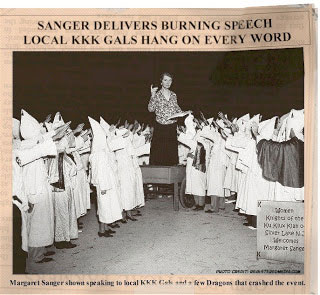 Indeed, as a direct result of the Sanger movement, even today, American black children suffer death by the millions at the hands of abortionists. Planned Parenthood is the largest abortion provider in America, with 78% of their clinics in minority communities. Although blacks make up only 12% of the population, 35% of all the abortions in America are black babies.
 There are still a few people who claim to be undecided about today’s elections. Do they want to continue to support Barack Obama, or has our country reached a point where we must make a change of leadership . . from the top down?
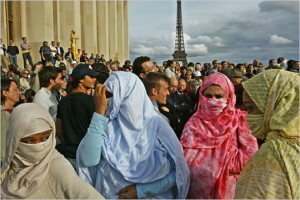 Friday in Paris. A hidden camera shows streets blocked by huge crowds of Muslim worshippers and enforced by a private security force.
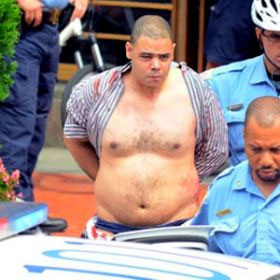 America gets a good look at the face of tolerance. Yesterday a heavily armed liberal terrorist associated with the LGBT movement made his way into the headquarters of the pro-family, pro-life organization, Family Research Council (FRC), and opened fire when challenged by unarmed building operations manager, Leo Johnson.