To celebrate Independence Day, the editors have decided to share the original words of the national anthem, in the original words and spelling of Francis Scott Key. Do you know the words?
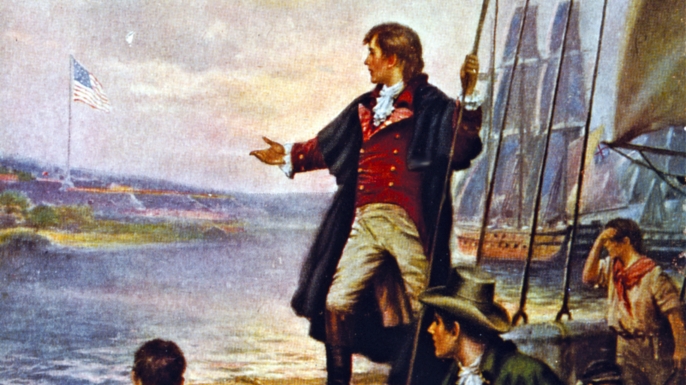
The Star-Spangled Banner
O say can you see, by the dawn’s early light,
What so proudly we hail’d at the twilight’s last gleaming,
Whose broad stripes and bright stars through the perilous fight
O’er the ramparts we watch’d were so gallantly streaming?
And the rocket’s red glare, the bomb bursting in air,
Gave proof through the night that our flag was still there,
O say does that star-spangled banner yet wave
O’er the land of the free and the home of the brave?
On the shore dimly seen through the mists of the deep
Where the foe’s haughty host in dread silence reposes,
What is that which the breeze, o’er the towering steep,
As it fitfully blows, half conceals, half discloses?
Now it catches the gleam of the morning’s first beam,
In full glory reflected now shines in the stream,
‘Tis the star-spangled banner – O long may it wave
O’er the land of the free and the home of the brave!
And where is that band who so vauntingly swore,
That the havoc of war and the battle’s confusion
A home and a Country should leave us no more?
Their blood has wash’d out their foul footstep’s pollution.
No refuge could save the hireling and slave
From the terror of flight or the gloom of the grave,
And the star-spangled banner in triumph doth wave
O’er the land of the free and the home of the brave.
O thus be it ever when freemen shall stand
Between their lov’d home and the war’s desolation!
Blest with vict’ry and peace may the heav’n rescued land
Praise the power that hath made and preserv’d us a nation!
Then conquer we must, when our cause it is just,
And this be our motto – “In God is our trust,”
And the star-spangled banner in triumph shall wave
O’er the land of the free and the home of the brave.
Francis Scott Key
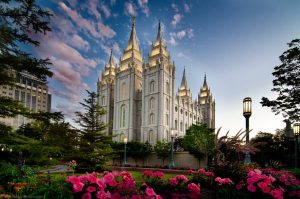 SALT LAKE CITY — The Church of Jesus Christ of Latter-day Saints could have a significant impact on the upcoming ballot initiative for medical marijuana in Utah.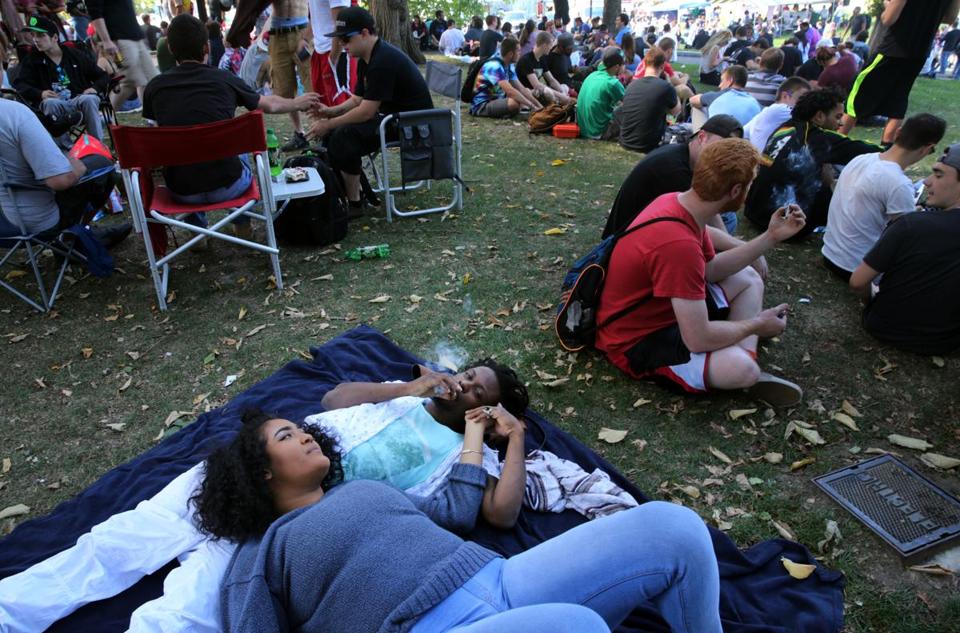
 The U.S. Supreme Court has announced that it will hear the Trump administration’s appeal of a lower court’s ruling that blocked the president’s executive order temporarily restricting travel from several terror-risk, Muslim-majority countries.
 Sen. Bernie Sanders and his wife have hired defense attorneys amid an FBI probe into a loan the senator’s wife procured for Burlington College while she was school president, according to news reports.
 Politico also reports that federal prosecutors could be looking into allegations that Sen. Sanders’ office tried inappropriately to get the bank to approve the loan.
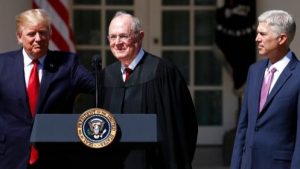 The Supreme Court’s term ends next week with growing speculation that Justice Anthony Kennedy–the panel’s most pivotal member–may retire at age 80 after 29 years on the court.

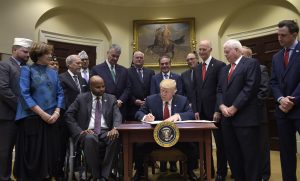
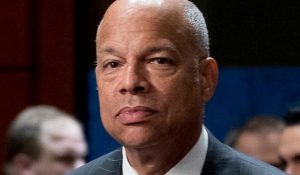 Former Homeland Security Secretary Jeh Johnson testified Wednesday that the Democratic National Committee last year turned down his agency’s offer to help protect its network despite being warned about a hack.



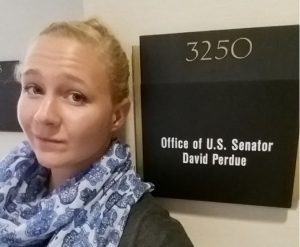 The alleged leaker accused of feeding a classified report to an online news site has a colorful history on social media that lays bare her political leanings as an environmentalist who wanted to “resist” President Trump.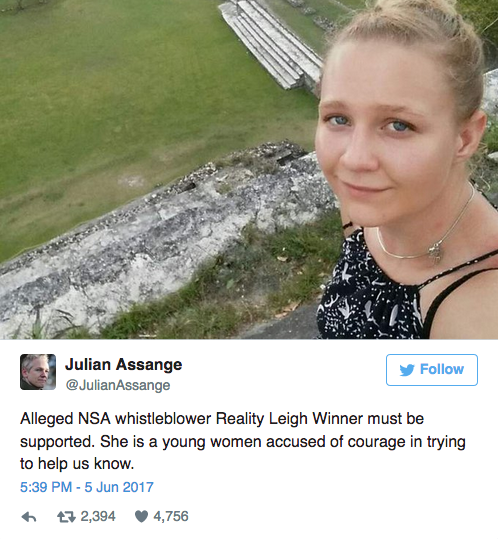
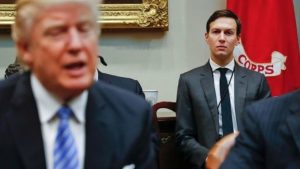 Jared Kushner, President Donald Trump’s son-in-law and one of the senior advisers in the Trump administration, was seeking a private communications channel with the Kremlin, according to a new report in
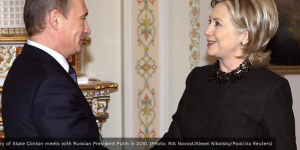 The Democrats and old-guard news media (forgive the redundancy) are pathologically obsessed with the hypothesis that Team Trump and Russia rigged last November’s presidential election. If Donald J. Trump so much as played Tchaikovsky’s Marche Slav on his stereo, these leftists deduce, he was in cahoots with the Kremlin.
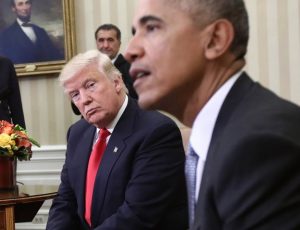 The Obama Administration struggled through one Congressional investigation after another, with the Departments of State, Justice, Treasury, Homeland Security, and Agriculture all getting their turn on the hot seat. Interestingly, the public never really connected these scandals to Obama, instead associating Lois Lerner, Janet Napolitano, Eric Holder, Hillary Clinton, and other career bureaucrats with the various investigations. When President Obama first took office, his administration focused on placing political appointees in various government positions of influence. Performance may have suffered when someone unqualified individual took over a powerful agency, but concern for the average citizen was not on the list of priorities. In some instances, persons were appointed to certain positions for specific purposes. Leon Panetta, whose intelligence experience was limited to two years as an Intelligence Officer in the Army from 1964 to 1966, was appointed Director of the CIA in 2009. Panetta spent two years as CIA Director, which was more than enough time to conduct an internal investigation into the interrogation practices of the agency under the Bush Administration. Lerner, Napolitano, Holder, and Clinton closely followed the script, as none of the scandals involving these agencies were ever connected to Obama.
Reader Responses