
• Home
  • Mission
  • Federalist Papers
  • Foundation
  • U.S. Constitution
  • Bill of Rights

Federalist Press | Defending Liberty — Informing America

Breaking News and Political Commentary

  • All Stories
  • Economy
  • Elections
  • Entitlement
  • Ethics
  • Foreign
  • Gender
  • Religion
  • Sci-Tech

2 Dead, Dozens Injured After 2 Bombs Explode at Boston Marathon

April 15, 2013 By Editor Leave a Comment

boston_marathon_blastAt least two people are dead and dozens injured – including up to 10 with amputated limbs – after at least two bombs tore through the finish line of the Boston Marathon, according to the Boston Police Department.

The simultaneous explosions, and reports of two other unexploded devices found near the scene raised suspicions that the blasts, just before 3 p.m., could be part of a terrorist attack. Intelligence officials told The Associated Press two unexploded devices were being dismantled, and reports of a third “controlled” explosion near the JFK Library in the Columbia Point section of Dorchester, may have been an intentional detonation supervised by authorities. Competitors and race organizers were crying as they fled the bloody chaos, while some witnesses reported seeing victims with lost limbs.

“Somebody’s leg flew by my head,” a spectator, who gave his name as John Ross, told the Boston Herald. “I gave my belt to stop the blood.”

Witnesses heard booms that sounded like two claps of thunder near the finish line inside the Fairmount Copley Plaza Hotel, according to multiple local reports. The horror unfolded as the city marked the 238th annual Patriot’s Day, commemorating the anniversary of the Battles of Lexington and Concord at the beginning of the Revolutionary War.

Video of the scene showed a number of emergency crews in the area tending to victims and blood on the ground near the finish line.

“I saw two explosions. The first one was beyond the finish line. I heard a loud bang and I saw smoke rising,” Boston Herald reporter Chris Cassidy, who was running in the marathon, told the newspaper. “I kept running and I heard behind me a loud bang. It looked like it was in a trash can or something…There are people who have been hit with debris, people with bloody foreheads.”

“There are a lot of people down,” said one man, whose bib No. 17528 identified him as Frank Deruyter of North Carolina. He was not injured, but marathon workers were carrying one woman, who did not appear to be a runner, to the medical area as blood gushed from her leg. A Boston police officer was wheeled from the course with a leg injury that was bleeding.

About three hours after the winners crossed the line, there was a loud explosion on the north side of Boylston Street, just before the photo bridge that marks the finish line. Another thunderous explosion could be heard a few seconds later.

Runner Laura McLean of Toronto said she heard two explosions outside the medical tent.

“There are people who are really, really bloody,” McLean said. “They were pulling them into the medical tent.”

Cherie Falgoust was waiting for her husband, who was running the race.  “I was expecting my husband any minute,” she said. “I don’t know what this building is … it just blew. Just a big bomb, a loud boom, and then glass everywhere. Something hit my head. I don’t know what it was. I just ducked.”

Authorities in New York, meanwhile, are deploying counter-terrorism vehicles around landmark sites in Manhattan, including prominent hotels, according to the New York City Police Department.

Nearly 25,000 people, including runners from around the world, competed in Boston’s celebrated 26.2-mile race, attracting huge throngs of onlookers, especially near the finish line.

“This is a horrific day in Boston,” Massachusetts Gov. Deval Patrick said in a statement. “My thoughts and prayers are with those who have been injured. I have been in touch with the President, Mayor [Thomas] Menino and our public safety leaders. Our focus is on making sure that the area around Copley Square is safe and secured. I am asking everyone to stay away from Copley Square and let the first responders do their jobs.”

Click for more from MyFoxBoston.com

Published April 15, 2013

FoxNews.com /The Associated Press contributed to this report.

Filed Under: All Stories, Elections, Entitlement, Ethics, Foreign, Religion

Dems Run from Progress Kentucky

April 14, 2013 By Editor Leave a Comment

Progress Kentucky is a super PAC that is acting more like a rogue operation in its efforts to unseat Kentucky Republican Sen. Mitch McConnell — sending out racially sensitive tweets and allegedly making a secret recording of the Senate minority leader’s re-election strategy talks.

ashley_judd_mitch_mcconnellThe group has been around only since December, raising about $1,000 and spending $18, compared to the McConnell campaign that has raised $10 million toward 2014 re-election efforts, according to recent Federal Election Commission filings.

Kentucky Democrats have over the past week made numerous, overt efforts to separate their party from Kentucky Progress and its questionable activities.

A former state party official described group members as “just a couple of activists” intent on making a mockery of super PACs, compared to those active in the 2012 elections that were run by savvy political operatives raising millions from well heeled contributors.

“This has nothing to do with the party or even a group,” said Chris Tobe, the former state party board member.

Earlier this week, Jacob Conway, a member of Kentucky’s Jefferson County Democratic Party, told Fox News that two group members secretly recorded the McConnell strategy sessions.

Conway alleges Executive Director Shawn Reilly and volunteer Curtis Morrison recorded the February office meeting from a hallway, perhaps with an iPhone, and later told him about it.

Conway said he came forward because he didn’t want the situation tarnishing the Democratic Party.

In the meeting held by McConnell, aides disparaged actress Ashley Judd, then a potential Democratic challenger, laughing about her bouts with depression and discussing possibly using that against her. They also talked about Judd’s political positions and religious beliefs, according to the tape posted Tuesday by the left-leaning Mother Jones magazine.

Judd has since said she will not run.

mcconnell_juddMcConnell called the taping “Watergate-style tactics,” and the FBI is now investigating the allegation, following his request.

Ted Shouse, Reilly’s attorney, said his client and Morrison were in a “public hallway” outside the office where McConnell’s meeting took place but Reilly never recorded anything.

Morrison didn’t return phone calls or answer the door Friday of his Louisville residence, where the blinds and curtains were closed and mail overflowed in the mailbox.

Kentucky has more registered Democrats than Republicans but tends to vote for Republican candidates for Congress and president.

Progress Kentucky first attracted national attention in February with a tweet from a volunteer that referred to the Asian heritage of Elaine Chao, McConnell’s wife and a former U.S. Labor secretary.

The tweet was about the United States losing jobs to China, and McConnell promptly called the message a “racial slur” and “the ultimate outrage.”

His campaign then ran a statewide television spot in which the Taiwan-born Chao said “far-left special interests are also attacking my ethnicity.”

Another tweet from Progress’ account suggested Chao’s “Chinese” money is buying state elections, referring to members of her family last year giving $80,000 to the state Republican Party.

According to an FEC filing, Progress Kentucky’s treasurer was Douglas L. Davis until he resigned on Tuesday — the day the secret recording was made public.  He declined to comment Friday.

“With my resignation I will no longer be liable for any reporting, donations or expenditures made to, from or on behalf of the committee,” Davis wrote in the filing. Earlier this year, the group failed to turn in its year-end report on time, according to the FEC.

Morrison ran unsuccessfully for the state Senate in 2012 and was one of the organizers of the Occupy Louisville movement.

He wrote for a community journalism website, InsiderLouisville.com. Executive Editor Terry Boyd wrote in a blog post on Friday that Morrison is no longer a contributor.

“Curtis has the makings of a solid reporter, under adult supervision,” Boyd stated in his blog post. “Unfortunately, Curtis is also an overt and dedicated political activist, and you can’t be both at the same time at Insider Louisville.”

Published April 13, 2013 / FoxNews.com /The Associated Press contributed to this report.

Filed Under: All Stories, Economy, Elections, Entitlement, Ethics, Gender, Religion

North Korea Warns Japan It Goes First

April 12, 2013 By Editor Leave a Comment

japan_tokyo_atomic_bombNorth Korea reportedly warned Japan that Tokyo would be the first target if Pyongyang decides to play its nuclear card.

The warning reportedly is in response to Tokyo’s standing orders to destroy any missile heading toward Japan, according to Korean Central News Agency. Japan has deployed PAC-3 missile interceptor units around Tokyo to protect its capital and is taking North Korea’s rhetoric seriously.

“We are doing all we can to protect the safety of our nation,” chief Cabinet spokesman Yoshihide Suga said, though he and Ministry of Defense officials refused to confirm the reports about the naval alert, saying they do not want to “show their cards” to North Korea.

Japanese officials long have feared that North Korea not only has the means but several potential motives for launching an attack on Tokyo or major U.S. military installations on Japan’s main island.

“If Kim Jong Un decides to launch a missile, whether it’s across the Sea of Japan or some other direction, he will be choosing willfully to ignore the entire international community,” U.S. Secretary of State John Kerry told reporters in South Korea. “And it will be a provocation and unwanted act that will raise people’s temperatures.”

“We will stand with South Korea and Japan against these threats. And we will defend ourselves,” he said.

Kerry also weighed in on an intelligence report that rocked Washington on Thursday and suggested that North Korea now had the knowhow to arm a ballistic missile with a nuclear warhead — even if the weapons would lack reliability. Citing the Pentagon’s assessment, Kerry rejected the finding and said that Pyongyang still hadn’t developed or fully tested the nuclear capacities needed for such a step.

Speaking beside Kerry, South Korea Foreign Minister Yun Byung-se called for more United Nations action against Pyongyang if it commits another provocation.

He refused to comment specifically on the U.S. intelligence report, saying only that the North has “high nuclear and missile capabilities” but that it is still some time away from a nuclear bomb that is “small, light and diversified.”

Kerry offered strong words of solidarity for South Korea, and praised South Korea President Park Geun-hye’s “bright vision” of a prosperous and reunified Korean Peninsula without nuclear weapons. By contrast, he said North Korea’s Kim,  has a choice to make between provocation and returning to talks to de-escalate tension and lead to the end of its nuclear program

Both Yun and Kerry kept the door open for future negotiations with Pyongyang.

But both seemed to suggest that they were unlikely in light of the North’s increasingly bombastic threats, including nuclear strikes on the United States. Most experts say those are unfeasible based on the North’s current capacity and would never be explored seriously because the U.S. response would be overwhelming against a regime focused primarily on survival.

Kerry said any talks with North Korea have to lead toward denuclearization.

They have to be really serious,” Kerry said. “No one is going to talk for the sake of talking and no one is going to play this round-robin game that gets repeated every few years, which is both unnecessary and dangerous.”

Published April 12, 2013 / FoxNews.com /The Associated Press contributed to this report.
Filed Under: All Stories, Elections, Foreign

North Korea Able to Launch Nukes

April 12, 2013 By Editor Leave a Comment

korea_nukeObama administration officials scrambled to downplay the errant disclosure of a classified portion of an intelligence report finding that North Korea has advanced its nuclear knowledge to the point that it could arm a ballistic missile with a nuclear warhead.

The analysis, disclosed Thursday at a hearing on Capitol Hill, says the Pentagon’s intelligence wing has “moderate confidence” that North Korea has nuclear weapons capable of delivery by ballistic missiles but that the weapon was unreliable.

The revelation was significant, because it has not been previously reported or believed that the country had the ability to miniaturize and deliver a nuclear weapon.

But top U.S. officials repeatedly stressed that the finding does not mean North Korea has the capabilities to launch a nuclear missile with any reliability at this point.

“It is inaccurate to suggest that the (North Korea) has the capability articulated in that report — they have a missile but that is very different than having the militarization, nuclearization, etcetera,” Secretary of State John Kerry said Friday, after landing in South Korea as part of a tour of Asian countries.

On Thursday night, the Pentagon and Director of National Intelligence James Clapper both downplayed the report.

“While I cannot speak to all the details of a report that is classified in its entirety, it would be inaccurate to suggest that the North Korean regime has fully tested, developed, or demonstrated the kinds of nuclear capabilities referenced in the passage,” Pentagon spokesman George Little said. Clapper echoed the assessment.

Meanwhile, North Korea was leveling new threats Friday. According to South Korea’s Yonhap News Agency, the regime warned that Tokyo would, in the event of a war, be the first target “if it continues to maintain its hostile posture.” North Korea was apparently threatening Japan because it vowed to destroy any missile heading toward the country.

Separately, South Korean President Park Geun-hye reportedly said she’s open to working with the North to resolve the standoff if the regime ends its provocative behavior.

The dispute over the North’s nuclear capability started with the Capitol Hill hearing Thursday. At the hearing, Rep. Doug Lamborn, R-Colo., read aloud what he said was an unclassified paragraph from a secret Defense Intelligence Agency report that was supplied to some members of Congress.

He said, reading from the report: “DIA assesses with moderate confidence the North currently has nuclear weapons capable of delivering by ballistic missiles, however the reliability will be low.”

The reading seemed to take Gen. Martin Dempsey, chairman of the Joint Chiefs of Staff, by surprise, who said he hadn’t seen the report and declined to answer questions about it.

Pentagon officials told Fox News that the memo he read from was in fact classified. However, someone at the Defense Intelligence Agency mistakenly marked it “unclassified,” which led to the confusion.

A U.S. official in Seoul said Friday it is “premature” to say North Korea has developed the expertise to make a nuclear weapon small enough to put on a ballistic missile.

“It is a very difficult task,” the official told Fox News. “They haven’t been able to put everything together.”

The official also says there is no indication a North Korea missile launch is imminent, saying officials “have not seen activity” that would show that a launch will happen soon, or that the country is planning a large scale attack.

“There has been no indication of massive troop movements or anything to back up the rhetoric going on,” the official said.

Meanwhile, Kerry’s trip to South Korea comes in the midst of bellicose threats from the unpredictable communist regime in the North.

Kerry and his South Korean counterpart said in a joint press conference Friday that North Korea will gain nothing by threatening tests of its missile or nuclear programs.

Kerry said the U.S. and its Asian ally won’t accept the North as a nuclear power, calling the country’s rhetoric “unacceptable.”

South Korean Foreign Minister Yun Byung-se called Pyongyang’s threats a “grave provocation” to the entire international community.

Since the beginning of March, the Navy has moved two missile defense ships closer to the coast of the Korean peninsula, in part to protect against a potential missile launch aimed at Guam, a U.S. territory in the Pacific.

The Pentagon also has announced it will place a more advanced land-based missile defense on Guam, and Hagel said in March that he approved installing 14 additional missile interceptors in Alaska to bolster a portion of the missile defense network that is designed to protect all of U.S. territory.

On Thursday, the Pentagon said it had moved a sea-based X-band radar — designed to track warheads in flight — into position in the Pacific.

Notably absent from that unclassified segment of the Pentagon report was any reference to what the DIA believes is the range of a missile North Korea could arm with a nuclear warhead. Much of its missile arsenal is capable of reaching South Korea and Japan, but Kim has threatened to attack the United States as well.

But David Wright, a nuclear weapons expert at the Union of Concerned Scientists, said the DIA assessment probably does not change the views of those who closely follow developments in North Korea’s pursuit of a nuclear weapon.

“People are starting to believe North Korea very likely has the capability to build a nuclear weapon small enough to put on some of their shorter-range missiles,” Wright said. “Once you start talking about warheads small enough and technically capable to be on a long-range missile, I think it’s much more an open question.”

The DIA assessment is not out of line with comments Dempsey made Wednesday when he was asked at a Pentagon news conference whether North Korea was capable of pairing a nuclear warhead to a ballistic missile that could reach Japan or beyond.

In response, Dempsey said the extent of North Korean progress on designing a nuclear weapon small enough to operate as a missile warhead was a classified matter. But he did not rule out that the North has achieved the capability revealed in the DIA report.

“They have conducted two nuclear tests,” Dempsey told a Pentagon news conference. “They have conducted several successful ballistic missile launches. And in the absence of concrete evidence to the contrary, we have to assume the worst case, and that’s why we’re postured as we are today.” He was referring to recent moves by the U.S. to increase its missile defense capabilities in the Pacific.

At the same House hearing where Lamborn revealed the DIA conclusion, Defense Secretary Chuck Hagel was asked a different version of the same question: Does North Korea have the capability to strike U.S. territory with a nuclear weapon? Hagel said the answer is no.

“Now does that mean that they won’t have it or they can’t have it or they’re not working on it?” Hagel added. “No. That’s why this is a very dangerous situation.”

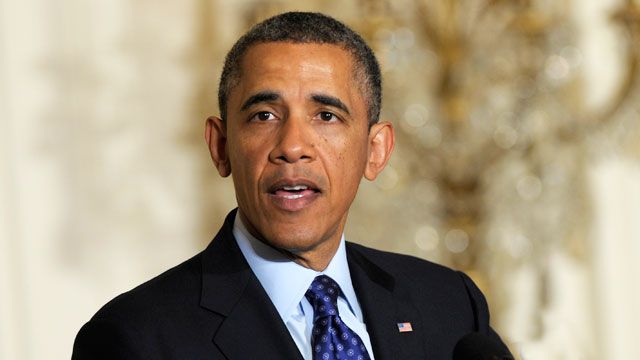
“Now is the time for North Korea to end the belligerent approach they have taken and to try to lower temperatures,” Obama said in his first public comments since Pyongyang threatened the United States and its allies in East Asia with nuclear attack.

Obama, speaking from the Oval Office, said he preferred to see the tensions on the peninsula resolved through diplomatic means, but added that “the United States will take all necessary steps to protect its people.”

The North on Thursday delivered a fresh round of war rhetoric with claims it has “powerful striking means” on standby, the latest in a torrent of warlike threats seen by outsiders as an effort to scare and pressure South Korea and the U.S. into changing their North Korea policies.

Fox News’ Justin Fishel and Greg Palkot and The Associated Press contributed to this report.

Filed Under: All Stories, Elections, Foreign

Gutting 2nd Amendment: Gun Bill Clears Key Senate Hurdle

April 11, 2013 By Editor Leave a Comment

biden_gun_banControversial gun legislation cleared a key Senate hurdle Thursday, as lawmakers voted 68-31 to start debate on the package which includes expanded background checks and new penalties for gun trafficking.

Senate Democrats, joined by 16 Republicans, were able to overcome an attempted filibuster by GOP senators opposed to the current bill. Those senators could still slow-walk the debate, but the Senate will eventually begin votes on amendments — one of which is considered crucial to winning support for a final vote.

The White House called Thursday’s tally an “important” but “early milestone,” as both sides of the issue prepare for a grueling debate — one that is being waged in Washington and on the airwaves.

The amendment likely to be at the front of the line is one from Sens. Joe Manchin, D-W.Va., and Pat Toomey, R-Pa., which would scale back the call for universal background checks. The plan would expand checks to gun-show and Internet sales, but exempt certain personal transactions.

The National Rifle Association and other gun-rights supporters voiced concern about the new proposal, saying it still goes too far. But the plan, offered by two lawmakers who are at the conservative end of their respective parties, could help ease opposition ahead of a final vote.

The legislation required at least 60 votes to advance Thursday. If the bill ultimately passes the Senate, it would still have to pass the Republican-dominated House.

“The hard work starts now,” Senate Majority Leader Harry Reid acknowledged after Thursday’s vote.

He assured Democrats that a proposal to renew the assault weapons ban and a ban on high-capacity magazines would get a vote as an amendment, though it was dropped from the main bill amid intense opposition. The main bill also includes a measure to increase school safety funding.

Reid lost two Democrats in Thursday’s vote — Sen. Mark Pryor, D-Ark., and Sen. Mark Begich, D-Alaska, both lawmakers from states with a strong tradition of gun ownership.

More than a dozen Republican senators for days had threatened to hold up the bill Thursday. They voiced concern that the proposal — namely, the background checks provision — would infringe on Second Amendment rights and impose a burden on law-abiding gun owners. They also expressed frustration that, while Manchin and Toomey touted their compromise measure, the bill on the table Thursday did not yet include that. Rather, it included a stricter background checks provision.

“Because the background-check measure is the centerpiece of this legislation it is critical that we know what is in the bill before we vote on it,” Sens. Rand Paul, R-Ky.; Ted Cruz, R-Texas; and Mike Lee, R-Utah, said in a statement. “The American people expect more and deserve better.”

Thursday’s vote follows an intense week of lobbying by gun control advocates, including the families of the victims of the December mass shooting at Sandy Hook Elementary School in Connecticut. That shooting prompted calls at the state and federal levels for new gun legislation.

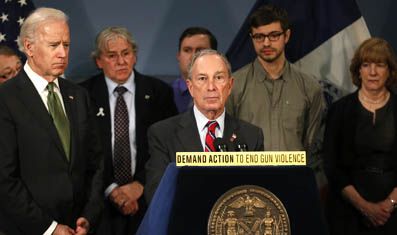
Advocates like New York Mayor Michael Bloomberg’s Mayors Against Illegal Guns group are likely to spar intensely with the NRA and conservative lawmakers in the coming days as lawmakers debate the bill and advance to a final vote.

The following is a list of Republican lawmakers who voted to advance the gun legislation in the Senate Thursday:

New Hampshire Sen. Kelly Ayotte

Georgia Sen. Saxby Chambliss

Oklahoma Sen. Tom Coburn

Maine Sen. Susan Collins

Arizona Sen. Jeff Flake

Georgia Sen. Johnny Isakson

Arizona Sen. John McCain

Mississippi Sen. Roger Wicker

North Carolina Sen. Richard Burr

North Dakota Sen. John Hoeven

Illinois Sen. Mark Kirk

South Carolina Sen. Lindsey Graham

Tennessee Sen. Lamar Alexander

Tennessee Sen. Bob Corker

Pennsylvania Sen. Pat Toomey

Nevada Sen. Dean Heller

The following is a list of Democratic lawmakers who voted against advancing gun legislation:

Alaska Sen. Mark Begich

Arkansas Sen. Mark Pryor


Published April 11, 2013 / FoxNews.com

Filed Under: All Stories, Economy, Elections, Ethics

Obama Plan: More Spending + Tax Hikes + SS Cuts = $3.77T

April 10, 2013 By Editor 1 Comment

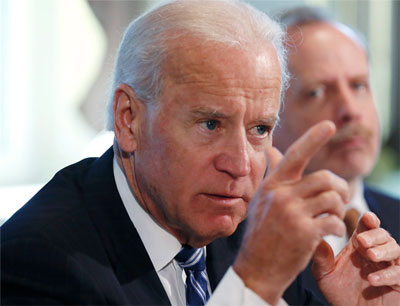
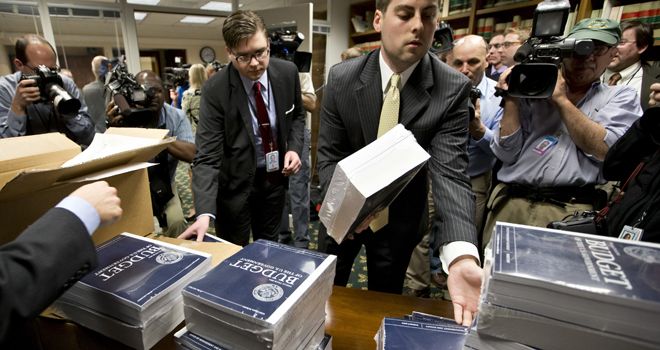
ObamaBudgetPresident Obama found himself weathering bipartisan broadsides Wednesday as he sent Congress his 2014 budget proposal, which in its effort to please both sides of the aisle has ended up angering both.

The budget arrived on Capitol Hill Wednesday morning, delivered 65 days after the legal deadline. The $3.77 trillion spending plan, which is over 2,000 pages, tries to curb deficits by further raising taxes on top earners and reining in the growth of Social Security.

But Republicans argue they already consented to increased taxes as part of the fiscal crisis deal and have expressed little interest in negotiating another hike. And liberal Democrats — particularly powerful advocacy groups — have launched a series of campaigns to oppose the changes to Social Security.

The president’s proposal being unveiled Wednesday includes an additional $1.8 trillion in deficit reduction over the next decade, bringing total deficit savings to $4.3 trillion, based on the administration’s calculations. It projects that the deficit for the 2014 budget year, which begins Oct. 1, would fall to $744 billion. That would be the lowest gap between spending and revenue since 2008.

The president’s plan tracks an offer he made to House Speaker John Boehner, R-Ohio, during December’s budget negotiations, which Boehner ended up walking away from because of his opposition to higher taxes on the wealthy.

The Obama budget proposal will join competing budget outlines already approved by the Republican-controlled House and the Democratic-run Senate.

The most sweeping proposal in Obama’s budget is a switch in the way the government calculates the annual cost-of-living adjustments for the millions of recipients of Social Security and other government benefit programs. The current method of measuring increases in the consumer price index would be modified to track a process known as chained CPI.

The new method takes into account changes that occur when people substitute goods rising in price with less expensive products. It results in slightly lower annual reading for inflation.

The switch in the inflation formula would cut spending on government benefit programs by $130 billion over 10 years, although the administration said it planned to protect the most vulnerable, including the very elderly. The change would also raise about $100 billion in higher taxes because the current CPI formula is used to adjust tax brackets each year. A lower inflation measure would mean more money taxed at higher rates.

In the tax area, Obama would raise an additional $580 billion by restricting deductions for the top 2 percent of family incomes. The budget would also implement the “Buffett Rule” requiring that households with incomes of more than $1 million pay at least 30 percent of their income in taxes. Charitable giving would be excluded.

Obama’s plan is not all about budget cuts. It also includes an additional $50 billion to fund infrastructure investments, including $40 billion in a “Fix It First” effort to provide immediate investments to repair highways, bridges, transit systems and airports nationwide.

Obama’s budget would also provide $1 billion to launch a network of 15 manufacturing innovation institutes across the country, and it earmarks funding to support high-speed rail projects.

The president also is proposing establishment of program to offer preschool to all 4-year-olds from low- and moderate-income families, with the money to support the effort coming from increased taxes on tobacco products.

The administration said its proposals to increase spending would not increase the deficit but rather are paid for either by increasing taxes or making deeper cuts to other programs.

Among the proposed cuts, the administration wants to trim defense spending by an additional $100 billion and domestic programs by an extra $100 billion over the next decade.

The budget proposes cutting $400 billion from Medicare and other health care programs over a decade. The cuts would come in a variety of ways, including negotiating better prescription drug prices and asking wealthy seniors to pay more.

It would obtain an additional $200 billion in savings by scaling back farm subsidies and trimming federal retiree programs.

Congress and the administration have already secured $2.5 trillion in deficit reduction over the next 10 years through budget reductions and with the end-of-year tax increase on the rich. Obama’s plan would bring that total to $4.3 trillion over 10 years.

It is unlikely that Congress will get down to serious budget negotiations until this summer, when the government once again will be confronted with the need to raise the government’s borrowing limit or face the prospect of a first-ever default on U.S. debt.

As part of the administration’s effort to win over Republicans, Obama will have a private dinner at the White House with about a dozen GOP senators Wednesday night. The budget is expected to be a primary topic, along with proposed legislation dealing with gun control and immigration.

Early indications are that the budget negotiations will be intense. Republicans have been adamant in their rejection of higher taxes, arguing that the $600 billion increase on top earners that was part of the late December agreement to prevent the government from going over the “fiscal cliff” were all the new revenue they will tolerate.

The administration maintains that Obama’s proposal is balanced with the proper mix of spending cuts and tax increases.

Obama has presided over four straight years of annual deficits totaling more than $1 trillion, reflecting in part the lost revenue during a deep recession and the government’s efforts to get the economy going again and stabilize the financial system.

The Obama budget’s $1.8 trillion in new deficit cuts would take the place of the automatic $1.2 trillion in reductions required by a 2011 budget deal. That provision triggered $85 billion in automatic cuts for the current budget year, and those reductions, known as a “sequester,” would not be affected by Obama’s new budget.

The budget plan already passed by the GOP-controlled House would cut deficits by a total $4.6 trillion over 10 years on top of the $1.2 trillion called for in the 2011 deal. The budget outline approved by the Democratic-controlled Senate tracks more closely to the Obama proposal, although it does not include changes to the cost-of-living formula for Social Security.

Published April 10, 2013 / FoxNews.com  / The Associated Press contributed to this report.
Filed Under: All Stories, Economy, Elections, Entitlement, Ethics, Foreign, Gender, Religion

Army Email Labels Christian Ministries “Domestic Hate Groups”

April 9, 2013 By Editor Leave a Comment

war_against_christianityA U.S. Army officer sent an email to dozens of subordinates listing the American Family Association and Family Research Council as “domestic hate groups” because they oppose homosexuality — and warned officers to monitor soldiers who might be supporters of the groups.

“Just want to ensure everyone is somewhat educated on some of the groups out there that do not share our Army Values,” read an email from Lt. Col.  Jack Rich to three dozen subordinates at Fort Campbell in Kentucky. “When we see behaviors that are inconsistent with Army Values – don’t just walk by – do the right thing and address the concern before it becomes a problem.”

Tony Perkins, president of the Family Research Council, told Fox News he was disturbed by the contents of the email.

“It’s very disturbing to see where the Obama Administration is taking the military and using it as a laboratory for social experimentation  — and also as an instrument to fundamentally change the culture,” he said. “The message is very clear – if you are a Christian who believes in the Bible, who believes in transcendent truth, there is no place for you in the military.”

The Army denied there is any attack on Christians or those who hold religious beliefs.

“The notion that the Army is taking an anti-religion or anti-Christian stance is contrary to any of our policies, doctrines and regulations,” said George Wright, Army spokesman at the Pentagon. “Any belief that the Army is out to label religious groups in a negative manner is without warrant.”

Wright said they are checking into the origin of the email. At this point it’s unclear who ordered the email to be sent and why.

The 14-page email documented groups the military considers to be anti-gay, anti-immigrant and anti-Muslim. Among the other groups mentioned are Neo-Nazis, Racist Skinheads, White Nationalists and the Ku Klux Klan.

The Family Research Council and the American Family Association were listed as being anti-gay.

“The religious right in America has employed a variety of strategies in its efforts to beat back the increasingly confident gay rights movement,” the officer wrote. “One of those has been defamation.”

The officer accused the “Christian Right” of “engaging in the crudest type of name-calling, describing LGBT people as ‘perverts” with ‘filthy habits’ who seek to snatch the children of straight parents and ‘convert’ them to gay sex,” he wrote.

Last week, Fox News reported that an Army training instructor told a Reserve unit based in Pennsylvania that Evangelical Christianity and Catholicism were examples of religious extremism. The Army categorized that episode as an isolated incident.

Ron Crews, executive director of the Chaplain Alliance, told Fox News that the latest revelation is proof of a much larger problem within military leadership.

“We’re concerned that this is more than an isolated incident,” he said. “We’d like answers. Is there a policy in the military concerning people of faith?”

Crews said that soldiers have religious liberty – and they should not be punished for being members of respected religious groups.

“This is part of a trend that is concerning us,” he said. “Several in the military have this belief that evangelicals and people who hold to traditional values seem to be a problem and need to be monitored.”

Perkins, a Marine Corps veteran, said it’s clear that “Army Values” have indeed changed.

“And it’s the values of Evangelicals and Catholics,” Perkins said. “It’s not the values of the vast majority of those serving in our nation’s military. I think it’s the values of this administration trying to superimpose upon our military.”

Lt. Gen. (Ret.) Jerry Boykin, now an executive vice president of the FRC, told Fox News that all Americans should be concerned about the contents of the email.

“If this is the action of a single Army lieutenant colonel, it needs to be investigated,” he said. “On the other hand, if what he reflects is a shifting policy or attitude of the Army or DOD, then I think it is a much bigger issue.”

Boykin served more than 36 years in the military before retiring in 2007. Since 2008 he said he’s seen withering attacks on religious liberty.

Among the incidents:

  • A War Games scenario at Fort Leavenworth that identified Christian groups and Evangelical groups as being potential threats;
  • A 2009 Dept. of Homeland Security memorandum that identified future threats to national security coming from Evangelicals and pro-life groups;
  • A West Point study released by the U.S. Military Academy’s Combating Terrorism Center that linked pro-lifers to terrorism;
  • Evangelical leader Franklin Graham was uninvited from the Pentagon’s National Day of Prayer service because of his comments about Islam;
  • Christian prayers were banned at the funeral services for veterans at Houston’s National Cemetery;
  • Bibles were banned at Walter Reed Army Medical Center – a decision that was later rescinded;
  • Christian crosses and a steeple were removed from a chapel in Afghanistan because the military said the icons disrespected other religions;
  • Catholic chaplains were told not to read a letter to parishioners from their archbishop related to Obamcare mandates. The Secretary of the Army feared the letter could be viewed as a call for civil disobedience.

But Boykin called the newly-uncovered email the most “egregious” attack.

“That kind of rhetoric is isolating the institution of the military from a large sector of the American population,” he said. “This is an attack not only on the Christian faith, but on fundamental, traditional American values.”

Crews said the military is getting their information on domestic hate groups from the Southern Poverty Law Center. And the email written by the lieutenant colonel referenced the organization.

“This is disturbing that the military would use this list composed by the Southern Poverty Law Center when these organizations that are highly esteemed and respected in the evangelical community,” he said.

The Chaplain Alliance filed a Freedom of Information Act request – asking if the SPLC list had been widely distributed in the military or if had been used in a formal manner.

The response they got from the Dept. of Defense left Crews troubled.

“They told us they had no record of the SPLC list being used,” he said – even though the email clearly proves otherwise.

“This is part of a trend that is concerning us,” he said. “We believe it is more widespread than the military is acknowledging. We keep getting calls from military personnel telling us of their issues.”

David Jeremiah, the pastor of Shadow Mountain Community Church, was among the first to publicly support the FRC and AFA and denounce the attack.

“For it to be coming from a left wing political group is one thing, but for it to be coming from our own government is unconscionable to me,” he told Fox News.

Shadow Mountain is an evangelical mega-church near San Diego – attended by many military families. Jeremiah said he suspects there is a significant disconnect between the Pentagon and the rank and file troops.

“There are so many good and godly people in the military who would be appalled to think that their leaders would be saying things like this,” he said. “The attempt on the part of the social engineers of our day to secularize our culture is in full swing. Everything they can do to remove God, the Bible and morality from the marketplace is being done – not subtly but overtly.”

By Todd Starnes

Related posts:

  1. Army Labeled Evangelicals as Religious Extremists
  2. Military Says Christian Crosses Disrespect other Faiths
  3. Army Silences Catholic Chaplains
  4. Schools Allow Anti-War Groups Same Access as Military Recruiters
  5. Army Removes Crosses, Steeple from Chapel

Filed Under: All Stories, Elections, Ethics, Religion

Sen. McConnell Brings in FBI to Probe Ashley Judd Spies

April 9, 2013 By Editor Leave a Comment

ashley_judd_probeSenate Republican Leader Mitch McConnell’s campaign has contacted the FBI after a recording of a private strategy meeting was published Tuesday in a liberal publication, claiming the campaign was the victim of “Watergate-style tactics” to bug the office.

Several snippets of the audio from the February strategy sessions were published Tuesday by Mother Jones magazine, along with a lengthy article. The recording, obtained from an unnamed source, included McConnell aides discussing ways to politically damage actress Ashley Judd, who at the time was talked about as a possible McConnell challenger. The aides suggested going after her mental health and views on religion.

McConnell campaign manager Jesse Benton said Tuesday that the senator’s office is “working with the FBI” on the issue and has notified the U.S. attorney in Louisville at the FBI’s request.

“We’ve always said the Left would stop at nothing to attack Sen. McConnell, but Watergate-style tactics to bug campaign headquarters are above and beyond,” Benton said in a statement Tuesday. “Obviously a recording device of some kind was placed in Senator McConnell’s campaign office without consent. By whom and how that was accomplished presumably will be the subject of a criminal investigation.”

The campaign, on Twitter, later accused opponents of “illegally wiretapping” the office.

Sen. Jerry Moran, R-Kan., chairman of the National Republican Senatorial Committee, also urged liberal and Democratic groups to denounce the tactics.

“Secret recordings, private conversations leaked, reports of bugs — these Watergate-era tactics have no place in our campaigns,” he said.

The FBI declined to comment.

Judd had been seriously considering a challenge to the Senate Republican leader in Kentucky until she opted against running last month. The McConnell team meeting covered in the Mother Jones article reportedly took place on Feb. 2.

The advisers could be heard discussing possible avenues of attack against Judd, one of which concerned her mental state.

“She’s clearly, this sounds extreme, but she is emotionally unbalanced. I mean it’s been documented. Jesse can go in chapter and verse from her autobiography about, you know, she’s suffered some suicidal tendencies. She was hospitalized for 42 days when she had a mental breakdown in the ’90s,” one strategist said.

One aide also said Judd is “critical … of traditional Christianity.”

“She sort of views it as sort of a vestige of patriarchy,” the aide continued. “She says Christianity gives a God like a man, presented and discussed exclusively with male imagery, which legitimizes and seals male power, the intention to dominate even if that intention is nowhere visible.”

At the beginning, McConnell could be heard saying: “I assume most of you have played the, the game Whac-A-Mole? This is the Whac-A-Mole period of the campaign…when anybody sticks their head up, do them out.”

The meeting was evidently a preliminary session to toss around ideas. The campaign ultimately never had to deploy any of them, as Judd decided not to run.

But the allegation that the meeting was recorded and released without the consent of the campaign could present a significant legal issue.

It is reminiscent of the 1996 scandal in Florida where Democratic activists taped a cellphone conversation with then-House Speaker Newt Gingrich picked up by a police scanner. The conversation was passed to Democratic Rep. Jim McDermott, D-Wash., who later admitted he leaked it to the media.

McDermott was sued by Rep. John Boehner — now the House speaker — who eventually won a court judgment against McDermott.

Fox News’ Mike Emanuel and Mike Levine contributed to this report.

Filed Under: All Stories, Elections, Ethics, Gender, Religion

Left Pressures Congress to Gut 2nd Amendment

April 9, 2013 By Editor Leave a Comment

Supporters of comprehensive gun control legislation are ratcheting up pressure on wavering lawmakers, trying to clear the way for Senate Democratic Leader Harry Reid to proceed with a bill in the face of mounting roadblocks from conservative members.

Biden_BloombergAt least 14 Republican senators have threatened to filibuster the firearms legislation, complaining that it would curb the rights of the law-abiding while doing little to reduce crime. “The more people learn about the consequences of current gun control proposals, the less they will support the new restrictions,” Sen. Mike Lee, R-Utah, said.

If Lee and his colleagues succeed, their objections would require any bill to garner 60 votes, a heavy lift for Reid and the White House.

But as negotiations continue on a compromise measure that could sway moderate hold-outs, powerful advocacy groups are rolling out new ads and campaigns to win them over.

Family members of the victims of the Sandy Hook mass shooting are in Washington through Thursday to meet with senators on both sides of the aisle and lobby for legislation. After flying back from an event with President Obama on Air Force One Monday night, the family members plan to hold a conference call Tuesday afternoon. They are calling for universal background checks, limits on high-capacity magazines and tougher gun trafficking laws.

Separately, New York Mayor Michael Bloomberg’s group Mayors Against Illegal Guns reportedly is launching a scoring system Tuesday to give lawmakers a letter grade on their gun control stances. According to The Washington Post, this will be similar to what the National Rifle Association does in scoring lawmakers’ gun-rights positions.

“For decades, the NRA has done an admirable job of tracking to minute detail how members of Congress stand on gun bills. We’ve simply decided to do the same,” Mark Glaze, director of Mayors Against Illegal Guns, told the Post.

Obama’s chief campaign arm Organizing for Action on Monday also began running online ads on Facebook and search engines asking Americans to urge senators to support universal background checks.

These groups are targeting moderate lawmakers seen as pliable on the issue of gun control. The new efforts come after the legislation appeared to be losing momentum. First, Reid dropped a renewed ban on assault weapons and high-capacity magazines from the main bill — though they could still get a vote as an amendment. Then, senators began to clash over the issue of universal background checks.

On the sidelines, West Virginia Democratic Sen. Joe Manchin and Pennsylvania Republican Sen. Pat Toomey are now discussing a possible compromise proposal on the checks, which could serve to assuage gun-rights supporters’ concerns about the new system encumbering casual transactions among family members and fellow hunters.

Reid has not yet moved to call a vote on the package. The earliest a vote could happen is most likely Thursday.

Late Monday, Senate Republican Leader Mitch McConnell joined conservatives threatening to filibuster and demand a 60-vote threshold.

“Sen. McConnell opposes the Reid bill (S.649). While nobody knows yet what Sen. Reid’s plan is for the gun bill, if he chooses to file cloture on the motion to proceed to the Reid bill, Sen. McConnell will oppose cloture on proceeding to that bill,” spokesman Mike Brumas said.

Obama criticized the proposed filibuster during a campaign-style event at the University of Hartford in Connecticut about 45 miles from the elementary school where 20 first-graders were shot and killed in December.

“Some back in Washington are already floating the idea that they might use political stunts,” said Obama, who was introduced by Nicole Hockley, whose son, Dylan, was one of the victims. “They’re not just saying they’ll vote ‘no’ on ideas that almost all Americans support. They’re saying they won’t allow any votes on them at all.”

Many in the crowd responded by chanting: “We want a vote.”

Published April 09, 2013 / FoxNews.com

Filed Under: All Stories, Elections, Ethics

Navy Will Deploy Lasers on Ships

April 8, 2013 By Editor Leave a Comment

120730-N-PO203-141The Pentagon has plans to deploy its first ever ship-mounted laser next year, a disruptive, cutting-edge weapon capable of obliterating small boats and unmanned aerial vehicles with a blast of infrared energy.

Navy officials announced Monday that in early 2014, a solid-state laser prototype will be mounted to the fantail of the USS Ponce and sent to the 5th fleet region in the Middle East for real-world experience.

Video released by the Navy shows the laser lock onto a slow-moving target, in this case an unmanned drone, which bursts aflame in mid-flight. The drone soon catches fire and crashes into the sea below.

“It operates much like a blowtorch … with an unlimited magazine,” one official said.

There are potential targets for the laser in the 5th fleet region, which includes the Persian Gulf, where Iran operates small surveillance drones and is known for swarming and harassing U.S. Navy ships with small, armored speed boats.

Navy researches say so far the laser is 12 for 12 in testing, destroying its targets 100 percent of the time. Officials who briefed the press on the laser gun — which the Navy calls a “directed energy pulse weapon” — say it has non-lethal functions too, and may be used to send warning signals to other vessels.

One of its major advantages, the Navy said, is its relatively low cost to operate. “Its weapon round costs about $1 to shoot,” said Rear Admiral Matthew Klunder, chief of Naval Research. Although the unit cost is higher — at around $32 million to produce.

Still, Navy officials say this is a major accomplishment when compared to the Airborne Laser, the Air Force’s now cancelled project to put nose-mounted lasers on its aircraft. Those lasers cost nearly $1.5 billion a piece.

“This wasn’t demonstrated on a barge. This was on a naval warship. And the performance results were quite astounding,” Klunder said.

There are some concerns with the new technology, however. Navy officials expressed worries with its ability to fire in poor weather conditions and believe the 5th fleet region will be a great test of the weapon’s abilities. It’s also unclear if the laser can effectively take down faster moving objects, such as fighter jets.

Officials also would not reveal the range of this new weapon, describing it as more of a “close in” system. Energy levels were also classified. If successful, it will eventually be painted Navy grey and mounted on top of the ship with the rest of the major weapons systems.

The Navy and other armed forces have been experimenting for years with these directed energy weapons — laser guns to you and me. Such weapons could be the future of warfare.

In April 2011, the Navy conducted a more limited test of a similar weapon, blasting a boat from the water with a laser weapon. Nevin Carr, chief of Naval Research at the time, said this energy weapon would not handle all types of threats, however.

“To begin to address a cruise missile threat, we’d need to get up to hundreds of kilowatts,” Carr said.

The Navy is working on just such a gun of course.

Called the FEL — for free-electron laser, which doesn’t use a gain medium and is therefore more versatile — it was tested in February 2011, consuming blistering amounts of energy and burning through feet of raw steel.

The FEL will easily get into the kilowatt power range, experts say. It can also be easily tuned as well, to adjust to environmental conditions, another reason it is more flexible than the fixed wavelength of solid-state laser. But the Navy doesn’t expect to release megawatt-class FEL weapons until the 2020s; among the obstacles yet to be overcome, the incredible power requirements of such weapons.

Also in the Navy’s futuristic arsenal: a so-called “rail gun,” which uses an electomagnetic current to accelerate a non-explosive bullet at several times the speed of sound. Railguns are even further off in the distance, possibly by 2025, the Navy has said.

But lasers? Forget Buck Rogers and the 25th century. They’re here today.

By Justin Fishel  / Published April 08, 2013 / FoxNews.com

Filed Under: All Stories, Economy, Elections, Foreign, Sci-Tech

Former British Prime Minister Margaret Thatcher Has Died

April 8, 2013 By Editor Leave a Comment

thatcherFormer British Prime Minister Margaret Thatcher has died after suffering a stroke at the age of 87. Known as ‘The Iron Lady,’ Thatcher was Britain’s only female prime minister and led the Conservatives to three election victories, governing from 1979 to 1990.

The U.K. press is reporting that Thatcher suffered a stroke and her children said in a statement she passed “peacefully.”

“It is with great sadness that Mark and Carol Thatcher announced that their mother Baroness Thatcher died peacefully following a stroke this morning,” Lord Bell, Thatcher’s spokesperson, said.

Thatcher, known as the “Iron Lady,” was a staunch critic of Communism and delivered several memorable lines while defending Capitalism. For example, during her last speech in the House of Commons in 1990, she delivered a rousing rebuttal to a member of Parliament who questioned her policies and their affect on the poor.

She ruled for 11 remarkable years and imposed her will on a fractious, rundown nation – breaking the unions, triumphing in a far-off war, and selling off state industries at a record pace. She left behind a leaner government and more prosperous nation by the time a mutiny ousted her from No. 10 Downing Street.

For admirers, Thatcher was a savior who rescued Britain from ruin and laid the groundwork for an extraordinary economic renaissance. For critics, she was a heartless tyrant who ushered in an era of greed that kicked the weak out onto the streets and let the rich become filthy rich.

“Let us not kid ourselves, she was a very divisive figure,” said Bernard Ingham, Thatcher’s press secretary for her entire term. “She was a real toughie. She was a patriot with a great love for this country, and she raised the standing of Britain abroad.”

Thatcher was the first – and still only – female prime minister in Britain’s history. But she often found feminists tiresome and was not above using her handbag as a prop to underline her swagger and power. A grocer’s daughter, she rose to the top of Britain’s snobbish hierarchy the hard way, and envisioned a classless society that rewarded hard work and determination.

She was a trailblazer who at first believed trailblazing impossible: Thatcher told the Liverpool Daily Post in 1974 that she did not think a woman would serve as party leader or prime minister during her lifetime.

But once in power, she never showed an ounce of doubt.

Thatcher could be intimidating to those working for her: British diplomats sighed with relief on her first official visit to Washington, D.C., as prime minister to find that she was relaxed enough to enjoy a glass of whiskey and a half-glass of wine during an embassy lunch, according to official documents.

Like her close friend and political ally Ronald Reagan, Thatcher seemed motivated by an unshakable belief that free markets would build a better country than reliance on a strong, central government. Another thing she shared with the American president: a tendency to reduce problems to their basics, choose a path, and follow it to the end, no matter what the opposition.

She formed a deep attachment to the man she called “Ronnie” – some spoke of it as a schoolgirl crush. Still, she would not back down when she disagreed with him on important matters, even though the United States was the richer and vastly stronger partner in the so-called “special relationship.”

Thatcher was at her brashest when Britain was challenged. When Argentina’s military junta seized the remote Falklands Islands from Britain in 1982, she did not hesitate even though her senior military advisers said it might not be feasible to reclaim the islands.

She simply would not allow Britain to be pushed around, particularly by military dictators, said Ingham, who recalls the Falklands War as the tensest period of Thatcher’s three terms in power. When diplomacy failed, she dispatched a military task force that accomplished her goal, despite the naysayers.

“That required enormous leadership,” Ingham said. “This was a formidable undertaking, this was a risk with a capital R-I-S-K, and she demonstrated her leadership by saying she would give the military their marching orders and let them get on with it.”

Thatcher served from 1979-1990.

This is a breaking story. Updates will be added. ​The Associated Press contributed to this report.
Filed Under: All Stories, Elections, Foreign

North Korea Moves Missile Launchers, Warns Foreign Embassies

April 5, 2013 By Editor Leave a Comment

Korea_Missles_MovedAs tensions continued to mount on the Korean peninsula, the communist dictatorship in the North deployed mid-range missile launchers to its east coast and reportedly warned foreign embassies Friday it cannot guarantee the safety of diplomats after April 10.

Reuters reported early Friday that North Korea deployed two of its intermediate range missiles on mobile launchers and hid them on the east coast of the country, citing a South Korean news agency.

South Korea said Thursday North Korea moved a missile with “considerable range” to its east coast after an unnamed spokesman for the North Korean army warned the U.S. Wednesday that its military has been cleared to wage an attack using “smaller, lighter and diversified nuclear” weapons.

Meanwhile, the United Kingdom foreign office confirmed in a statement Friday that North Korea asked a number of foreign embassies in Pyongyang  to consider moving staff out since they could not assure their safety in the event of conflict.

“We are consulting international partners about these developments.  No decisions have been taken, and we have no immediate plans to withdraw our Embassy,”  the UK foreign office statement said.

Under the Vienna Convention that governs diplomatic missions, host governments are required to assist in the evacuation of embassy staff from the country in the event of conflict.

North Korea has railed for weeks against joint U.S. and South Korean military exercises taking place in South Korea and has expressed anger over tightened sanctions for a February nuclear test.

“The current question was not whether, but when a war would break out on the peninsula,” because of the “increasing threat from the United States”, China’s state news agency Xinhua quoted the North’s Foreign Ministry as saying, according to a Reuters report.

U.S. National Security Council spokesperson Caitlin Hayden has called North Korea’s threats “unhelpful and unconstructive.”

“It is yet another offering in a long line of provocative statements that only serve to further isolate North Korea from the rest of the international community and undermine its goal of economic development,” she said. “North Korea should stop its provocative threats and instead concentrate on abiding by its international obligations.”

South Korean Defense Minister Kim Kwan-jin dismissed reports in the Japanese and South Korean media that the missile moved this week could be a KN-08, which is believed to be a long-range missile that if operable could hit the United States.

Kim told lawmakers at a hearing that the missile’s range is considerable but not far enough to hit the U.S. mainland. He said he did not know the reasons behind the missile movement, saying it “could be for testing or drills.”

The range he described could refer to a mobile North Korean missile known as the Musudan, which has a range of 1,800 miles. That would make Japan and South Korea potential targets, but little is known about the missile’s accuracy.

Despite North Korea’s rhetoric, analysts say they do not expect a nuclear attack, which knows the move could trigger a destructive, suicidal war that no one in the region wants.

“The rhetoric is off the charts,” said Victor Cha, former director for Asian affairs at the White House National Security.

Following through on one threat Wednesday, North Korean border authorities refused to allow entry to South Koreans who manage jointly run factories in the North Korean city of Kaesong.

Washington calls the military drills, which this time have incorporated fighter jets and nuclear-capable stealth bombers, routine annual exercises between the allies. Pyongyang calls them rehearsals for a northward invasion.

Published April 05, 2013 / FoxNews.com /Fox News’ Justin Fishel and the Associated Press contributed to this report.

Filed Under: All Stories, Elections, Foreign

Federal Judge Orders Abortion Pill Must Be Over-Counter For All Girls

April 5, 2013 By Editor 1 Comment

Plan_BA federal judge ruled Friday that the morning-after pill known as Plan B must be made available over the counter for women and girls of all ages.

The decision on the controversial subject comes after lengthy legal battles over who should have access to the pill and at what age. The Justice Department did not say whether it would appeal.

The Food and Drug Administration had initially decided to allow the emergency pill to be available for young teens. But Health and Human Services Secretary Kathleen Sebelius overruled the FDA in late 2011, and the agency limited availability without a prescription to women 17 and older.

The decision Friday by U.S. District Judge Edward Korman ordered the FDA to make the pill, commonly referred to as the abortion pill, available for all ages. The decision means that unless the FDA appeals and is granted a stay, by this time next month a teenager 16 or under could walk into a local pharmacy and buy the pill off the shelf.

Korman accused the FDA of “intolerable delays” in reviewing a petition seeking broad access to the drug, likening the process to an “administrative agency filibuster.”

“The plaintiffs should not be forced to endure, nor should the agency’s misconduct be rewarded by, an exercise that permits the FDA to engage in further delays and obstruction,” he wrote.

The FDA declined to comment on the ruling, describing it as an “ongoing legal matter.”

Pill manufacturer Teva said it is “currently reviewing” the decision. “We have no additional comment at this time,” the company said.

The judge ordered the change to be completed in a month. The opinion is sure to rile conservatives and other pro-life groups, who consider the morning-after pill — in some cases — to act as an abortion-inducing drug.

“This ruling places the health of young girls at risk,” said Anna Higgins of the Family Research Council. “There is a real danger that Plan B may be given to young girls, under coercion or without their consent. The involvement of parents and medical professionals act as a safeguard for these young girls. However, today’s ruling removes these commonsense protections.”

The case started in 2005, and Korman initially ruled in 2009 that 17 year-olds should have over-the-counter access. The FDA then moved to allow that access to all ages, until Sebelius stepped in.

Korman wrote in his opinion that “the FDA bowed to political pressure emanating from the White House.”

The Center for Reproductive Rights, which filed suit against the age restriction, and other groups have argued that contraceptives are being held to a different and non-scientific standard than other drugs and that politics has played a role in decision-making.

“I think this is a landmark decision in terms of providing women and girls in the United States access to a safe and effective form of birth control,” said attorney Andrea Costello with the Partnership for Civil Justice Fund.

The morning-after pill contains a higher dose of the female progestin hormone that is in regular birth control pills. Taking it within 72 hours of rape, condom failure or just forgetting regular contraception can cut the chances of pregnancy by up to 89 percent. But it works best within the first 24 hours.

If a woman already is pregnant, the pill has no effect. It prevents ovulation or fertilization of an egg. According to the medical definition, pregnancy doesn’t begin until a fertilized egg implants itself into the wall of the uterus. Still, some critics say Plan B is the equivalent of an abortion pill because it may also be able to prevent a fertilized egg from attaching to the uterus, a contention that scientists — and Korman, in his ruling — said has been discredited.

Published April 05, 2013 / FoxNews.com /The Associated Press contributed to this report.

Filed Under: All Stories, Economy, Elections, Entitlement, Ethics, Gender, Religion, Sci-Tech

Obama Puts Social Security, Medicare On Block to Gain Tax-Hike Support

April 5, 2013 By Editor Leave a Comment

obama_tax_hikePresident Obama will propose modest changes to Social Security and other benefit programs in his 2014 budget — a gesture that is meant to soften Republicans to the idea of tax hikes, but has already drawn the ire of liberal Democrats who want the entitlement shielded.

The president plans to unveil his budget Wednesday, but a senior administration official confirmed the key details in advance. Included in the plan, which would aim to reduce the deficit by $1.8 trillion over 10 years, is a provision to lower cost-of-living adjustments to Social Security, the benefit program for retirees. This would curb the growth in benefits.

“While this is not the president’s ideal deficit reduction plan, and there are particular proposals in this plan like the (Social Security change) that were key Republican requests,” the official said. “The president felt it was important to make it clear that the offer still stands.”

The administration is clear that it is offering changes to Social Security and Medicare — the two benefit programs most important to seniors — in order to convince Republicans to accept increased revenues. The official said the plan to be unveiled next week “isn’t a menu of options for them to choose from — it’s a cohesive package.”

The proposal, though, is sure to get hit from both sides. Republicans want the Social Security change but for years have resisted new tax revenue — Obama’s plan calls for additional tax revenue, including a proposal to place limits on tax-preferred retirement accounts for top earners. Obama has also called for limits on tax deductions by top earners, a proposal that could generate about $580 billion in revenue over 10 years.

But the president could face an even tougher time selling the Social Security change to liberal members of Congress.

Sen. Bernie Sanders, I-Vt., fired off a statement Thursday responding to what was then the rumor that Obama’s budget could include the change.

“Millions of working people, seniors, disabled veterans, those who have lost a loved one in combat, and women will be extremely disappointed if President Obama caves into the long standing Republican effort to cut Social Security and benefits for disabled veterans and their survivors through a so-called chained CPI,” Sanders said. “In 2008, candidate Barack Obama told the American people that he would not cut Social Security.  Having him go back on his word will only add to the rampant political cynicism that our country is experiencing today.”

Chained CPI is the Washington term for the revised inflation adjustment that would effectively curb annual increases in a broad swath of government programs, but would have its biggest impact on Social Security.

The inflation adjustment would reduce federal spending over 10 years by about $130 billion, according to past White House estimates. Because it also affects how tax brackets are adjusted, it would also generate about $100 in higher taxes and affect even middle income taxpayers.

Obama’s budget, to be released next week, comes after the Republican-controlled House and the Democratic-run Senate passed separate and markedly different budget proposals. House Republicans achieved long-term deficit reductions by targeting safety net programs; Democrats instead protected those programs and called for $1 trillion in tax increases.

Obama’s budget proposal includes features from an offer he made to House Speaker John Boehner during fiscal negotiations last year. Those talks ultimately failed but Congress did agree to increase tax rates on top earners.

The reductions in growth of benefit programs, which would affect veterans, the poor and the older Americans, is sure to anger many Democrats.

Labor groups and liberals have long been critical of Obama’s offer to Boehner for including such a plan.

Obama’s new plan would also replace the sequester with other spending cuts. But it will steer clear of major cuts to Medicaid, including tens of billions in reductions to the health care plan for the poor that the administration had proposed only last year.

Published April 05, 2013 / FoxNews.com / The Associated Press contributed to this report.
 

Filed Under: All Stories, Economy, Elections, Entitlement, Ethics

N. Korea: US Nuke Attack Approved

April 4, 2013 By Editor Leave a Comment

korea_missleSouth Korea says North Korea has moved a missile with “considerable range” to its east coast after an unnamed spokesman for the North Korean army warned the U.S. Wednesday that its military has been cleared to wage an attack using “smaller, lighter and diversified nuclear” weapons.

South Korea’s defense minister said Thursday the missile moved is not capable of hitting the United States.

Kim Kwan-jin dismissed reports in Japanese and South Korean media that the missile could be a KN-08, which is believed to be a long-range missile that if operable could hit the United States.

Kim told lawmakers at a hearing that the missile’s range is considerable but not far enough to hit the U.S. mainland. He said he did not know the reasons behind the missile movement, saying it “could be for testing or drills.”

The range he described could refer to a mobile North Korean missile known as the Musudan, which has a range of 1,800 miles. That would make Japan and South Korea potential targets, but little is known about the missile’s accuracy.

North Korea has railed for weeks against joint U.S. and South Korean military exercises taking place in South Korea and has expressed anger over tightened sanctions for a February nuclear test.

The army spokesman said in a statement carried by the Korean Central News Agency that troops have been authorized to counter U.S. aggression with “powerful practical military counteractions.”

National Security Council spokesperson Caitlin Hayden called the threats “unhelpful and unconstructive.”

“It is yet another offering in a long line of provocative statements that only serve to further isolate North Korea from the rest of the international community and undermine its goal of economic development,” she said. “North Korea should stop its provocative threats and instead concentrate on abiding by its international obligations.”

The Pentagon said in Washington that it will deploy a missile defense system to the U.S. Pacific territory of Guam to strengthen regional protection against a possible attack from North Korea. The defense secretary said the U.S. was seeking to defuse the situation.

Despite the rhetoric, analysts say they do not expect a nuclear attack by North Korea, which knows the move could trigger a destructive, suicidal war that no one in the region wants.

The strident warning from Pyongyang is latest in a series of escalating threats from North Korea, which has railed for weeks against joint U.S. and South Korean military exercises taking place in South Korea and has expressed anger over tightened sanctions for a February nuclear test.

Following through on one threat Wednesday, North Korean border authorities refused to allow entry to South Koreans who manage jointly run factories in the North Korean city of Kaesong.

Washington calls the military drills, which this time have incorporated fighter jets and nuclear-capable stealth bombers, routine annual exercises between the allies. Pyongyang calls them rehearsals for a northward invasion.

The foes fought on opposite sides of the three-year Korean War, which ended in a truce in 1953. The divided Korean Peninsula remains in a technical state of war six decades later, and Washington keeps 28,500 troops in South Korea to protect its ally.

U.S. Defense Secretary Chuck Hagel said Washington was doing all it can to defuse the situation, echoing comments a day earlier by Secretary of State John Kerry.

“Some of the actions they’ve taken over the last few weeks present a real and clear danger and threat to the interests, certainly of our allies, starting with South Korea and Japan and also the threats that the North Koreans have leveled directly at the United States regarding our base in Guam, threatened Hawaii, threatened the West Coast of the United States,” Hagel said Wednesday.

In Pyongyang, the military statement said North Korean troops had been authorized to counter U.S. “aggression” with “powerful practical military counteractions,” including nuclear weapons.

“We formally inform the White House and Pentagon that the ever-escalating U.S. hostile policy toward the DPRK and its reckless nuclear threat will be smashed by the strong will of all the united service personnel and people and cutting-edge smaller, lighter and diversified nuclear strike means,” an unnamed spokesman from the General Bureau of the Korean People’s Army said in a statement carried by state media, referring to North Korea by its formal name, the Democratic People’s Republic of Korea. “The U.S. had better ponder over the prevailing grave situation.”

However, North Korea’s nuclear strike capabilities remain unclear.

Pyongyang is believed to be working toward building an atomic bomb small enough to mount on a long-range missile. Long-range rocket launches designed to send satellites into space in 2009 and 2012 were widely considered covert tests of missile technology, and North Korea has conducted three underground nuclear tests, most recently in February.

“I don’t believe North Korea has to capacity to attack the United States with nuclear weapons mounted on missiles, and won’t for many years. Its ability to target and strike South Korea is also very limited,” nuclear scientist Siegfried Hecker, a senior fellow at the Center for International Security and Cooperation at Stanford University, said this week.

“And even if Pyongyang had the technical means, why would the regime want to launch a nuclear attack when it fully knows that any use of nuclear weapons would result in a devastating military response and would spell the end of the regime? ” he said in answers posted to CISAC’s website.

In Seoul, a senior government official said Tuesday that it wasn’t clear how advanced North Korea’s nuclear weapons capabilities are. But he also noted fallout from any nuclear strike on Seoul or beyond would threaten Pyongyang as well, making a strike unlikely. He spoke on condition of anonymity because he wasn’t authorized to speak publicly to the media.

North Korea maintains that it needs to build nuclear weapons to defend itself against the United States. On Monday, North Korean leader Kim Jong Un led a high-level meeting of party officials who declared building the economy and “nuclear armed forces” as the nation’s two top priorities.

Published April 04, 2013 / FoxNews.com

The Associated Press contributed to this report.

Filed Under: All Stories, Elections, Foreign

Hagel Calls N. Korea ‘Real and Clear Danger’

April 3, 2013 By Editor Leave a Comment

Kim_dangerDefense Secretary Chuck Hagel said Wednesday that North Korea’s rising threats pose a “real and clear danger,” as the Pentagon continued to take precautions with a plan to deploy a missile-defense system to Guam.

A senior U.S. official confirmed to Fox News that the military will deploy an Army system shown as a Terminal High Altitude Area Defense battery to Guam. The system is capable of shooting down short-, medium- and intermediate-range ballistic missiles.

This follows the positioning of two U.S. destroyer ships in the region, along with plans to have two sea-based radar systems in the western Pacific.

At the same time, North Korea seemed to ramp up its rhetoric even further Wednesday, warning that it’s military had been cleared to attack the U.S. with “smaller, lighter and diversified nuclear” weapons. The National Security Council responded by saying such “unhelpful and unconstructive threats … only serve to further isolate North Korea.”

Hagel, speaking Wednesday at the National Defense University, said the cascade of threats out of North Korea must be taken “seriously,” given the country’s nuclear and missile-delivery capacity — though analysts say the country still could not fire a nuclear-tipped missile all the way to the continental United States.

“As they have ratcheted up (their) bellicose, dangerous rhetoric — and some of the actions they’ve taken over the last few weeks present a real and clear danger and threat to the interests, certainly of our allies, starting with South Korea and Japan,” Hagel said. He also cited the “threats that the North Koreans have leveled directly at the United States regarding our base in Guam, threatened Hawaii, threatened to the West Coast of the United States.”

The Kim Jong Un regime has toggled in recent weeks between threatening the U.S. and threatening South Korea.

In addition to announcing through an unnamed army spokesman that it had cleared a strike plan for a potential attack on the U.S., North Korea said Wednesday it had decided to bar South Korean managers and trucks delivering supplies from crossing the border to enter a jointly run factory park called Kaesong.

The Kaesong industrial park started producing goods in 2004 and has been an unusual point of cooperation in an otherwise hostile relationship between the Koreas, whose three-year war ended in 1953 with an armistice, not a peace treaty.

The Kaesong move came a day after the North said it would restart its long-shuttered plutonium reactor and a uranium enrichment plant. Both could produce fuel for nuclear weapons that North Korea is developing and has threatened to hurl at the U.S., something experts don’t think it will be able to accomplish for years.

The North’s rising rhetoric has been met by a display of U.S. military strength, including flights of nuclear-capable bombers and stealth jets at annual South Korean-U.S. military drills that the allies call routine and North Korea says are invasion preparations.

In a telephone call Tuesday evening to Chinese Defense Minister Chang Wanquan, Hagel cited North Korea’s pursuit of nuclear weapons and ballistic missiles and said Washington and Beijing should continue to cooperate on those problems.

“The secretary emphasized the growing threat to the U.S. and our allies posed by North Korea’s aggressive pursuit of nuclear weapons and ballistic missile programs and expressed to General Chang the importance of sustained U.S.-China dialogue and cooperation on these issues,” Pentagon spokesman George Little said in a statement describing the phone call.

Little also disclosed that Gen. Martin Dempsey, chairman of the Joint Chiefs of Staff, will visit China later this month. It would be Dempsey’s first trip to China as head of the Joint Chiefs.

Hagel also invited the Chinese defense minister to visit the United States this year.

Fox News’ Justin Fishel and The Associated Press contributed to this report.

Filed Under: All Stories, Elections, Foreign

AP Imposes PC Gag on Itself

April 3, 2013 By Editor Leave a Comment

IllegalImmgrantFenceWASHINGTON –  The Associated Press is being accused of trying to influence the immigration debate following a decision to stop using the term “illegal immigrant” in its coverage — despite the fact it is still being used by U.S. government officials including Homeland Security Secretary Janet Napolitano.The decision comes as a bipartisan group of senators prepares to introduce sweeping immigration legislation which is expected to propose a pathway to citizenship for millions of illegal immigrants.

Indeed, the move by the influential wire service is being hailed as a victory by immigrant advocacy groups.

The conservative Media Research Center, though, described the change as a “politically-correct mumble.”

The new style guideline was first announced this week on the wire service’s blog by Senior Vice President and Executive Editor Kathleen Carroll, who said the change came out of conversations with people who opposed the term.

“Our goal always is to use the most precise and accurate words so that the meaning is clear to any reader anywhere,” Carroll said.

“The Stylebook no longer sanctions the term ‘illegal immigrant’ or the use of ‘illegal’ to describe a person,” Carroll said. “Instead, it tells users that ‘illegal’ should describe only an action, such as living in or immigrating to a country illegally.”

Still, some are wondering why the AP decided to nix the phrase when high-ranking government officials don’t seem to have a problem with it.

Last week, Napolitano told reporters that she didn’t “really get caught up in the vocabulary wars.”

“They are immigrants who are here illegally, that’s an illegal immigrant,” she said.

Previously, the AP rejected the term “undocumented immigrants,” favored by some activists, as inaccurate.

AP_PC_LenoChanges to the AP Stylebook, which is updated annually, have important and widespread repercussions in the media. The changes don’t just influence the AP’s writing, which is found in publications around the world. The book is the primary writing style guide for journalists in both print and broadcast.

The Congressional Hispanic Caucus, a group of 27 House Democrats, applauded the AP’s decision and called it “a great step forward.”

On a more tongue-in-cheek note, ALIPAC announced Wednesday it would be changing its “style” preference in all future articles to “illegal invaders” — “in response to the totalitarian steps by the Associated Press to make ‘illegal immigrants’ disappear with the stroke of a pen just days before legislation attempting to do the same is expected to be filed in Washington, DC, by the ‘Gang of 8.'”

Comedian Jay Leno joked that the phrase should be replaced with “undocumented Democrat.”

The AP said its decision to stop using the term “illegal immigrants” is part of a broader shift away from labeling people and toward labeling behavior — for example, referring to people “diagnosed with schizophrenia” instead of “schizophrenics.”

In 1986, the AP’s then-stylebook editor Christopher French used the same reasoning to support the wire service’s decision to use “anti-abortion” instead of “pro-life,” and abortion rights instead of “pro-abortion” or “pro-choice.”

“Until a specific rule is agreed upon at AP, the following existing guideline is being applied: Avoid labeling groups or individuals and instead spend an extra sentence on a more specific description,” French said at the time.

In February, it reversed a decision on gay marriage, saying people in same-sex marriages could now be referred to as “husbands” and “wives.”

Several news organizations are also dropping the term “illegal immigrant” from their reporting. CNN, ABC News and NBC News have all parted ways with the phrase in the past few years.

The debate on whether to change the term at The New York Times is still being debated, public editor Margaret Sullivan wrote in an article Tuesday.

“The Times, for the past couple of months, has also been considering changes to its stylebook entry on this term and will probably announce them to staff members this week,” she wrote.

“From what I can gather, The Times’s changes will not be nearly as sweeping as The AP’s,” Sullivan said, adding, “I would be surprised to see The Times ban the use of ‘illegal immigrant,’ as the AP has done.”

Published April 03, 2013 / FoxNews.com

Filed Under: All Stories, Economy, Elections, Entitlement, Ethics, Foreign

N. Korea Blocks S. Koreans From Entering Jointly-Run Industrial Park

April 3, 2013 By Editor Leave a Comment

south-koreans-factoryPAJU, South Korea –  North Korea on Wednesday barred South Korean workers from entering a jointly run factory park just over the heavily armed border in the North in the latest sign that Pyongyang’s warlike stance toward South Korea and the United States is moving from words to action.

The Kaesong move came a day after the North announced it would restart its long-shuttered plutonium reactor and a uranium enrichment plant, both of which could produce fuel for nuclear weapons that Pyongyang is developing and has threatened to hurl at the U.S. but which experts don’t think it will be able to accomplish for years.

The North’s rising rhetoric over recent weeks has been met by a display of U.S. military strength, including flights of nuclear-capable bombers and stealth jets at the annual South Korean-U.S. military drills that the allies call routine but that North Korea claims are invasion preparations.

The Kaesong industrial park started producing goods in 2004 and has been an unusual point of cooperation in an otherwise hostile relationship between the Koreas, whose three-year war ended in 1953 with an armistice. Its continued operation even through past episodes of high tension has reassured foreign multinationals that another Korean War is unlikely and their investments in prosperous dynamic South Korea are safe.

“The Kaesong factory park has been the last stronghold of detente between the Koreas,” said Hong Soon-jik, a North Korea researcher at the Seoul-based Hyundai Research Institute.

He said tension between the Koreas could escalate further over Kaesong because Seoul may react with its own punitive response and Pyongyang will then hit back with another move.

It is unclear how long North Korea will prevent South Koreans from entering the industrial park, which is located in the North Korean border city of Kaesong and provides jobs for more than 50,000 North Koreans. The last major disruption at the park amid tensions over U.S.-South Korean military drills in 2009 lasted just three days.

Seoul’s Unification Ministry spokesman Kim Hyung-suk said Pyongyang was allowing South Koreans to return home from Kaesong. Some 33 workers of about 860 South Koreans at Kaesong returned Wednesday. But Kim said about 480 South Koreans who had planned to travel to the park Wednesday were being refused entry.

Trucks streamed back into South Korea through its Paju border checkpoint in the morning, just minutes after heading through it, after being refused entry into the North.

Pyongyang threatened last week to shut down the park, which is run with North Korean labor and South Korean know-how. It expressed anger over South Korean media reports that said North Korea hadn’t yet shut the park because it is a source of crucial hard currency for the impoverished country.

About 120 South Korean companies operate factories in Kaesong which produced $470 million of goods such as clocks, clothing and shoes last year that are trucked back to the South for export to other countries. The industrial park is crucial for the small businesses that operate there to take advantage of North Korea’s low wages but not important for the South Korean economy overall.

It has more significance to cash-strapped North Korea since, according to the South Korean government, wages for North Korean workers totaled some $81 million last year. That has underlined the risks that North Korea’s brinkmanship will result in a miscalculation that results in an even more dangerous polarization of the Korean peninsula.

Barring entry to South Koreas is a “slap in the face” after the South Korean government recently extended medical aid to the North, said Lee Choon-kun, a North Korea researcher at the Korea Economic Research Institute, a Seoul-based think tank. “I see this as a start for more provocative actions,” he said.

“The North has made too many threats not to stop short of any real action.”

Kaesong, initially conceived as a test case for reunification and reconciliation, also provides an irksome reminder for Pyongyang that what it lacks, the South has in abundance — material prosperity. An enormous gap emerged between the two Koreas in the decades after the Korean War as the South embraced a form of state-directed capitalism while the North adhered to communist central planning.

Every morning, North Korean workers commute to the complex on the edge of Kaesong on South Korean-made Hyundai buses. Once inside the gates of the complex, it’s a world apart. The paved streets and sidewalks are marked with South Korean traffic signals and signs and the parking lots are filled with the Hyundai, Samsung and KIA cars driven by South Korean managers.

Inside several factories visited by The Associated Press last year, the posters on the walls are not party slogans but safety warnings. “Beware of fires,” read one; “Wash your hands” read another. While most factories in North Korea are drafty, and few have running water, the facilities in Kaesong are equipped with hot water, flush toilets and air conditioners.

In the rest of the Korean Peninsula, it is illegal for Koreans from North and South to interact without government permission. But inside Kaesong, North Korean workers work side by side with South Korean managers, discussing orders and mapping out production.

However, they tend not to socialize with one another. At most factories, North Korean workers take their meals in cafeterias that serve basic stews and rice while the South Koreans dine separately.

Park Yun-kyu, who heads a men’s apparel maker that employs 700 North Korean workers in Kaesong, said he was worried he couldn’t send fresh food to his eight South Korean workers in Kaesong.

“They were working normally when I called them in the morning,” said Park who returned to Seoul after being refused entry into Kaesong. “The problem is food. I hope North Korea would at least let us send food. We have to send food and some materials for production every day.”

On Tuesday, a senior South Korean government official said Seoul has a contingency plan for its citizens in Kaesong. But he said the government hoped the tension would not lead to a shutdown of the complex. He spoke on condition of anonymity, saying he was not authorized to speak publicly to the media.

Published April 03, 2013 / Associated Press /Associated Press writers Foster Klug, Hyung-jin Kim, Jean H. Lee, Sam Kim and Youkyung Lee in Seoul contributed to this report.
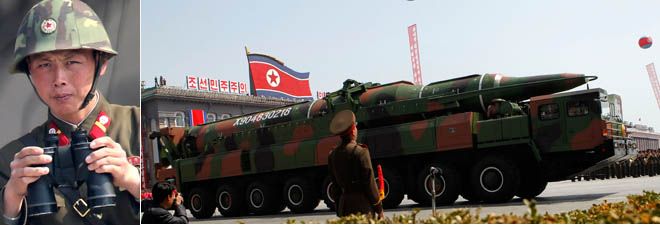


Filed Under: All Stories, Elections, Foreign

Hagel Calls North Korea’s Nuclear Ambitions a ‘Growing Threat’

April 3, 2013 By Editor Leave a Comment

HagelWASHINGTON –  Defense Secretary Chuck Hagel said Tuesday that North Korea’s development of nuclear weapons poses a “growing threat” to the U.S. and its allies.

In a telephone call Tuesday evening to Chinese Defense Minister Chang Wanquan, Hagel cited North Korea’s pursuit of nuclear weapons and ballistic missiles and said Washington and Beijing should continue to cooperate on those problems.

“The secretary emphasized the growing threat to the U.S. and our allies posed by North Korea’s aggressive pursuit of nuclear weapons and ballistic missile programs and expressed to General Chang the importance of sustained U.S.-China dialogue and cooperation on these issues,” Pentagon spokesman George Little said in a statement describing the phone call.

Little also disclosed that Gen. Martin Dempsey, chairman of the Joint Chiefs of Staff, will visit China later this month. It would be Dempsey’s first trip to China as head of the Joint Chiefs.

Hagel also invited the Chinese defense minister to visit the United States this year.

North Korea on Wednesday barred South Korean workers from entering a jointly run factory park just over the heavily armed border in the North, officials in Seoul said, a day after Pyongyang announced it would restart its long-shuttered plutonium reactor and increase production of nuclear weapons material.

Seoul’s Unification Ministry spokesman Kim Hyung-suk said Pyongyang is allowing South Koreans to return home from Kaesong, but that about 480 South Koreans who had planned to travel to the park Wednesday were being refused entry.

North Korean authorities cited recent political circumstances on the Korean Peninsula when they delivered their decision to block South Korean workers from entering Kaesong, Kim said without elaborating.

The two sides do not allow their citizens to travel to the other country without approval, but an exception has previously been made each day for the South Koreans working at Kaesong.

Meanwhile, the Pentagon on Tuesday confirmed that it is positioning an array of military assets near the Korean Peninsula, as the White House stressed that the “entire national security team” is focused on the escalating threats out of Pyongyang — with the latest being a pledge to restart its plutonium reactor.

Secretary of State John Kerry, speaking Tuesday at a news conference with the visiting foreign minister of South Korea, said recent belligerent rhetoric from North Korea is “unacceptable” and that the U.S. will defend itself, as well as South Korea and Japan, from any threat from the North.

The declaration of a resumption of plutonium production — the most common fuel in nuclear weapons — and other facilities at the main Nyongbyon nuclear complex will boost fears in Washington and among its allies about North Korea’s timetable for building a nuclear-tipped missile that can reach the mainland U.S., technology it is not currently believed to have.

The amount of hostile language from North Korea in recent weeks was “extraordinary,” Kerry said, adding that the isolated state should have no doubt that the U.S. will fulfill its treaty obligations to allies in the region.

Pentagon spokesman George Little said that two destroyer warships, the USS Decatur and USS McCain, have arrived in the region as part of a missile-defense mission. Previously, the Pentagon had only revealed that it had moved the USS McCain to the region.

“They have arrived at predetermined positions in the western Pacific, where they will be poised to respond to any missile threats to our allies or our territory,” Little said Tuesday.

In addition, the Pentagon has already announced plans to have two sea-based radar systems in the western Pacific. One is already in northern Japan; the other has not yet deployed and is currently conducting non-North Korean related systems tests off Pearl Harbor.

The system in Japan can serve to protect the Korean peninsula as well as threats to the western United States that originate from North Korea.

Published April 03, 2013 / FoxNews.com /The Associated Press contributed to this report.

Filed Under: All Stories, Elections, Foreign

Rush on Connecticut Gun Stores Ahead of Vote on Ban

April 3, 2013 By Editor Leave a Comment

ct_gunstoresNEWINGTON, Conn. –  Customers packed gun stores around Connecticut on Tuesday ahead of a vote expected to bring sweeping changes to the state’s gun control laws, including a ban on the sale of large-capacity ammunition magazines like the ones used in the Newtown shooting and a new classification for more than 100 types of guns as banned assault weapons.

Lawmakers have touted the legislation expected to pass the General Assembly on Wednesday as the toughest in the country. Some measures would take effect right away, including the expansion of the state’s assault weapons ban, universal background checks for all firearms sales, and a ban on the sale or purchase of ammunition magazines holding more than 10 rounds. The bill also addresses mental health and school security measures in response to the massacre.

Gov. Dannel P. Malloy, a Democrat, supports the bill and could sign it into law as soon as Wednesday night.

In a state with a rich history of gun manufacturing, some companies said they feel the legislation made them into scapegoats for the deaths of 20 first-graders and six educators in the Dec. 14 massacre at Sandy Hook Elementary School. At least one ammunition magazine maker is more seriously considering offers to leave.

“My home is in Connecticut, but at this point, I don’t know if I can operate here legally come Wednesday afternoon,” said Jonathan Scalise, owner of Ammunition Storage Components in New Britain. He said it’s unclear to him whether employees in possession of banned firearms or ammunition would be breaking the law.

Gun shops across the state reported brisk sales Tuesday and said customers also checked on the status of orders that they worried could be canceled once the new laws take effect.

The parking lot at Hoffman’s Gun Center and Indoor Range in Newington was full Tuesday morning, with some drivers parking on the front lawn. Inside, customers waited in long lines to purchase what was left.

“I walked through. I walked out because they didn’t have anything. The girl told me what’s on the shelf is what they have. And I totally believe that,” said Nick Viccione, a gun owner from Wallingford. He said people are trying to load up on ammunition and buy “anything semi-automatic.”

At other shops, including the Delta Arsenal gun store in Wallingford, employees reported difficulty getting through to the state police to run background checks needed to complete gun sales.

Connecticut State Police Lt. J. Paul Vance said he hadn’t received any complaints of people not getting through to the office that handles such checks but acknowledged they might get a busy signal once in a while.

“The special licensing and firearms unit is going full bore,” he said.

The gun industry in Connecticut dates back to the Revolutionary War and says it supports more than 7,000 jobs in the state. Some companies say the new restrictions have them considering a move.

O.F. Mossberg & Sons Inc. in North Haven does not support a ban on firearms or equipment, said Joe Bartozzi, senior vice president and general counsel, adding that “they’ve never reduced crime or violence.”

Mossberg has been in business since 1919 and employs 270 workers in Connecticut. It also has a manufacturing plant in Eagle Pass, Texas, and has been courted for years by other states.

“I’ve got a stack of invitations from governors, congressmen and economic development groups right here on my desk,” he said.

Mark Malkowski, owner and president of Stag Arms in New Britain, said he’s not threatening to move but that his biggest concern about staying in Connecticut is “staying in a state that does not support us.”

He said Stag Arms, which employs 200 people, manufactures about 72,000 rifles a year, at a cost of about $1,000 each. About 5 percent of the company’s sales are in Connecticut.

“It’s actually quite hypocritical, quite insulting,” he said. “If our products are so dangerous and so horrible that no Connecticut resident should be in possession of it, why is it OK to send it to the rest of the country?”

Echoing that was the National Shooting Sports Foundation.

“Connecticut’s firearms manufacturers will be forced to pay a price economically for the state’s double standard of you can build it here, but not sell it here, public policy formulation,” the Newtown-based trade association said in a statement.

Malloy said Tuesday he plans to write to the state’s gun manufacturers, informing them that as long as they are manufacturing a product that can be legally sold in the U.S. that they’re still welcome in Connecticut.

“Having said that, there are other things that need to be taken into consideration,” Malloy said. “And the public’s safety is one of those things.”

Nicole Hockley, whose 6-year-old son, Dylan, was killed at Sandy Hook, welcomed the legislation. She credited lawmakers with listening to the parents, who had opposed allowing existing high-capacity magazines to be grandfathered into the law. Legislators did allow that but also required the magazines to be registered by Jan. 1 with the state.

“This is going to be one of the strongest gun laws in the nation, and that will be a model for other states to follow and for federal leaders to follow,” she said.

Published April 03, 2013 / Associated Press

Filed Under: All Stories, Economy, Elections, Ethics

« Previous Page
Next Page »

Federalist Press Dispatch

Get breaking political news, investigations, and uncensored analysis delivered directly to your inbox.

Please wait...

Thank you for subscribing to the Federalist Press Dispatch.

Byrna Non-lethal Self Protection

Byrna Non-lethal Self Protection

Byrna offers non-lethal self protection at an affordable price. Watch the short video, or click to learn more!

Click to talk with us about writing your book >>

Do you want to write a book? James Thompson is a ghostwriter who writes the books of people just like you.

Brit Axton Mysteries Series

Brit Axton Mysteries Series

Brit Axton Mysteries is a series of young adult adventure novels that lead young Brit Axton and her friends on whirlwind adventures to uncover hidden secrets and long lost treasures.

Get free info to help your life

Get free info to help your life

Simple bite-sized guides for life, money, civics, and more . . . because some stuff school just didn’t cover.

Understanding Cryptocurrency: Essentials for Building Wealth in Digital Currency

Understanding Cryptocurrency: Essentials for Building Wealth in Digital Currency

Understanding Cryptocurrency serves as a definitive guide for novice investors looking to understand the world of cryptocurrency and harness its potential for financial growth and prosperity.

Real Estate Wealth Strategies During High Inflation

Real Estate Wealth Strategies During High Inflation

Real Estate Wealth Strategies During High Inflation is a comprehensive guide on navigating the real estate market, offering strategies and insights for successful investing, during high inflation and interest rates.

Privacy Policy

Terms of Service

Follow us

  • parler
  • welcome-widgets-menus
  • facebook
  • envato

Economy

Federal Investigation of Ilhan Omar Expands: Agents Seize Phone, Subpoena Relatives as Citizenship and Financial Questions Mount

Secretary of State Marco Rubio Remarks from the Athens Acropolis

Federal Agents Raid Ilhan Omar’s Washington Home in Criminal Immigration Investigation

Elections

Federal Investigation of Ilhan Omar Expands: Agents Seize Phone, Subpoena Relatives as Citizenship and Financial Questions Mount

Secretary of State Marco Rubio Remarks from the Athens Acropolis

Federal Agents Raid Ilhan Omar’s Washington Home in Criminal Immigration Investigation

Foreign

Flashback: When Chuck Schumer Insisted Voter ID Was Common Sense

The Left’s Favorite Question Is “Who Benefits?” Their Forgotten Question Is “At Whose Expense?”

The Battle for Lindsey Graham’s Senate Seat Begins

Crime

Heroes Fought Back: The Oregon School Shooting That Proved One Man’s Life Mission

Federal Investigation of Ilhan Omar Expands: Agents Seize Phone, Subpoena Relatives as Citizenship and Financial Questions Mount

Federal Agents Raid Ilhan Omar’s Washington Home in Criminal Immigration Investigation

Science Tech

From “Buy Greenland” to Permanent U.S. Bases: What Trump Got America in the Arctic Deal

Deeper Dive Into White House UFO Tranche 6. The Files That Deserve Another Look.

The Pentagon Just Dropped UFO Tranche 6 — And a 74-Year-Old Recording May Be the File to Hear First

Reader Responses

  • Linda Livaudais on Trump’s UFO Disclosure Has Changed the Conversation — But Not Yet Answered the Biggest Question
  • T059736 on Trump and Musk Announce Plans to Shut Down USAID
  • C.Josef.D on ‘Pay to Play’ at Clinton Foundation Under Investigation
  • John D Cole on Biden Says ‘You ain’t black’ If You Don’t Vote for Him
  • Ed on U.S. Attorney Huber Moving to Indict Clintons and Others

Copyright © 2026 by Federalist Press · All rights reserved · Website design by RoadRunner CRM · Content Wiriting by GhostWriter · Log in