• Home
  • Mission
  • Federalist Papers
  • Foundation
  • U.S. Constitution
  • Bill of Rights

Federalist Press | Defending Liberty — Informing America

Breaking News and Political Commentary

  • All Stories
  • Economy
  • Elections
  • Entitlement
  • Ethics
  • Foreign
  • Gender
  • Religion
  • Sci-Tech

Federal Judge Orders Abortion Pill Must Be Over-Counter For All Girls

April 5, 2013 By Editor 1 Comment

Plan_BA federal judge ruled Friday that the morning-after pill known as Plan B must be made available over the counter for women and girls of all ages.

The decision on the controversial subject comes after lengthy legal battles over who should have access to the pill and at what age. The Justice Department did not say whether it would appeal.

The Food and Drug Administration had initially decided to allow the emergency pill to be available for young teens. But Health and Human Services Secretary Kathleen Sebelius overruled the FDA in late 2011, and the agency limited availability without a prescription to women 17 and older.

The decision Friday by U.S. District Judge Edward Korman ordered the FDA to make the pill, commonly referred to as the abortion pill, available for all ages. The decision means that unless the FDA appeals and is granted a stay, by this time next month a teenager 16 or under could walk into a local pharmacy and buy the pill off the shelf.

Korman accused the FDA of “intolerable delays” in reviewing a petition seeking broad access to the drug, likening the process to an “administrative agency filibuster.”

“The plaintiffs should not be forced to endure, nor should the agency’s misconduct be rewarded by, an exercise that permits the FDA to engage in further delays and obstruction,” he wrote.

The FDA declined to comment on the ruling, describing it as an “ongoing legal matter.”

Pill manufacturer Teva said it is “currently reviewing” the decision. “We have no additional comment at this time,” the company said.

The judge ordered the change to be completed in a month. The opinion is sure to rile conservatives and other pro-life groups, who consider the morning-after pill — in some cases — to act as an abortion-inducing drug.

“This ruling places the health of young girls at risk,” said Anna Higgins of the Family Research Council. “There is a real danger that Plan B may be given to young girls, under coercion or without their consent. The involvement of parents and medical professionals act as a safeguard for these young girls. However, today’s ruling removes these commonsense protections.”

The case started in 2005, and Korman initially ruled in 2009 that 17 year-olds should have over-the-counter access. The FDA then moved to allow that access to all ages, until Sebelius stepped in.

Korman wrote in his opinion that “the FDA bowed to political pressure emanating from the White House.”

The Center for Reproductive Rights, which filed suit against the age restriction, and other groups have argued that contraceptives are being held to a different and non-scientific standard than other drugs and that politics has played a role in decision-making.

“I think this is a landmark decision in terms of providing women and girls in the United States access to a safe and effective form of birth control,” said attorney Andrea Costello with the Partnership for Civil Justice Fund.

The morning-after pill contains a higher dose of the female progestin hormone that is in regular birth control pills. Taking it within 72 hours of rape, condom failure or just forgetting regular contraception can cut the chances of pregnancy by up to 89 percent. But it works best within the first 24 hours.

If a woman already is pregnant, the pill has no effect. It prevents ovulation or fertilization of an egg. According to the medical definition, pregnancy doesn’t begin until a fertilized egg implants itself into the wall of the uterus. Still, some critics say Plan B is the equivalent of an abortion pill because it may also be able to prevent a fertilized egg from attaching to the uterus, a contention that scientists — and Korman, in his ruling — said has been discredited.

Published April 05, 2013 / FoxNews.com /The Associated Press contributed to this report.

Filed Under: All Stories, Economy, Elections, Entitlement, Ethics, Gender, Religion, Sci-Tech

Obama Puts Social Security, Medicare On Block to Gain Tax-Hike Support

April 5, 2013 By Editor Leave a Comment

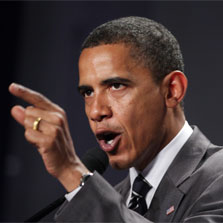
obama_tax_hikePresident Obama will propose modest changes to Social Security and other benefit programs in his 2014 budget — a gesture that is meant to soften Republicans to the idea of tax hikes, but has already drawn the ire of liberal Democrats who want the entitlement shielded.

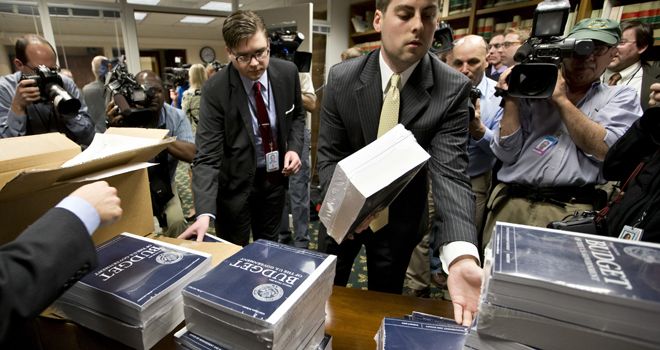
The president plans to unveil his budget Wednesday, but a senior administration official confirmed the key details in advance. Included in the plan, which would aim to reduce the deficit by $1.8 trillion over 10 years, is a provision to lower cost-of-living adjustments to Social Security, the benefit program for retirees. This would curb the growth in benefits.

“While this is not the president’s ideal deficit reduction plan, and there are particular proposals in this plan like the (Social Security change) that were key Republican requests,” the official said. “The president felt it was important to make it clear that the offer still stands.”

The administration is clear that it is offering changes to Social Security and Medicare — the two benefit programs most important to seniors — in order to convince Republicans to accept increased revenues. The official said the plan to be unveiled next week “isn’t a menu of options for them to choose from — it’s a cohesive package.”

The proposal, though, is sure to get hit from both sides. Republicans want the Social Security change but for years have resisted new tax revenue — Obama’s plan calls for additional tax revenue, including a proposal to place limits on tax-preferred retirement accounts for top earners. Obama has also called for limits on tax deductions by top earners, a proposal that could generate about $580 billion in revenue over 10 years.

But the president could face an even tougher time selling the Social Security change to liberal members of Congress.

Sen. Bernie Sanders, I-Vt., fired off a statement Thursday responding to what was then the rumor that Obama’s budget could include the change.

“Millions of working people, seniors, disabled veterans, those who have lost a loved one in combat, and women will be extremely disappointed if President Obama caves into the long standing Republican effort to cut Social Security and benefits for disabled veterans and their survivors through a so-called chained CPI,” Sanders said. “In 2008, candidate Barack Obama told the American people that he would not cut Social Security.  Having him go back on his word will only add to the rampant political cynicism that our country is experiencing today.”

Chained CPI is the Washington term for the revised inflation adjustment that would effectively curb annual increases in a broad swath of government programs, but would have its biggest impact on Social Security.

The inflation adjustment would reduce federal spending over 10 years by about $130 billion, according to past White House estimates. Because it also affects how tax brackets are adjusted, it would also generate about $100 in higher taxes and affect even middle income taxpayers.

Obama’s budget, to be released next week, comes after the Republican-controlled House and the Democratic-run Senate passed separate and markedly different budget proposals. House Republicans achieved long-term deficit reductions by targeting safety net programs; Democrats instead protected those programs and called for $1 trillion in tax increases.

Obama’s budget proposal includes features from an offer he made to House Speaker John Boehner during fiscal negotiations last year. Those talks ultimately failed but Congress did agree to increase tax rates on top earners.

The reductions in growth of benefit programs, which would affect veterans, the poor and the older Americans, is sure to anger many Democrats.

Labor groups and liberals have long been critical of Obama’s offer to Boehner for including such a plan.

Obama’s new plan would also replace the sequester with other spending cuts. But it will steer clear of major cuts to Medicaid, including tens of billions in reductions to the health care plan for the poor that the administration had proposed only last year.

Published April 05, 2013 / FoxNews.com / The Associated Press contributed to this report.


Filed Under: All Stories, Economy, Elections, Entitlement, Ethics

N. Korea: US Nuke Attack Approved

April 4, 2013 By Editor Leave a Comment

korea_missleSouth Korea says North Korea has moved a missile with “considerable range” to its east coast after an unnamed spokesman for the North Korean army warned the U.S. Wednesday that its military has been cleared to wage an attack using “smaller, lighter and diversified nuclear” weapons.

South Korea’s defense minister said Thursday the missile moved is not capable of hitting the United States.

Kim Kwan-jin dismissed reports in Japanese and South Korean media that the missile could be a KN-08, which is believed to be a long-range missile that if operable could hit the United States.

Kim told lawmakers at a hearing that the missile’s range is considerable but not far enough to hit the U.S. mainland. He said he did not know the reasons behind the missile movement, saying it “could be for testing or drills.”

The range he described could refer to a mobile North Korean missile known as the Musudan, which has a range of 1,800 miles. That would make Japan and South Korea potential targets, but little is known about the missile’s accuracy.

North Korea has railed for weeks against joint U.S. and South Korean military exercises taking place in South Korea and has expressed anger over tightened sanctions for a February nuclear test.

The army spokesman said in a statement carried by the Korean Central News Agency that troops have been authorized to counter U.S. aggression with “powerful practical military counteractions.”

National Security Council spokesperson Caitlin Hayden called the threats “unhelpful and unconstructive.”

“It is yet another offering in a long line of provocative statements that only serve to further isolate North Korea from the rest of the international community and undermine its goal of economic development,” she said. “North Korea should stop its provocative threats and instead concentrate on abiding by its international obligations.”

The Pentagon said in Washington that it will deploy a missile defense system to the U.S. Pacific territory of Guam to strengthen regional protection against a possible attack from North Korea. The defense secretary said the U.S. was seeking to defuse the situation.

Despite the rhetoric, analysts say they do not expect a nuclear attack by North Korea, which knows the move could trigger a destructive, suicidal war that no one in the region wants.

The strident warning from Pyongyang is latest in a series of escalating threats from North Korea, which has railed for weeks against joint U.S. and South Korean military exercises taking place in South Korea and has expressed anger over tightened sanctions for a February nuclear test.

Following through on one threat Wednesday, North Korean border authorities refused to allow entry to South Koreans who manage jointly run factories in the North Korean city of Kaesong.

Washington calls the military drills, which this time have incorporated fighter jets and nuclear-capable stealth bombers, routine annual exercises between the allies. Pyongyang calls them rehearsals for a northward invasion.

The foes fought on opposite sides of the three-year Korean War, which ended in a truce in 1953. The divided Korean Peninsula remains in a technical state of war six decades later, and Washington keeps 28,500 troops in South Korea to protect its ally.

U.S. Defense Secretary Chuck Hagel said Washington was doing all it can to defuse the situation, echoing comments a day earlier by Secretary of State John Kerry.

“Some of the actions they’ve taken over the last few weeks present a real and clear danger and threat to the interests, certainly of our allies, starting with South Korea and Japan and also the threats that the North Koreans have leveled directly at the United States regarding our base in Guam, threatened Hawaii, threatened the West Coast of the United States,” Hagel said Wednesday.

In Pyongyang, the military statement said North Korean troops had been authorized to counter U.S. “aggression” with “powerful practical military counteractions,” including nuclear weapons.

“We formally inform the White House and Pentagon that the ever-escalating U.S. hostile policy toward the DPRK and its reckless nuclear threat will be smashed by the strong will of all the united service personnel and people and cutting-edge smaller, lighter and diversified nuclear strike means,” an unnamed spokesman from the General Bureau of the Korean People’s Army said in a statement carried by state media, referring to North Korea by its formal name, the Democratic People’s Republic of Korea. “The U.S. had better ponder over the prevailing grave situation.”

However, North Korea’s nuclear strike capabilities remain unclear.

Pyongyang is believed to be working toward building an atomic bomb small enough to mount on a long-range missile. Long-range rocket launches designed to send satellites into space in 2009 and 2012 were widely considered covert tests of missile technology, and North Korea has conducted three underground nuclear tests, most recently in February.

“I don’t believe North Korea has to capacity to attack the United States with nuclear weapons mounted on missiles, and won’t for many years. Its ability to target and strike South Korea is also very limited,” nuclear scientist Siegfried Hecker, a senior fellow at the Center for International Security and Cooperation at Stanford University, said this week.

“And even if Pyongyang had the technical means, why would the regime want to launch a nuclear attack when it fully knows that any use of nuclear weapons would result in a devastating military response and would spell the end of the regime? ” he said in answers posted to CISAC’s website.

In Seoul, a senior government official said Tuesday that it wasn’t clear how advanced North Korea’s nuclear weapons capabilities are. But he also noted fallout from any nuclear strike on Seoul or beyond would threaten Pyongyang as well, making a strike unlikely. He spoke on condition of anonymity because he wasn’t authorized to speak publicly to the media.

North Korea maintains that it needs to build nuclear weapons to defend itself against the United States. On Monday, North Korean leader Kim Jong Un led a high-level meeting of party officials who declared building the economy and “nuclear armed forces” as the nation’s two top priorities.

Published April 04, 2013 / FoxNews.com

The Associated Press contributed to this report.

Filed Under: All Stories, Elections, Foreign

Hagel Calls N. Korea ‘Real and Clear Danger’

April 3, 2013 By Editor Leave a Comment

Kim_dangerDefense Secretary Chuck Hagel said Wednesday that North Korea’s rising threats pose a “real and clear danger,” as the Pentagon continued to take precautions with a plan to deploy a missile-defense system to Guam.

A senior U.S. official confirmed to Fox News that the military will deploy an Army system shown as a Terminal High Altitude Area Defense battery to Guam. The system is capable of shooting down short-, medium- and intermediate-range ballistic missiles.

This follows the positioning of two U.S. destroyer ships in the region, along with plans to have two sea-based radar systems in the western Pacific.

At the same time, North Korea seemed to ramp up its rhetoric even further Wednesday, warning that it’s military had been cleared to attack the U.S. with “smaller, lighter and diversified nuclear” weapons. The National Security Council responded by saying such “unhelpful and unconstructive threats … only serve to further isolate North Korea.”

Hagel, speaking Wednesday at the National Defense University, said the cascade of threats out of North Korea must be taken “seriously,” given the country’s nuclear and missile-delivery capacity — though analysts say the country still could not fire a nuclear-tipped missile all the way to the continental United States.

“As they have ratcheted up (their) bellicose, dangerous rhetoric — and some of the actions they’ve taken over the last few weeks present a real and clear danger and threat to the interests, certainly of our allies, starting with South Korea and Japan,” Hagel said. He also cited the “threats that the North Koreans have leveled directly at the United States regarding our base in Guam, threatened Hawaii, threatened to the West Coast of the United States.”

The Kim Jong Un regime has toggled in recent weeks between threatening the U.S. and threatening South Korea.

In addition to announcing through an unnamed army spokesman that it had cleared a strike plan for a potential attack on the U.S., North Korea said Wednesday it had decided to bar South Korean managers and trucks delivering supplies from crossing the border to enter a jointly run factory park called Kaesong.

The Kaesong industrial park started producing goods in 2004 and has been an unusual point of cooperation in an otherwise hostile relationship between the Koreas, whose three-year war ended in 1953 with an armistice, not a peace treaty.

The Kaesong move came a day after the North said it would restart its long-shuttered plutonium reactor and a uranium enrichment plant. Both could produce fuel for nuclear weapons that North Korea is developing and has threatened to hurl at the U.S., something experts don’t think it will be able to accomplish for years.

The North’s rising rhetoric has been met by a display of U.S. military strength, including flights of nuclear-capable bombers and stealth jets at annual South Korean-U.S. military drills that the allies call routine and North Korea says are invasion preparations.

In a telephone call Tuesday evening to Chinese Defense Minister Chang Wanquan, Hagel cited North Korea’s pursuit of nuclear weapons and ballistic missiles and said Washington and Beijing should continue to cooperate on those problems.

“The secretary emphasized the growing threat to the U.S. and our allies posed by North Korea’s aggressive pursuit of nuclear weapons and ballistic missile programs and expressed to General Chang the importance of sustained U.S.-China dialogue and cooperation on these issues,” Pentagon spokesman George Little said in a statement describing the phone call.

Little also disclosed that Gen. Martin Dempsey, chairman of the Joint Chiefs of Staff, will visit China later this month. It would be Dempsey’s first trip to China as head of the Joint Chiefs.

Hagel also invited the Chinese defense minister to visit the United States this year.

Fox News’ Justin Fishel and The Associated Press contributed to this report.

Filed Under: All Stories, Elections, Foreign

AP Imposes PC Gag on Itself

April 3, 2013 By Editor Leave a Comment

IllegalImmgrantFenceWASHINGTON –  The Associated Press is being accused of trying to influence the immigration debate following a decision to stop using the term “illegal immigrant” in its coverage — despite the fact it is still being used by U.S. government officials including Homeland Security Secretary Janet Napolitano.The decision comes as a bipartisan group of senators prepares to introduce sweeping immigration legislation which is expected to propose a pathway to citizenship for millions of illegal immigrants.

Indeed, the move by the influential wire service is being hailed as a victory by immigrant advocacy groups.

The conservative Media Research Center, though, described the change as a “politically-correct mumble.”

The new style guideline was first announced this week on the wire service’s blog by Senior Vice President and Executive Editor Kathleen Carroll, who said the change came out of conversations with people who opposed the term.

“Our goal always is to use the most precise and accurate words so that the meaning is clear to any reader anywhere,” Carroll said.

“The Stylebook no longer sanctions the term ‘illegal immigrant’ or the use of ‘illegal’ to describe a person,” Carroll said. “Instead, it tells users that ‘illegal’ should describe only an action, such as living in or immigrating to a country illegally.”

Still, some are wondering why the AP decided to nix the phrase when high-ranking government officials don’t seem to have a problem with it.

Last week, Napolitano told reporters that she didn’t “really get caught up in the vocabulary wars.”

“They are immigrants who are here illegally, that’s an illegal immigrant,” she said.

Previously, the AP rejected the term “undocumented immigrants,” favored by some activists, as inaccurate.

AP_PC_LenoChanges to the AP Stylebook, which is updated annually, have important and widespread repercussions in the media. The changes don’t just influence the AP’s writing, which is found in publications around the world. The book is the primary writing style guide for journalists in both print and broadcast.

The Congressional Hispanic Caucus, a group of 27 House Democrats, applauded the AP’s decision and called it “a great step forward.”

On a more tongue-in-cheek note, ALIPAC announced Wednesday it would be changing its “style” preference in all future articles to “illegal invaders” — “in response to the totalitarian steps by the Associated Press to make ‘illegal immigrants’ disappear with the stroke of a pen just days before legislation attempting to do the same is expected to be filed in Washington, DC, by the ‘Gang of 8.'”

Comedian Jay Leno joked that the phrase should be replaced with “undocumented Democrat.”

The AP said its decision to stop using the term “illegal immigrants” is part of a broader shift away from labeling people and toward labeling behavior — for example, referring to people “diagnosed with schizophrenia” instead of “schizophrenics.”

In 1986, the AP’s then-stylebook editor Christopher French used the same reasoning to support the wire service’s decision to use “anti-abortion” instead of “pro-life,” and abortion rights instead of “pro-abortion” or “pro-choice.”

“Until a specific rule is agreed upon at AP, the following existing guideline is being applied: Avoid labeling groups or individuals and instead spend an extra sentence on a more specific description,” French said at the time.

In February, it reversed a decision on gay marriage, saying people in same-sex marriages could now be referred to as “husbands” and “wives.”

Several news organizations are also dropping the term “illegal immigrant” from their reporting. CNN, ABC News and NBC News have all parted ways with the phrase in the past few years.

The debate on whether to change the term at The New York Times is still being debated, public editor Margaret Sullivan wrote in an article Tuesday.

“The Times, for the past couple of months, has also been considering changes to its stylebook entry on this term and will probably announce them to staff members this week,” she wrote.

“From what I can gather, The Times’s changes will not be nearly as sweeping as The AP’s,” Sullivan said, adding, “I would be surprised to see The Times ban the use of ‘illegal immigrant,’ as the AP has done.”

Published April 03, 2013 / FoxNews.com

Filed Under: All Stories, Economy, Elections, Entitlement, Ethics, Foreign

N. Korea Blocks S. Koreans From Entering Jointly-Run Industrial Park

April 3, 2013 By Editor Leave a Comment

south-koreans-factoryPAJU, South Korea –  North Korea on Wednesday barred South Korean workers from entering a jointly run factory park just over the heavily armed border in the North in the latest sign that Pyongyang’s warlike stance toward South Korea and the United States is moving from words to action.

The Kaesong move came a day after the North announced it would restart its long-shuttered plutonium reactor and a uranium enrichment plant, both of which could produce fuel for nuclear weapons that Pyongyang is developing and has threatened to hurl at the U.S. but which experts don’t think it will be able to accomplish for years.

The North’s rising rhetoric over recent weeks has been met by a display of U.S. military strength, including flights of nuclear-capable bombers and stealth jets at the annual South Korean-U.S. military drills that the allies call routine but that North Korea claims are invasion preparations.

The Kaesong industrial park started producing goods in 2004 and has been an unusual point of cooperation in an otherwise hostile relationship between the Koreas, whose three-year war ended in 1953 with an armistice. Its continued operation even through past episodes of high tension has reassured foreign multinationals that another Korean War is unlikely and their investments in prosperous dynamic South Korea are safe.

“The Kaesong factory park has been the last stronghold of detente between the Koreas,” said Hong Soon-jik, a North Korea researcher at the Seoul-based Hyundai Research Institute.

He said tension between the Koreas could escalate further over Kaesong because Seoul may react with its own punitive response and Pyongyang will then hit back with another move.

It is unclear how long North Korea will prevent South Koreans from entering the industrial park, which is located in the North Korean border city of Kaesong and provides jobs for more than 50,000 North Koreans. The last major disruption at the park amid tensions over U.S.-South Korean military drills in 2009 lasted just three days.

Seoul’s Unification Ministry spokesman Kim Hyung-suk said Pyongyang was allowing South Koreans to return home from Kaesong. Some 33 workers of about 860 South Koreans at Kaesong returned Wednesday. But Kim said about 480 South Koreans who had planned to travel to the park Wednesday were being refused entry.

Trucks streamed back into South Korea through its Paju border checkpoint in the morning, just minutes after heading through it, after being refused entry into the North.

Pyongyang threatened last week to shut down the park, which is run with North Korean labor and South Korean know-how. It expressed anger over South Korean media reports that said North Korea hadn’t yet shut the park because it is a source of crucial hard currency for the impoverished country.

About 120 South Korean companies operate factories in Kaesong which produced $470 million of goods such as clocks, clothing and shoes last year that are trucked back to the South for export to other countries. The industrial park is crucial for the small businesses that operate there to take advantage of North Korea’s low wages but not important for the South Korean economy overall.

It has more significance to cash-strapped North Korea since, according to the South Korean government, wages for North Korean workers totaled some $81 million last year. That has underlined the risks that North Korea’s brinkmanship will result in a miscalculation that results in an even more dangerous polarization of the Korean peninsula.

Barring entry to South Koreas is a “slap in the face” after the South Korean government recently extended medical aid to the North, said Lee Choon-kun, a North Korea researcher at the Korea Economic Research Institute, a Seoul-based think tank. “I see this as a start for more provocative actions,” he said.

“The North has made too many threats not to stop short of any real action.”

Kaesong, initially conceived as a test case for reunification and reconciliation, also provides an irksome reminder for Pyongyang that what it lacks, the South has in abundance — material prosperity. An enormous gap emerged between the two Koreas in the decades after the Korean War as the South embraced a form of state-directed capitalism while the North adhered to communist central planning.

Every morning, North Korean workers commute to the complex on the edge of Kaesong on South Korean-made Hyundai buses. Once inside the gates of the complex, it’s a world apart. The paved streets and sidewalks are marked with South Korean traffic signals and signs and the parking lots are filled with the Hyundai, Samsung and KIA cars driven by South Korean managers.

Inside several factories visited by The Associated Press last year, the posters on the walls are not party slogans but safety warnings. “Beware of fires,” read one; “Wash your hands” read another. While most factories in North Korea are drafty, and few have running water, the facilities in Kaesong are equipped with hot water, flush toilets and air conditioners.

In the rest of the Korean Peninsula, it is illegal for Koreans from North and South to interact without government permission. But inside Kaesong, North Korean workers work side by side with South Korean managers, discussing orders and mapping out production.

However, they tend not to socialize with one another. At most factories, North Korean workers take their meals in cafeterias that serve basic stews and rice while the South Koreans dine separately.

Park Yun-kyu, who heads a men’s apparel maker that employs 700 North Korean workers in Kaesong, said he was worried he couldn’t send fresh food to his eight South Korean workers in Kaesong.

“They were working normally when I called them in the morning,” said Park who returned to Seoul after being refused entry into Kaesong. “The problem is food. I hope North Korea would at least let us send food. We have to send food and some materials for production every day.”

On Tuesday, a senior South Korean government official said Seoul has a contingency plan for its citizens in Kaesong. But he said the government hoped the tension would not lead to a shutdown of the complex. He spoke on condition of anonymity, saying he was not authorized to speak publicly to the media.

Published April 03, 2013 / Associated Press /Associated Press writers Foster Klug, Hyung-jin Kim, Jean H. Lee, Sam Kim and Youkyung Lee in Seoul contributed to this report.


Filed Under: All Stories, Elections, Foreign

Hagel Calls North Korea’s Nuclear Ambitions a ‘Growing Threat’

April 3, 2013 By Editor Leave a Comment

HagelWASHINGTON –  Defense Secretary Chuck Hagel said Tuesday that North Korea’s development of nuclear weapons poses a “growing threat” to the U.S. and its allies.

In a telephone call Tuesday evening to Chinese Defense Minister Chang Wanquan, Hagel cited North Korea’s pursuit of nuclear weapons and ballistic missiles and said Washington and Beijing should continue to cooperate on those problems.

“The secretary emphasized the growing threat to the U.S. and our allies posed by North Korea’s aggressive pursuit of nuclear weapons and ballistic missile programs and expressed to General Chang the importance of sustained U.S.-China dialogue and cooperation on these issues,” Pentagon spokesman George Little said in a statement describing the phone call.

Little also disclosed that Gen. Martin Dempsey, chairman of the Joint Chiefs of Staff, will visit China later this month. It would be Dempsey’s first trip to China as head of the Joint Chiefs.

Hagel also invited the Chinese defense minister to visit the United States this year.

North Korea on Wednesday barred South Korean workers from entering a jointly run factory park just over the heavily armed border in the North, officials in Seoul said, a day after Pyongyang announced it would restart its long-shuttered plutonium reactor and increase production of nuclear weapons material.

Seoul’s Unification Ministry spokesman Kim Hyung-suk said Pyongyang is allowing South Koreans to return home from Kaesong, but that about 480 South Koreans who had planned to travel to the park Wednesday were being refused entry.

North Korean authorities cited recent political circumstances on the Korean Peninsula when they delivered their decision to block South Korean workers from entering Kaesong, Kim said without elaborating.

The two sides do not allow their citizens to travel to the other country without approval, but an exception has previously been made each day for the South Koreans working at Kaesong.

Meanwhile, the Pentagon on Tuesday confirmed that it is positioning an array of military assets near the Korean Peninsula, as the White House stressed that the “entire national security team” is focused on the escalating threats out of Pyongyang — with the latest being a pledge to restart its plutonium reactor.

Secretary of State John Kerry, speaking Tuesday at a news conference with the visiting foreign minister of South Korea, said recent belligerent rhetoric from North Korea is “unacceptable” and that the U.S. will defend itself, as well as South Korea and Japan, from any threat from the North.

The declaration of a resumption of plutonium production — the most common fuel in nuclear weapons — and other facilities at the main Nyongbyon nuclear complex will boost fears in Washington and among its allies about North Korea’s timetable for building a nuclear-tipped missile that can reach the mainland U.S., technology it is not currently believed to have.

The amount of hostile language from North Korea in recent weeks was “extraordinary,” Kerry said, adding that the isolated state should have no doubt that the U.S. will fulfill its treaty obligations to allies in the region.

Pentagon spokesman George Little said that two destroyer warships, the USS Decatur and USS McCain, have arrived in the region as part of a missile-defense mission. Previously, the Pentagon had only revealed that it had moved the USS McCain to the region.

“They have arrived at predetermined positions in the western Pacific, where they will be poised to respond to any missile threats to our allies or our territory,” Little said Tuesday.

In addition, the Pentagon has already announced plans to have two sea-based radar systems in the western Pacific. One is already in northern Japan; the other has not yet deployed and is currently conducting non-North Korean related systems tests off Pearl Harbor.

The system in Japan can serve to protect the Korean peninsula as well as threats to the western United States that originate from North Korea.

Published April 03, 2013 / FoxNews.com /The Associated Press contributed to this report.

Filed Under: All Stories, Elections, Foreign

Rush on Connecticut Gun Stores Ahead of Vote on Ban

April 3, 2013 By Editor Leave a Comment

ct_gunstoresNEWINGTON, Conn. –  Customers packed gun stores around Connecticut on Tuesday ahead of a vote expected to bring sweeping changes to the state’s gun control laws, including a ban on the sale of large-capacity ammunition magazines like the ones used in the Newtown shooting and a new classification for more than 100 types of guns as banned assault weapons.

Lawmakers have touted the legislation expected to pass the General Assembly on Wednesday as the toughest in the country. Some measures would take effect right away, including the expansion of the state’s assault weapons ban, universal background checks for all firearms sales, and a ban on the sale or purchase of ammunition magazines holding more than 10 rounds. The bill also addresses mental health and school security measures in response to the massacre.

Gov. Dannel P. Malloy, a Democrat, supports the bill and could sign it into law as soon as Wednesday night.

In a state with a rich history of gun manufacturing, some companies said they feel the legislation made them into scapegoats for the deaths of 20 first-graders and six educators in the Dec. 14 massacre at Sandy Hook Elementary School. At least one ammunition magazine maker is more seriously considering offers to leave.

“My home is in Connecticut, but at this point, I don’t know if I can operate here legally come Wednesday afternoon,” said Jonathan Scalise, owner of Ammunition Storage Components in New Britain. He said it’s unclear to him whether employees in possession of banned firearms or ammunition would be breaking the law.

Gun shops across the state reported brisk sales Tuesday and said customers also checked on the status of orders that they worried could be canceled once the new laws take effect.

The parking lot at Hoffman’s Gun Center and Indoor Range in Newington was full Tuesday morning, with some drivers parking on the front lawn. Inside, customers waited in long lines to purchase what was left.

“I walked through. I walked out because they didn’t have anything. The girl told me what’s on the shelf is what they have. And I totally believe that,” said Nick Viccione, a gun owner from Wallingford. He said people are trying to load up on ammunition and buy “anything semi-automatic.”

At other shops, including the Delta Arsenal gun store in Wallingford, employees reported difficulty getting through to the state police to run background checks needed to complete gun sales.

Connecticut State Police Lt. J. Paul Vance said he hadn’t received any complaints of people not getting through to the office that handles such checks but acknowledged they might get a busy signal once in a while.

“The special licensing and firearms unit is going full bore,” he said.

The gun industry in Connecticut dates back to the Revolutionary War and says it supports more than 7,000 jobs in the state. Some companies say the new restrictions have them considering a move.

O.F. Mossberg & Sons Inc. in North Haven does not support a ban on firearms or equipment, said Joe Bartozzi, senior vice president and general counsel, adding that “they’ve never reduced crime or violence.”

Mossberg has been in business since 1919 and employs 270 workers in Connecticut. It also has a manufacturing plant in Eagle Pass, Texas, and has been courted for years by other states.

“I’ve got a stack of invitations from governors, congressmen and economic development groups right here on my desk,” he said.

Mark Malkowski, owner and president of Stag Arms in New Britain, said he’s not threatening to move but that his biggest concern about staying in Connecticut is “staying in a state that does not support us.”

He said Stag Arms, which employs 200 people, manufactures about 72,000 rifles a year, at a cost of about $1,000 each. About 5 percent of the company’s sales are in Connecticut.

“It’s actually quite hypocritical, quite insulting,” he said. “If our products are so dangerous and so horrible that no Connecticut resident should be in possession of it, why is it OK to send it to the rest of the country?”

Echoing that was the National Shooting Sports Foundation.

“Connecticut’s firearms manufacturers will be forced to pay a price economically for the state’s double standard of you can build it here, but not sell it here, public policy formulation,” the Newtown-based trade association said in a statement.

Malloy said Tuesday he plans to write to the state’s gun manufacturers, informing them that as long as they are manufacturing a product that can be legally sold in the U.S. that they’re still welcome in Connecticut.

“Having said that, there are other things that need to be taken into consideration,” Malloy said. “And the public’s safety is one of those things.”

Nicole Hockley, whose 6-year-old son, Dylan, was killed at Sandy Hook, welcomed the legislation. She credited lawmakers with listening to the parents, who had opposed allowing existing high-capacity magazines to be grandfathered into the law. Legislators did allow that but also required the magazines to be registered by Jan. 1 with the state.

“This is going to be one of the strongest gun laws in the nation, and that will be a model for other states to follow and for federal leaders to follow,” she said.

Published April 03, 2013 / Associated Press

Filed Under: All Stories, Economy, Elections, Ethics

Delays and Denials Threaten Obamacare

April 3, 2013 By Editor Leave a Comment

“It’s about jobs. In its life, [President Obama’s health law] will create 4 million jobs — 400,000 jobs almost immediately.”

— Then-House Speaker Nancy Pelosi speaking at a Feb. 25, 2010 summit on Obama’s pending health-insurance legislation.

Obama_CareOne of the key selling points in President Obama’s 2010 health law was that small business owners would be able to offer more insurance options to their employees.

But according to a New York Times report today, that benefit, set to kick in at the beginning of 2014, will be delayed for at least a year as federal regulators and insurance companies struggle to offer the expanded options.

This is partly a consequence of Obama relying on private insurance companies to implement his legacy law. With premiums already rising as a result of the law and set to increase by nearly a third on average with the full imposition of the new rules, insurance companies are in a strong position to demand a slowdown of the law.

With Midterm Elections just ahead and Obama still unable to rally much public support for the law, the administration is not keen to push costs even higher, especially as middle-class families are feeling the squeeze of higher taxes and higher fuel costs.

The stumbling start for Obama’s law ahead of the beginning of enrollment in its new health-insurance entitlement program is proving to be a major headache for the president. Enrollment in the federally subsidized insurance program – the centerpiece of the law – is set to begin on Oct. 1. But despite delaying the start of the program for nearly four years from the signing of the law, the federally funded insurance system does not look ready for liftoff.

With Democrats voting to cut out a key tax funding the program and the Department of Health and Human Services up to its eyeballs in delays, waivers and the difficulties of stitching together a patchwork system, the fate of what the president called “Obamacare” is looking uncertain.

Meanwhile, Senate Republicans are preparing to drag the controversial law into the budgeting process this summer. Obama is looking for a full-year fiscal plan that would provide enough borrowing authority to get to the next elections when voters might break the deadlock in Washington. The uncertainty about the law and its growing number of missed expectations enhances the ability of Senate Majority Leader Mitch McConnell and others to make the still-pending Obama entitlement part of the discussion.

Dissatisfaction with the law and the bureaucratic botch of its implementation makes Obama’s legacy program a much riper target for changes and legislative delays.

Dissatisfied Democrats may be willing to sacrifice parts of the law or slow its imposition before they are willing to meddle with popular programs like Medicare. It was politically helpful for Obama to shove the difficult or unpopular laws beyond his re-election bid. Some Senate Democrats may find it appropriate to return the favor.

The Obama administration’s decision to delay the expanded options for small business employees makes that prospect more appealing.

One of the main claims the president made in selling the law, aside from the promise of helping small businesses, was that individuals happy with their insurance and doctors would not have to make changes. Obama later clarified that he meant the government would not force citizens to change, but allowed that government regulations would cause employers, doctors and insurers to drop individuals, stop offering services or raise prices.

Obama modified his initial promise to a hope tinged with high-minded regret: “If you are happy with your plan, and if you are happy with your doctor, we don’t want you to have to change.”

But the changes are coming fast as employers prepare to jettison workers from health care plans, doctors retire or stop accepting government insurance and insurers jack up rates to cover new costs.

The delay of the expanded menu of insurance offerings will almost certainly accelerate the process.

Currently, small businesses are weighing whether to drop health insurance altogether. Obama’s law requires businesses to offer coverage of a certain caliber, above the above the basic catastrophic coverage offered by many companies. For many of them, it will be cheaper to pay the fines imposed for employers who offer no coverage at all or drop full-time workers down to part-time status to avoid the requirements.

The Congressional Budget Office already foresees some 8 million insurance customers getting dropped by employers. That’s more than before and the number will go up with this change and others still to come.

During the debate of the law, a key promise was that new regulation would require insurance companies to offer a broader menu of insurance choices to small businesses across a range of price points.

But if insurers are only offering one, more expensive health plan to small shops there will be even more employers who decide to get out of the game altogether and dump their workers onto taxpayer-subsidized insurance programs. Given the choice between that and being made part-time employees or seeing their paychecks shrink with higher premiums, many workers may prefer being dumped.

(Power Play will leave for another time the consideration of how much payroll tax fraud the new law will engender as small businesses pay “part-time” workers full-time wages. Woof.)

All of this will raise costs and dissatisfy consumers, yes. But the members of Team Obama also know that as long as implementation is lurching forward it becomes harder to uproot the system, no matter how expensive or unwieldy. That’s why Republicans are hoping to use these myriad problems and cost overruns to delay the system. Repeal or alteration remains possible as long as the system isn’t in place.

Obama’s decision to ram through the health law when it was still a jumble, especially using a procedural trick, was predicated on the belief that after he was re-elected he could put the law into place.

But the jumble persists and now threatens his legacy project.

And Now, A Word From Charles

“The Episcopal Church, it used to be said of it a generation ago it was the establishment at prayer. And now, it’s the American left at prayer. And I think that’s one of the reasons why it and the other mainline denominations are in such decline. Because if you want a message like what Reverend Leon delivered you go to a Democratic Party meeting or a pro-choice rally, you don’t go to church.”

— Charles Krauthammer on “Special Report with Bret Baier.”

By Chris Stirewalt / Power Play / Published April 02, 2013 / FoxNews.com

Filed Under: All Stories, Economy, Elections, Entitlement, Ethics

Obama Using Bogus Gun Stats to Sell Background Checks

April 2, 2013 By Editor Leave a Comment

barack_obamaAs President Obama prepares to head to Colorado on Wednesday to push gun control legislation, some are calling into question the validity of a key statistic he’s using to tout his message on near-universal background checks.
During several speeches, Obama has said 40 percent of all gun purchases were made without a background check. But that number is nearly two decades old and comes from a poll with a relatively tiny sample size.
Gun rights groups like the National Rifle Association, as well as The Washington Post’s “Fact Checker,” are calling out the president’s stat, saying his numbers on background checks need a background check of their own.During a speech last week, Obama asked, “Why wouldn’t we want to make it more difficult for a dangerous person to get his or her hand on a gun? Why wouldn’t we want to close the loophole that allows as many as 40 percent of all gun purchases to take place without a background check? Why wouldn’t we do that?”
The oft-cited figure, it turns out, was pulled from a 1997 study done by the National Institute of Justice. In the study, researchers estimated about 40 percent of all firearm sales took place through people other than licensed gun dealers. The conclusion was based on data from a 1994 survey of 2,568 households. Of those, only 251 people answered the question about where they got their guns.PolitiFact tracked down the co-author of the study, Duke University professor Philip Cook, and asked him if he thought the 40 percent estimate is accurate.“The answer is I have no idea,” Cook reportedly told PolitiFact. “This survey was done almost 20 years ago.”The National Rifle Association has questioned the 40 percent claim and says it’s a misrepresentation by gun control advocates to trump up support for universal background checks.

Another problem with the study is the sample size, 251 people, which is relatively small, and the data is open to interpretation.

“With this sample size, the 95 percent confidence interval will be plus or minus six percentage points,” The Washington Post fact-checker wrote on Tuesday. “Moreover, when asked whether the respondent brought from a licensed firearms dealer, the possible answers included ‘probably was/think so’ and ‘probably not,’ leaving open the possibility the purchaser was mistaken.”

When all of the “yes” and “probably was” answers were added together, 35.7 percent of those asked said they did not receive a gun from a licensed firearms dealer. If you round the number up, it becomes 40 percent but because the sample size is so small, rounding the number down to 30 percent could also be accurate, the paper noted.

But not everyone agrees with The Post’s fact checker.

“While slagging the president may be good for business, the effect of (the newspaper’s) false ruling is to undermine legitimate efforts to keep the public safe, and to obscure the real enemy of reliable data on gun violence,” Tommy Christopher of Mediaite wrote in a rebuttal Tuesday.

“It is possible to conclude that as few as 26.4% of gun owners in that study ‘purchased’ their gun without a background check, 20.4% if you factor in the margin of error,” he said.

The administration has not responded to questions surrounding the number and why they continue to use it to promote their gun control measures.

The president isn’t the only one who’s used the 40 percent figure to make a point. Many others stumping for the cause have pulled from the same info pile.

On Jan. 24, New York Sen. Kirsten Gillibrand stated the importance of background checks during a television interview.

“The background checks bill is vitally important. It’s going to basically say you can’t buy guns without getting a background check. Today, about 40 percent of guns are purchased without a background check.”

Seven months earlier, New York City Mayor Michael Bloomberg used the same statistic to skewer the National Rifle Association following the Colorado movie theater massacre.

“There’s a loophole where you can sell guns without a background check,” he said last year, on July 22.  “Forty percent of guns are sold that way.”

For months, both sides of the debate on gun control – from the local level all the way up to the national level — have accused the other of inflating figures and manipulating data.

Obama, in using an array of stats and studies and polls, has tried to make the case that the Senate is considering common-sense proposals that most Americans support. Amid resistance from some lawmakers, the president is ramping up his campaign for the legislation. He plans to visit Denver on Wednesday, followed by a stop next Monday in Hartford, Conn., the state that was the site of the deadly mass shooting in Newtown in December.

Published April 02, 2013 / FoxNews.com


Filed Under: All Stories, Elections, Ethics

Democrats Push Bill Requiring Gun Insurance Or $10,000 Fine

April 2, 2013 By Editor Leave a Comment

maloney_gun_banA New York Democratic lawmaker is behind a national push that would force gun owners to buy liability insurance or face a $10,000 fine.

The Firearm Risk Protection Act, pushed by Rep. Carolyn Maloney and seven co-sponsors, follows efforts at the state level to create the controversial new kind of insurance for gun owners.

“For too long, gun victims and society at large have borne the brunt of the costs of gun violence,” Maloney said in a written statement. “My bill would change that by shifting some of that cost back onto those who own the weapons.”

The likelihood, though, of Maloney’s bill gaining any traction is slim. Republicans control the House, and even states where Democrats have sizeable majorities have not approved the insurance idea.

Six states — California, Connecticut, Maryland, Massachusetts, New York and Pennsylvania — have all introduced gun liability insurance legislation over the past few months. None has produced any results.

In Illinois, the House rejected a measure 34-74 that would require people carrying concealed weapons to also carry $1 million in liability insurance. Chicago Democrat Kenneth Dunkin was behind the defeated bill. He said an insurance policy would cost between $500 to $2,000, but Illinois Republicans successfully argued the costs were too high for citizens exercising their constitutional right to carry a gun, and the bill was defeated.

Last week, a similar measure in Connecticut was withdrawn following a two-hour hearing on the issue. Connecticut’s proposal would require firearm owners to maintain excess personal liability insurance and self-defense insurance.

In Maryland, a bill that sought mandatory firearm liability insurance for gun owners was also recently withdrawn.

Because there have been so many setbacks on state levels, many have argued that trying to pass a liability insurance mandate on a national level would be near impossible.

Still, Maloney maintains she won’t back down from the fight.

“We have a long history of requiring insurance for high-risk products — and no one disputes that guns are dangerous,” she said in her written statement. “While many individual states are debating this issue right now, it makes more sense for Congress to establish a national requirement to allow the insurance markets to begin to price the risks involved consistently nationwide.”

Maloney also supports proposed bans on assault weapons and high-capacity ammunition magazines.

The push in Congress for a renewed assault weapons ban has faltered. Though it is expected to get a vote as an amendment to a broader gun control package, few expect it to pass. The debate in Congress lately has centered on whether lawmakers can agree to a system of near-universal background checks.

Published April 02, 2013 / FoxNews.com

Filed Under: All Stories, Elections, Ethics

UN Adopts Pact to Regulate Multibillion-dollar Global Arms Trade

April 2, 2013 By Editor Leave a Comment

Clouds are reflected off the Secretariat Building of the UN headquarters during the 67th United Nations General Assembly, in New YorkThe U.N. General Assembly has overwhelmingly approved the first U.N. treaty regulating the multibillion-dollar international arms trade.

The resolution adopting the landmark treaty was approved by a vote of 154 to 3 with 23 abstentions.

The 193-member world body voted after Iran, North Korea and Syria blocked its adoption by consensus at a negotiating conference last Thursday. The three countries voted “no” on the resolution.

The vote capped a more than decade-long campaign by activists and some governments to regulate the $60 billion global arms trade and try to keep illicit weapons out of the hands of terrorists, insurgent fighters and organized crime.

It will not control the domestic use of weapons in any country, but it will require countries to establish national regulations to control arms transfers.

Published April 02, 2013 / Associated Press

Filed Under: All Stories, Economy, Elections, Entitlement, Ethics, Foreign

Californians Face 30% Jump in Health-Care Premiums

April 2, 2013 By Editor Leave a Comment

HealthCareCostsCalifornia residents should brace for significantly higher health-care premiums next year, a new study shows.

Covered California, the agency tasked to rolling out the Patient Protection and Affordable Care Act in the Golden State, found nearly five million middle-income residents who are individually-insured could face 30% higher increases next year.

The agency reports the Affordable Care Act benefits low-income residents the most by shedding as much as 84% off their coverage costs. And these figures may push out individual policy holders, who are needed to subsidize those low-income residents’ insurance.

The higher premium costs doesn’t surprise, Kip Piper, of health-care policy advisors Health Results Group, who explains having more bodies in the system that might older, sicker and poorer than before just means the cost to keep them covered will go up for younger and healthier people.

“They may simply opt out, or risk being uninsured. The ACA hopes to get more people into this [insurance] pool, and treat them all pretty much equally. So the young will pay higher premiums to subsidize the old.”

Under current law, Piper says insurers can charge a range of premiums on a scale of one to six dependent on age, sex, location and health status. Under the ACA, that number lowers from one to three, compressing costs for an “adjusted community rating.” The way things stand now, older people are often charged up to five or six times as much for coverage than younger people, he says.

“The people who are least able to afford insurance, or least likely to need it like young healthy males, may just take the risk and be uninsured,” under the new law, he says.

Piper says states like New York already that have already switched to a community rating model, limiting the factors insurers can take into consideration when charging individuals for insurance, won’t see as high premium increases as states like California.

by Kate Rogers / Published March 29, 2013 / FOXBusiness

Filed Under: All Stories, Economy, Elections, Entitlement

North Korea Vows to Restart Nuclear Facilities

April 2, 2013 By Editor Leave a Comment

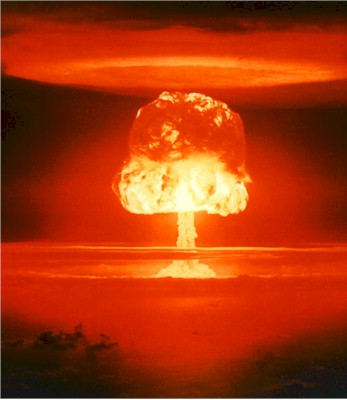
korea_nukeSEOUL, South Korea –  North Korea vowed Tuesday to restart a nuclear reactor that can make one bomb’s worth of plutonium a year, escalating tensions already raised by near daily warlike threats against the United States and South Korea.The North’s plutonium reactor was shut down in 2007 as part of international nuclear disarmament talks that have since stalled. The declaration of a resumption of plutonium production — the most common fuel in nuclear weapons — and other facilities at the main Nyongbyon nuclear complex will boost fears in Washington and among its allies about North Korea’s timetable for building a nuclear-tipped missile that can reach the United States, technology it is not currently believed to have.

A spokesman for the North’s General Department of Atomic Energy said that scientists will begin work at a uranium enrichment plant and a graphite-moderated 5 megawatt reactor, which generates spent fuel rods laced with plutonium and is the core of the Nyongbyon nuclear complex.

The unidentified spokesman said the measure is part of efforts to resolve the country’s acute electricity shortage but also for “bolstering up the nuclear armed force both in quality and quantity,” according to a statement carried by the official Korean Central News Agency.

Pyongyang conducted its third nuclear test in February, prompting a new round of U.N. sanctions that have infuriated its leaders and led to a torrent of threatening rhetoric. The United States has sent nuclear-capable bombers and stealth jets to participate in annual South Korean-U.S. military drills that the allies call routine but that Pyongyang claims are invasion preparations.

Obama_N_Korea_nukesNorth Korea has declared that the armistice ending the Korean War in 1953 is void, threatened to launch nuclear and rocket strikes on the United States and, most recently, declared at a high-level government assembly that making nuclear arms and a stronger economy are the nation’s top priorities.

The threats are seen as efforts to force policy changes in Seoul and Washington and increase domestic loyalty to young North Korean leader Kim Jong Un by portraying him as a powerful military force.

“North Korea is keeping tension and crisis alive to raise stakes ahead of possible future talks with the United States,” said Hwang Jihwan, a North Korea expert at the University of Seoul. “North Korea is asking the world, `What are you going to do about this?”‘

North Korea added the 5-megawatt, graphite-moderated reactor to its nuclear complex at Nyongbyon in 1986 after seven years of construction. The country began building a 50-megawatt and a 200 megawatt reactor in 1984, but construction was suspended under a 1994 nuclear deal with Washington.

North Korea says the facility is aimed at generating electricity. It takes about 8,000 fuel rods to run the reactor. Reprocessing the spent fuel rods after a year of reactor operation could yield about 7 kilograms of plutonium — enough to make at least one nuclear bomb, experts say.

Nuclear bombs can be produced with highly enriched uranium or with plutonium. North Korea is believed to have exploded plutonium devices in its first two nuclear tests, in 2006 and 2009.

In 2010, the North unveiled a long-suspected uranium enrichment program, which would give it another potential route to make bomb fuel. Uranium worries outsiders because the technology needed to make highly enriched uranium bombs is much easier to hide than huge plutonium facilities.

But experts say plutonium is considered better for building small warheads, which North Korea needs if it is going to put them on missiles. Analysts say they don’t believe North Korea currently has mastered such miniaturization technology.

korea_nukesScientist and nuclear expert Siegfried Hecker has estimated that Pyongyang has 24 to 42 kilograms of plutonium — enough for perhaps four to eight rudimentary bombs similar to the plutonium weapon used on Nagasaki in World War II.

It’s not known whether the North’s latest atomic test, in February, used highly enriched uranium or plutonium stockpiles. South Korea and other countries have so far failed to detect radioactive elements that may have leaked from the test and which could determine what kind of device was used.

“North Korea is dispelling any remaining uncertainties about its intention for developing nuclear arms. It is making it clear that its nuclear arms program is the essence of its national security and that it’s not negotiable,” said Sohn Yong-woo, a professor at the Graduate School of National Defense Strategy of Hannam University in South Korea.

“North Korea is more confident about itself than ever after the third nuclear test,” Sohn said. “That confidence is driving the leadership toward more aggressive nuclear development.”

Published April 02, 2013 / Associated Press

Filed Under: All Stories, Elections, Foreign

US Navy Ship Moves Off Korean Coast

April 1, 2013 By Editor Leave a Comment

Keen Sword 2010The U.S. military has moved a Navy ship capable of intercepting missiles to waters off the coast of the Korean Peninsula, as threats from North Korea’s Kim Jong Un escalate and the White House signals it wants to head off any potential conflict by flexing America’s military might.

A U.S. defense official confirmed to Fox News that the Navy had moved the U.S. destroyer to a location near South Korea. The ship, the USS McCain, is equipped with the Aegis defense system and is capable of shooting down missiles. Officials initially misidentified the ship but later clarified the USS McCain had been dispatched.

The defense official said the decision is not part of the ongoing joint military exercise with South Korea but part of the Navy’s general movements. The Navy had the same type of ship in this location as recently as December.

But, the positioning comes after the Pentagon dispatched two F-22 stealth fighter jets to South Korea to join Seoul forces in a training exercise, and after other demonstrations of U.S. capability last week.

White House Press Secretary Jay Carney said Monday that Kim Jong Un’s steadily escalating threats follow a “pattern,” but one that must be taken seriously. He said the U.S. is now taking “prudent” measures to “reassure our allies, demonstrate our resolve to the North and reduce pressure on Seoul to take unilateral action.”

This would include efforts to boost missile defense, last week’s rare flight of B-2 bombers to South Korea and likely the decision Sunday to deploy F-22 Raptors to Osan Air Base in South Korea.

With analysts warning that the biggest threat from North Korea is that it could start a war by going too far and provoking South Korea, Carney suggested the shows of strength are aimed at deterring the North from crossing that line.

“We believe this has reduced the chance of miscalculation and provocation,” Carney said of the B-2 flights and other actions.

Carney, though, said that despite the “harsh rhetoric” out of Pyongyang, the U.S. is not seeing changes to the country’s “military posture,” such as any “large-scale” mobilizations or positioning of forces.

“This pattern of bellicose rhetoric is not new, it is familiar,” Carney said. “We take it very seriously, we take prudent measures in response to it.”

The F-22 flight came after North Korea warned that the Korean Peninsula had entered “a state of war.”

A Pentagon spokesman confirmed to Fox News that the F-22 Raptors were deployed to Osan Air Base in South Korea from Japan on Sunday to support ongoing U.S.-South Korean military drills.

“This exercise has been planned for some time and is part of the air component of the Foal Eagle exercise,” spokesman George Little told reporters Monday.

Meanwhile, the North Korean leader gathered legislators Monday for an annual spring parliamentary session that followed a ruling party declaration that nuclear bomb building and a stronger economy were the nation’s top priorities.

The meeting of the Supreme People’s Assembly follows near-daily threats from Pyongyang, including vows of nuclear strikes on South Korea and the U.S.

North Korea said Saturday its armed forces, “will blow up U.S. bases for aggression in its mainland and in the Pacific operational theaters including Hawaii and Guam.”

Kim also threatened to shut down a border factory complex that is the last major symbol of inter-Korean cooperation.

The threats are seen as part of an effort to provoke the new government in Seoul to change its policies toward Pyongyang and to win diplomatic talks with Washington in order to gain more aid.

Fox News’ Justin Fishel and The Associated Press contributed to this report.

Filed Under: All Stories, Elections, Foreign

China Mobilizing Troops and Jets to N. Korean Border

April 1, 2013 By Editor Leave a Comment

chinaChina has placed military forces on heightened alert in the northeastern part of the country as tensions mount on the Korean peninsula following recent threats by Pyongyang to attack, U.S. officials said.

Reports from the region reveal the Chinese People’s Liberation Army (PLA) recently increased its military posture in response to the heightened tensions, specifically North Korea’s declaration of a “state of war” and threats to conduct missile attacks against the United States and South Korea.

According to the officials, the PLA has stepped up military mobilization in the border region with North Korea since mid-March, including troop movements and warplane activity.

China’s navy also conducted live-firing naval drills by warships in the Yellow Sea that were set to end Monday near the Korean peninsula, in apparent support of North Korea, which was angered by ongoing U.S.-South Korean military drills that are set to continue throughout April.

North Korea, meanwhile, is mobilizing missile forces, including road-mobile short- and medium-range missiles, according to officials familiar with satellite imagery of missile bases.

Published April 01, 2013 / Washington Free Beacon

Filed Under: All Stories, Elections, Foreign

US Flies F-22 Jets Over South Korea

April 1, 2013 By Editor Leave a Comment

F22_jetThe United States has sent F-22 stealth fighter jets to South Korea to join Seoul forces in military drills after North Korea warned the Korean Peninsula has entered “a state of war.”

A senior U.S. official confirms to Fox News that the F-22 Raptors were deployed to Osan Air Base in South Korea from Japan on Sunday to support ongoing U.S.-South Korean military drills.

Meanwhile, North Korean leader Kim Jong Un gathered legislators Monday for an annual spring parliamentary session that followed a ruling party declaration that nuclear bomb building and a stronger economy were the nation’s top priorities.

The meeting of the Supreme People’s Assembly follows near-daily threats from Pyongyang, including vows of nuclear strikes on South Korea and the U.S. In a statement released Sunday, U.S. military in South Korea urged North Korea to restrain itself.

“(North Korea) will achieve nothing by threats or provocations, which will only further isolate North Korea and undermine international efforts to ensure peace and stability in Northeast Asia,” the statement said.

Meanwhile, North Korea said Saturday its armed forces, “will blow up U.S. bases for aggression in its mainland and in the Pacific operational theaters including Hawaii and Guam.”

Kim also threatened to shut down a border factory complex that is the last major symbol of inter-Korean cooperation, according to the Associated Press.

The threats are seen as part of an effort to provoke the new government in Seoul to change its policies toward Pyongyang and to win diplomatic talks with Washington in order to gain more aid.

The White House says the U.S. is taking North Korea’s threats seriously, but has also noted Pyongyang’s history of “bellicose rhetoric.”

On Thursday, U.S. military officials revealed that two B-2 stealth bombers dropped dummy munitions on an uninhabited South Korean island as part of annual defense drills that Pyongyang sees as rehearsals for invasion. Hours later, Kim ordered his generals to put rockets on standby and threatened to strike American targets if provoked.

Military analysts have said a full-scale conflict between North and South Korea is extremely unlikely, noting that the Korean Peninsula has remained in a technical state of war for 60 years. But the North’s continued threats toward South Korea and the United States have raised worries that a misjudgment between the sides could lead to a clash.

In addition to the military exercise, the U.S. will fortify its defenses against a potential North Korean missile attack by adding more than a dozen missile interceptors to the 26 already in place at Fort Greely, Alaska, Defense Secretary Chuck Hagel has also announced.

Fox News’ Justin Fishel and The Associated Press contributed to this report.

Filed Under: All Stories, Elections, Foreign

Congress Spars Over Universal Background Checks

April 1, 2013 By Editor Leave a Comment

GunControl_kellySenate Democrats recently removed bans on semi-automatic weapons from pending gun-control legislation in apparent hopes of passing the more politically acceptable universal background checks — even referring to the checks as the “sweet spot” of the proposal.

But the issue has turned into the new sticking point in Congress with a top Republican saying Sunday the plan is “going nowhere” and Democrats and other gun-control advocates pressing the issue.

South Carolina Republican Sen. Lindsey Graham repeated the argument among gun-rights advocates that the federal government should not add new checks when existing ones are not enforced.

“The current system is broken,” he said on CNN’s “State of the Union.” “Why in the world would you expand that system if you’re not enforcing the law that exists today. … So I think that legislation is going nowhere.”

Leading gun-control advocate Mark Kelly warned Republican senators that trying to block a vote on new firearms legislation that includes universal background checks could hurt their re-election efforts.

Kelly, a former astronaut and Navy captain, directed his remarks to Sens. Rand Paul and Marco Rubio, among five Republican senators who have suggested they will filibuster a debate and full floor vote.

“They should listen to their constituents” and not get in the way of the debate, Kelly told “Fox News Sunday.”

Kelly, who with wife and retired Congresswoman Gabrielle Giffords leads the gun-control advocacy group Americans for Responsible solutions, said at least 80 percent of voters in Paul and Rubio’s districts favor the checks for potential gun buyers.

Giffords was shot in the head by Jared Lee Loughner, a mentally ill young man, in January 2011 during a town hall-style meeting outside Tucson, Ariz.

New York Democratic Sen. Chuck Schumer told NBC’s “Meet the Press,” he once called background checks the sweet spot “because it would do a whole lot of good and have a good chance of passing.”

“I’m working very hard with both Democrats and Republicans, pro-(National Rifle Association) and anti-NRA people, to come up with a background check that will be acceptable to 60 senators and be very strong and get the job done,” he said. “It’s very hard and we’re working hard and I’m very hopeful that we can get this passed.”

Congress returns April 8 from spring break. No vote on the legislation has been scheduled. But Senate Majority Leader Harry Reid is expected to bring legislation to the floor next month that is likely to include the background check but no bans on semi-automatic weapons and high-capacity gun magazines.

Sens. Ted Cruz, Texas; Mike Lee, Utah; and James Inhofe, Oklahoma, are the three others who have vowed to join in the filibuster.

“We, the undersigned, intend to oppose any legislation that would infringe on the American people’s constitutional right to bear arms, or on their ability to exercise this right without being subjected to government surveillance,” they said in a March 22 letter to Reid, a Nevada Democrat.

Graham said he will not join the filibuster, unless Reid blocks alternative amendments in the floor vote.

Meanwhile, Iowa Sen. Charles Grassley is crafting a Republican alternative to the one recently passed by the Senate Judiciary Committee, his office said Thursday.

No details have been released, but the bill is expected to include tougher laws on straw purchases and illegal gun trafficking, efforts to increase school safety and keeping guns out of the hands of the mentally ill.

A new CBS News poll shows 47 percent of Americans now support tougher gun laws, compared to 57 percent after the December 2012 shooting massacre at a Connecticut elementary school in which 20 first-graders and six adults were killed.

President Obama, who said the day of the shootings was the worst so far of his two-term presidency, push back last week on criticism that Washington has missed its opportunity to pass reform legislation by allowing momentum to fade.

“Let me tell you, people here don’t forget,” said Obama, who will travel Wednesday to Denver to talk with community leaders and local law enforcement officials about new state gun laws. “I haven’t forgotten those kids. Shame on us if we’ve forgotten.”

Kelly also called the potential Grassley bill a “mistake” because it doesn’t include the background check and disagreed with the argument it will lead to a federal registry and possible gun confiscation.

However, he agreed with the argument that states a need to pass along to the federal government information about mentally ill people.

“They absolutely have a point,” Kelly told Fox.

Published March 31, 2013 / FoxNews.com /The Associated Press contributed to this report.

Filed Under: All Stories, Economy, Elections, Entitlement, Ethics

Left Want Ben Carson Replaced as Commencement Speaker After Gay Marriage Remarks

March 30, 2013 By Editor Leave a Comment

Ben_carsonJohns Hopkins students are campaigning to have Dr. Ben Carson pulled from this year’s commencement speaker line-up, in response to comments the well-known neurosurgeon, a critic of the Obama administration, made about gay marriage.

Carson has since said he apologizes for having offended anyone and indicated he might withdraw from the commencement role, though he says his words are being misconstrued.

Carson — who rocketed to political fame after criticizing President Obama’s policies during the National Prayer Breakfast, which Obama attended — made the gay marriage comments on Fox News Tuesday night.

Host Sean Hannity asked Carson his opinion on same-sex marriage, given the Supreme Court’s consideration of two gay marriage cases this week.

“Marriage is between a man and a woman,” Carson said. “It’s a well-established, fundamental pillar of society and no group, be they gays, be they NAMBLA, be they people who believe in bestiality — it doesn’t matter what they are, they don’t get to change the definition.”

Students accused Carson of effectively comparing “gay relationships with pedophilia and bestiality.”

The Health and Human Rights Student Group began circulating a petition, linked out of its Facebook page, challenging Carson’s selection as the 2013 commencement speaker for the Johns Hopkins School of Medicine.

“At the time of his nomination, Dr. Carson was known to most of us as a world-class neurosurgeon and passionate advocate for education. Many of us had read his books and looked up to him as a role model in our careers,” the group said. “Since then, however, several public events have cast serious doubt on the appropriateness of having Dr. Carson speak at our graduation.”

The group cited his gay marriage comments, but also his comments at the National Prayer Breakfast — Carson was hailed by conservatives, and even landed a speaking role at the Conservative Political Action Conference, for his remarks in February.

The commencement address may be in doubt.

Asked about the students’ objections, Carson on Friday told MSNBC it’s “their day and the last thing I would want to do is rain on their parade.”

Asked whether he’s told the university he would not deliver the address, Carson said he was “waiting for appropriate channels.”

Carson also told the Baltimore Sun that people “have completely taken the wrong meaning out of what I was saying.”

He added:  “Now perhaps the examples were not the best choice of words, and I certainly apologize if I offended anyone. But the point that I was making was that no group of individuals, whoever they are, whatever their belief systems, gets to change traditional definitions.”

Published March 29, 2013 / FoxNews.com

Filed Under: All Stories, Elections, Entitlement, Ethics, Gender, Religion

N. Korea in ‘State of War’ With South

March 30, 2013 By Editor Leave a Comment

In its latest threat, North Korea says it’s entering a ‘state of war’ with South Korea, and promises to respond to any provocations by the United States and South Korea without ‘any prior notice.’

NKoreaSEOUL, South Korea –  North Korea said Saturday it had entered “a state of war” with South Korea in its latest threat aimed at the United States and its ally after two American B-2 bombers flew a training mission in the region.

“From this time on, the North-South relations will be entering the state of war and all issues raised between the North and the South will be handled accordingly,” said a statement carried by the official North Korean news agency, according to a Reuters report.

The joint statement by the government, political parties and organizations said North Korea will deal with all matters involving South Korea according to “wartime regulations.” It also warned it will retaliate against any provocations by the United States and South Korea without “any prior notice.”

The divided Korean Peninsula is already in a technical state of war because the 1950-53 Korean War ended in a cease-fire, not a peace treaty. But Pyongyang said it was scrapping the war armistice earlier this month.

Reuters reported that North Korea’s statement said it would respond “without mercy” to any action by South Korea that harmed its sovereignty, indicating it was not about to mount a pre-emptive strike.

Analysts say a full-scale conflict is extremely unlikely and North Korea’s threats are instead aimed at drawing Washington into talks that could result in aid and boosting leader Kim Jong Un’s image at home. But the harsh rhetoric from North Korea and rising animosity from the rivals that have followed U.N. sanctions over Pyongyang’s Feb. 12 nuclear test have raised worries of a misjudgment leading to a clash.

South Korea’s Unification Ministry released a statement saying the latest threat wasn’t new and was just a follow-up to Kim’s earlier order to put troops on a high alert in response to annual U.S-South Korean military drills. Pyongyang sees those drills as rehearsals for an invasion; the allies call them routine and defensive.

In an indication North Korea is not immediately considering starting a war, officials in Seoul said South Korean workers continued Saturday to cross the border to their jobs at a joint factory park in North Korea that’s funded by South Koreans

On Friday, North Korean leader Kim Jong Un warned his forces were ready “to settle accounts with the U.S.” after two nuclear-capable U.S. B-2 bombers dropped dummy munitions on a South Korean island range as part of joint drills and returned to their base in Missouri.

North Korean state media later released a photo of Kim and his senior generals huddled in front of a map showing routes for envisioned strikes against cities on both American coasts. The map bore the title “U.S. Mainland Strike Plan.”

At the main square in Pyongyang, tens of thousands of North Koreans turned out for a 90-minute mass rally in support of Kim’s call to arms. Small North Korean warships, including patrol boats, conducted maritime drills off both coasts of North Korea near the border with South Korea earlier this week, South Korean Defense Ministry spokesman Kim Min-seok said in a briefing Friday. He didn’t provide details.

The spokesman said South Korea’s military was mindful of the possibility that North Korean drills could lead to an actual provocation. He said the South Korean and U.S. militaries are watching closely for any signs of missile launch preparations in North Korea. He didn’t elaborate.

Experts believe North Korea is years away from developing nuclear-tipped missiles that could strike the United States. Many say they’ve also seen no evidence that Pyongyang has long-range missiles that can hit the U.S. mainland.

Still, there are fears of a localized conflict, such as a naval skirmish in disputed Yellow Sea waters. Such naval clashes have happened three times since 1999. There’s also danger that such a clash could escalate. Seoul has vowed to hit back hard the next time it is attacked.

“The first strike of the revolutionary armed forces of the DPRK will blow up the U.S. bases for aggression in its mainland and in the Pacific operational theatres including Hawaii and Guam,” the North said Saturday in the statement carried by the official Korean Central News Agency. DPRK stands for the Democratic People’s Republic of Korea, the North’s official name.

Pyongyang uses the U.S. nuclear arsenal as a justification for its own push for nuclear weapons. It says that U.S. nuclear firepower is a threat to its existence.

Published March 30, 2013 / FoxNews.com /The Associated Press and Reuters contributed to this report.


Filed Under: All Stories, Elections, Foreign

« Previous Page
Next Page »

Federalist Press Dispatch

Get breaking political news, investigations, and uncensored analysis delivered directly to your inbox.

Please wait...

Thank you for subscribing to the Federalist Press Dispatch.

Get free info to help your life

Get free info to help your life

Simple bite-sized guides for life, money, civics, and more . . . because some stuff school just didn’t cover.

Brit Axton Mysteries Series

Brit Axton Mysteries Series

Brit Axton Mysteries is a series of young adult adventure novels that lead young Brit Axton and her friends on whirlwind adventures to uncover hidden secrets and long lost treasures.

Byrna Non-lethal Self Protection

Byrna Non-lethal Self Protection

Byrna offers non-lethal self protection at an affordable price. Watch the short video, or click to learn more!

Understanding Cryptocurrency: Essentials for Building Wealth in Digital Currency

Understanding Cryptocurrency: Essentials for Building Wealth in Digital Currency

Understanding Cryptocurrency serves as a definitive guide for novice investors looking to understand the world of cryptocurrency and harness its potential for financial growth and prosperity.

Real Estate Wealth Strategies During High Inflation

Real Estate Wealth Strategies During High Inflation

Real Estate Wealth Strategies During High Inflation is a comprehensive guide on navigating the real estate market, offering strategies and insights for successful investing, during high inflation and interest rates.

Follow us

  • parler
  • welcome-widgets-menus
  • facebook
  • envato

Privacy Policy

Terms of Service

Economy

The “Authoritarian” Narrative vs. Reality: Why Trump’s Positions Are Historically Mainstream

Election Autopsy: What Yesterday’s Results Revealed

Why Is the United States Still Allowing Iran to Threaten the Strait of Hormuz?

Elections

Stephen Colbert’s Final Curtain: When Late Night Became Political Therapy Instead of Comedy

Where Are the Handcuffs?

Skid Row Vote-Buying Case Exposes How Dems Cheat America’s Election System

Foreign

BREAKING: President Trump Orders Devastating Airstrikes on Iran’s Nuclear Weapons Facilities in Historic Preemptive Strike

Jamie Lee Curtis Wept Over Kanye’s Antisemitism—But Where Is Her Outrage Now?

Trump confirms ‘comprehensive’ trade deal with UK

Crime

When Political Rhetoric Becomes a Security Threat—Yet Another Assassination Attempt

Where Are the Handcuffs?

Skid Row Vote-Buying Case Exposes How Dems Cheat America’s Election System

Science Tech

Fed Appeals Court Judge Stayed Silent for Decades. Now Witnesses Beginning to Talk.

Trump’s ISIS Strike in Nigeria Sends a Message: America Can Still Hunt Terrorists Anywhere

Trump’s UFO Disclosure Has Changed the Conversation — But Not Yet Answered the Biggest Question

Reader Responses

  • Linda Livaudais on Trump’s UFO Disclosure Has Changed the Conversation — But Not Yet Answered the Biggest Question
  • T059736 on Trump and Musk Announce Plans to Shut Down USAID
  • C.Josef.D on ‘Pay to Play’ at Clinton Foundation Under Investigation
  • John D Cole on Biden Says ‘You ain’t black’ If You Don’t Vote for Him
  • Ed on U.S. Attorney Huber Moving to Indict Clintons and Others

Copyright © 2026 by Federalist Press · All rights reserved · Website design by RoadRunner CRM · Content Wiriting by GhostWriter · Log in