
Reprinted from The Washington Post: Bob Woodward (woodwardb@washpost.com) is an associate editor of The Post. His latest book is “The Price of Politics.” Evelyn M. Duffy contributed to this column.
Misunderstanding, misstatements and all the classic contortions of partisan message management surround the sequester, the term for the $85 billion in ugly and largely irrational federal spending cuts set by law to begin Friday.
What is the non-budget wonk to make of this? Who is responsible? What really happened?
The president and Lew had this wrong. My extensive reporting for my book “The Price of Politics” shows that the automatic spending cuts were initiated by the White House and were the brainchild of Lew and White House congressional relations chief Rob Nabors — probably the foremost experts on budget issues in the senior ranks of the federal government.
 Obama personally approved of the plan for Lew and Nabors to propose the sequester to Senate Majority Leader Harry Reid (D-Nev.). They did so at 2:30 p.m. July 27, 2011, according to interviews with two senior White House aides who were directly involved.
Nabors has told others that they checked with the president before going to see Reid. A mandatory sequester was the only action-forcing mechanism they could devise. Nabors has said, “We didn’t actually think it would be that hard to convince them” — Reid and the Republicans — to adopt the sequester. “It really was the only thing we had. There was not a lot of other options left on the table.”
A majority of Republicans did vote for the Budget Control Act that summer, which included the sequester. Key Republican staffers said they didn’t even initially know what a sequester was — because the concept stemmed from the budget wars of the 1980s, when they were not in government.
At the Feb. 13 Senate Finance Committee hearing on Lew’s nomination to become Treasury secretary, Sen. Richard Burr (R-N.C.) asked Lew about the account in my book: “Woodward credits you with originating the plan for sequestration. Was he right or wrong?”
“It’s a little more complicated than that,” Lew responded, “and even in his account, it was a little more complicated than that. We were in a negotiation where the failure would have meant the default of the government of the United States.”
“Did you make the suggestion?” Burr asked.
“Well, what I did was said that with all other options closed, we needed to look for an option where we could agree on how to resolve our differences. And we went back to the 1984 plan that Senator [Phil] Gramm and Senator [Warren] Rudman worked on and said that that would be a basis for having a consequence that would be so unacceptable to everyone that we would be able to get action.”


 At a time when the American people can no longer afford politics as usual, and re-elected a GOP majority in the House to protect them from socialistic tax increases, the GOP led House has caved on a Senate bill that substantially raises taxes on many Americans.
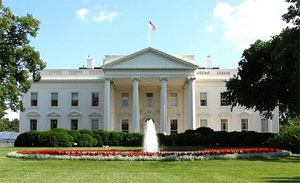 Following one of the worst performances for an American president in this nation’s history, Americans awarded Barack Obama a second term. What was the pitch from the far left that got him re-elected following four years of economic upheaval and government socialization of the medical industry?
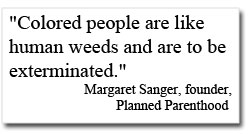 The Federalist Press suggests that the GOP consider adopting a democratic party long-term strategy. Indeed, democrats have exercised control of American government for much of the past 100 years by long-term planning—which became necessary following the beating they took in the Civil War and post-war reconstruction, as republicans freed the slaves and passed and enforced the civil rights amendments.
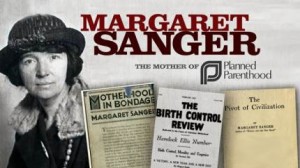 Planned Parenthood was founded by Margaret Sanger, and like-minded racists, like Dr. S. Adolphus Knopf and Lothrop Stoddard, a Harvard graduate and the author of The Rising Tide of Color against White Supremacy. Margaret Sanger was an ardent proponent of sterilizing those she considered “unfit,” which would be the “salvation of American civilization.” Who was unfit? Those of African descent.
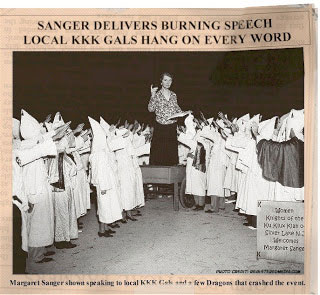 Indeed, as a direct result of the Sanger movement, even today, American black children suffer death by the millions at the hands of abortionists. Planned Parenthood is the largest abortion provider in America, with 78% of their clinics in minority communities. Although blacks make up only 12% of the population, 35% of all the abortions in America are black babies.
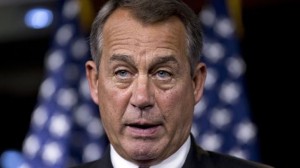 With the 2012 elections in the books, the result is that there has been no change in the makeup of America’s government. The Democrats won major advances in 2008, but were rebuked in the 2010 elections with the loss of the House of Representatives. The status quo prevails.
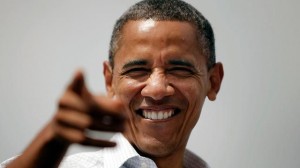 Following 4 years of economic, social and political failure by President Obama, Americans doubled down and asked him to give them more of the same.
 There are still a few people who claim to be undecided about today’s elections. Do they want to continue to support Barack Obama, or has our country reached a point where we must make a change of leadership . . from the top down?


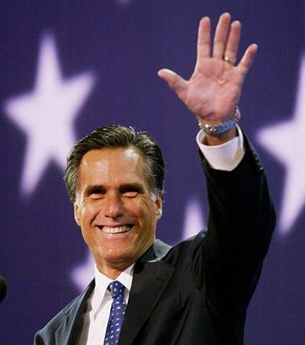 Community Organizer Barack Hussein Obama released his first book about himself in 1995, titled Dreams from My Father, as publicity to launch his Senatorial campaign. The book has only recently received any scrutiny, and reveals a very disturbing ideology and series of life choices in the form of socialist associations and heavy drug use of the would-be leader.
 Friday in Paris. A hidden camera shows streets blocked by huge crowds of Muslim worshippers and enforced by a private security force.
 In a revealing move the Swiss Defense Ministry is beefing up its military presence to defend Swiss borders against a massive influx of refugees from Greece, Spain, France, Italy, Portugal and other European Union countries on the brink of collapse.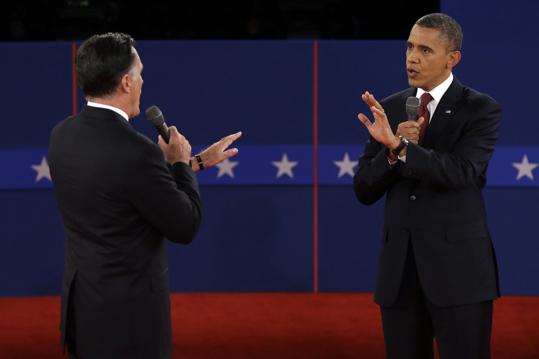
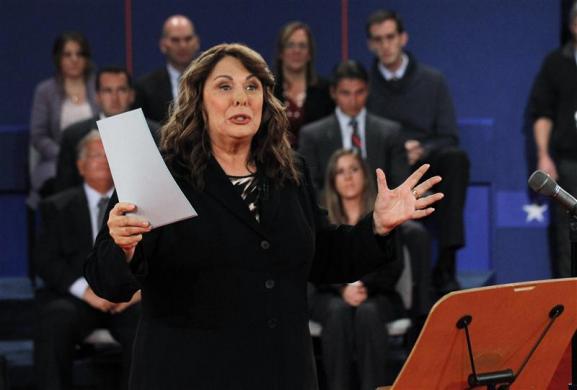
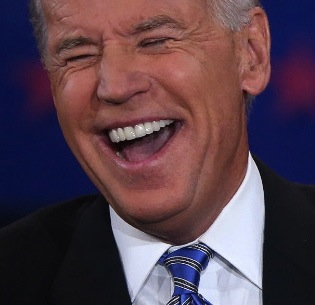 The vice presidential debate between VP Joe Biden and GOP challenger Paul Ryan was anticipated by liberals as the party’s opportunity for payback following the spanking their fearless leader took in the first presidential debate last week at the hands of Mitt Romney. Feeling that Obama had simply failed to put in the necessary time to adequately prepare for the debate, Joe Biden was removed from the campaign trail and sequestered in debate rehearsal for nearly a week.
 We observed a brief exchange in social media between a liberal and conservative, based on a quote posted by the liberal: “A nation that continues year after year to spend more money on military defense than on programs of social uplift is approaching spiritual death.” Martin Luther King, Jr.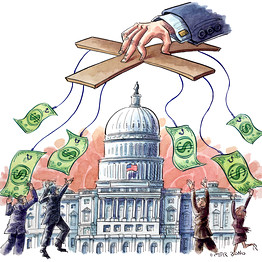
 In the first of three presidential debates held Wednesday evening GOP challenger Mitt Romney won a decisive victory over the incumbent, Barack Hussein Obama. Obama’s performance was lackluster, to say the least, while Romney appeared energetic, friendly, and in command.
 We recently visited a local library in the state of Arizona and were surprised to find opposite the obligatory row of 6 handicapped parking spots, reserved nearest the library entrance, a gratuitous row of 8 Alternative Fuel Parking spaces.
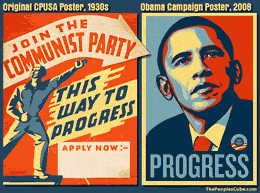
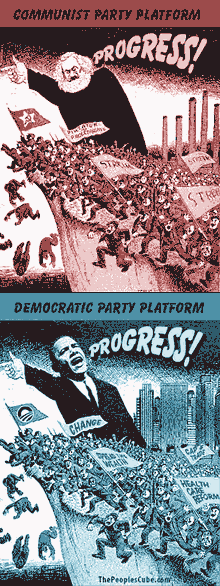 The Communist Party representative explained that government ownership of the auto and financial industries, redistribution of wealth, and free rationed healthcare have always been among the glorious CPUSA objectives: “We held on to these goals through all the difficult years of factional infighting, purges, denunciations, and heroic espionage on behalf of the Soviet intelligence services.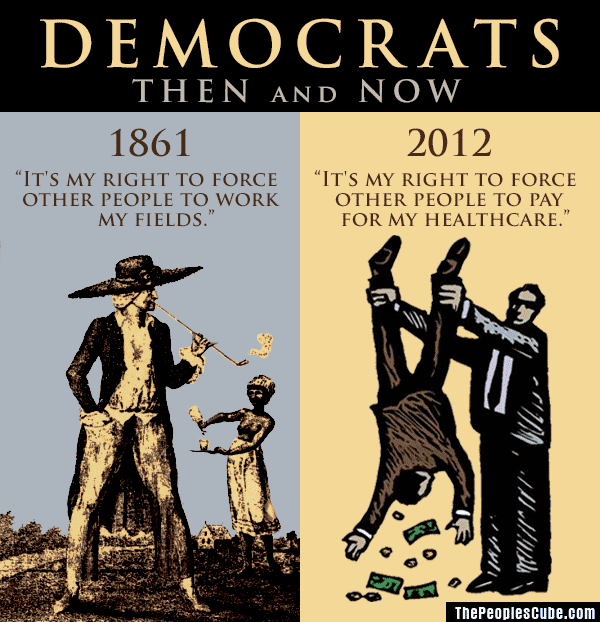

Reader Responses